Photographer
Marc Riboud
Marc Riboud was a French photographer whose long career joined postwar humanist photography to an unusually sustained engagement with Asia. Born in 1923 in Saint-Genis-Laval, near Lyon, he became associated with Magnum Photos and traveled extensively rather than remaining tied to one national press culture. He died in 2016. His archive encompasses major political transformations, but its enduring interest lies equally in how public history appears through gestures, working lives, streets, and encounters between individuals.
Riboud worked primarily in a poetic black-and-white documentary language. His pictures often balance formal clarity with alertness to fleeting behavior: bodies are organized against architecture or landscape, yet the composition rarely suppresses the spontaneity of the event. Compared with harder-edged conflict photography, his approach was notably attentive to ambiguity and ordinary experience. This humanist tendency could soften political complexity, but it also allowed him to photograph societies as lived environments rather than merely as illustrations of ideology. Travel was therefore not just his subject; it was his method of observing patiently across cultural boundaries.
China became one of the central bodies of work in Riboud’s career. He was among the earliest European photographers to gain sustained access to the People’s Republic during the 1950s, and he returned to the country as it underwent profound social and political change. The photographs gathered around The Three Banners of China are important because they connect state spectacle and collective labor with quieter scenes of daily life. His subsequent coverage of the Cultural Revolution extended this visual record, while work in Tibet and Japan broadened his account of a rapidly changing East Asia.
Vietnam formed another landmark chapter. Face of North Vietnam approached a country at war through people and places rather than military action alone, placing social observation beside the geopolitical narrative. His wider travels in India and elsewhere in Asia similarly produced photo essays in which historic events coexist with markets, roads, workplaces, and moments of repose. Across these projects, Riboud’s distinction was less a claim to detached neutrality than an ability to hold political circumstance and individual presence within the same frame.
Riboud’s historical position rests on this bridge between Magnum’s international reportage tradition and the lyrical strand of French humanist photography. For photobook collectors, The Three Banners of China and Face of North Vietnam provide useful entry points because they reveal how individual images acquire meaning through geographic and narrative sequence. Different publications and retrospective selections may emphasize political chronology, travel, or visual poetry, so attention to editing, captions, reproduction quality, and the relationship between text and image is especially rewarding. His books are best read not simply as containers for famous photographs, but as structured records of how a European observer repeatedly revised his view of Asia.
〔PBL-BIO/2〕


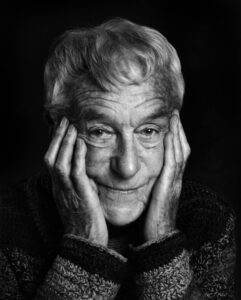
Jacques Henri Lartigue
Shared publisher: Atelier EXB, Flammarion
6 photobook(s) in the library
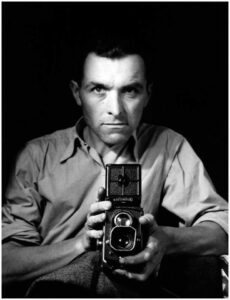
Robert Doisneau
Shared publisher: Flammarion
6 photobook(s) in the library
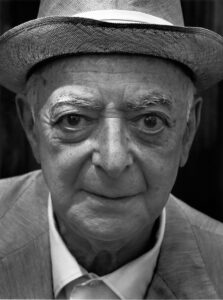
Brassaï
Shared publisher: Flammarion
5 photobook(s) in the library

Graciela Iturbide
Shared publisher: Atelier EXB
4 photobook(s) in the library
COMMUNITY DISCUSSION
Discuss this entry
Share interpretations, reading notes, and source-aware questions. For catalog corrections, use the feedback form below.
No discussion yet. Start the first focused conversation.
Sign in to join the discussion.
Optionally receive a digest when related photobooks are added to the catalog.
See something incorrect? Sign in to suggest a correction or report an issue.