Photographer
Eugene Richards
Eugene Richards, born in Dorchester, Massachusetts, in 1944, is an American documentary photographer, writer, and filmmaker based in New York City. Active as a photojournalist and documentary photographer since the late 1960s, he belongs to a generation that treated photography not simply as reportage but as sustained engagement with social experience. His long career has moved between commissioned journalism, independently conceived books, exhibitions, and filmmaking, while remaining centered on the lives of people facing illness, poverty, addiction, violence, displacement, and social neglect.
Richards is associated with an intimate, physically close form of documentary photography. His pictures often favor unstable framing, dense shadow, available light, and gestures caught at emotionally charged moments. Rather than adopting the detached overview of conventional news coverage, he works from within homes, hospital rooms, streets, and family relationships. This proximity can make the photographs compassionate and unsettling at once: viewers encounter individuals as complicated presences rather than anonymous examples of a social problem. The method also raises the ethical tensions inherent in photographing vulnerability, but Richards’s extended involvement with subjects and his use of writing and sequences distinguish his work from more episodic photojournalism.
Several books reveal the range of that approach. “Exploding into Life” joins photographs and personal testimony in an account of breast cancer, making private illness inseparable from family experience. “Dorchester Days” returns to the Boston neighborhood of his upbringing and treats place as a mixture of memory, class history, community, and change rather than as a picturesque backdrop. The later “In This Brief Life” reflects on aging, mortality, social fracture, and the passage of time, while “Do I Know You?” continues his interest in recognition and the uncertain relationship between photographer, subject, and viewer. Together, these works show how Richards repeatedly converts documentary assignments and lived encounters into longer, more reflective narratives.
His historical importance rests partly on this movement between public witness and personal disclosure. The career-spanning exhibition “Eugene Richards: The Run-On of Time” surveyed work from 1968 onward, placing his photographs within the development of postwar American documentary practice. His work is held by institutions including the Metropolitan Museum of Art and the Museum of Modern Art, and his production extends across numerous books and films. Yet institutional recognition has not softened the roughness of his imagery; the photographs retain the urgency and partial viewpoint of someone present inside unfolding circumstances.
Photobook collectors should approach Richards through complete sequences rather than isolated celebrated images. Repetition, abrupt transitions, written testimony, and shifts between public events and private aftermath give his books their force. “Dorchester Days” offers a useful entry into his relationship with memory and place, while “Exploding into Life” demonstrates how photographs and first-person language can share narrative authority. The later books allow readers to follow how an intense documentary vocabulary changes when directed toward remembrance, aging, and self-questioning.
〔PBL-BIO/2〕
Eugene Richards (born 1944) is an American documentary photographer known for his immersive, long-term studies of social issues. Beginning with Dorchester Days (1978), he documented poverty, addiction, and isolation across the U.S. His landmark projects include Exploding into Life (1986), created with his dying partner, and Cocaine True, Cocaine Blue (1994). Richards was a member of Magnum Photos, and his work has earned a Guggenheim Fellowship, the W. Eugene Smith Grant, and widespread exhibition. Major institutions such as the Museum of Modern Art and the International Center of Photography hold his prints. His photography prioritizes empathy and direct engagement, making him a key voice in American social documentary.

New World

Eugene Richards: Remembrance Garden: A Portrait of Green-Wood Cemetery

Eugene Richards: In This Brief Life

Eugene Richards: The Day I Was Born

Bring 'em All: Chaos. Care. Stories from Medicine's Front Line

Eugene Richards: The Run-On of Time

Red Ball of a Sun Slipping Down

The Blue Room

Cocaine True, Cocaine Blue

The Fat Baby

Dorchester Days
Selected Works & Key Projects
A source-backed introduction to individual photographs and significant bodies of work.
Key projects
Project · 1973
Few Comforts or Surprises: The Arkansas Delta
Published by MIT Press in 1973, this was Richards’s first book. It grew from photographs made during four years in eastern Arkansas, where he had joined VISTA and helped establish a social-service organization and the community newspaper Many Voices. The project documents life in an impoverished, racially troubled South. It merits selection because it establishes the sustained, socially engaged method that underlies Richards’s later work: photographs are presented not as isolated incidents but as a long-form account rooted in a particular community.
View source ↗Project · 1986
Exploding Into Life
Aperture published Exploding Into Life in 1986. Richards’s official account describes it as a deeply personal chronicle of Dorothea Lynch, then thirty-four, confronting breast cancer, survival, and mortality; his biography identifies Lynch as his first wife. The book received Nikon’s Book of the Year award. It merits selection because its significance is project-wide: it combines a sustained personal subject with the successive realities of biopsy, surgery, chemotherapy, and treatment, making illness and intimate care the organizing subject of a recognized photographic book.
View source ↗Project · 1994
Cocaine True, Cocaine Blue
Published by Aperture in 1994, Cocaine True, Cocaine Blue is described by Richards as an in-depth, intimate study of addicts, drug dealers, sex workers, and police across three inner-city communities. His biography calls it an extensive report on the effects of hard-drug use and records its Kraszna-Krausz Award for Photographic Innovation in Books. It merits selection because the project gathers people positioned differently within drug use and policing into one sustained report, rather than reducing the subject to a single event or constituency.
View source ↗Selected photographs

1971 · Hughes, Arkansas, United States
Superman
Richards’s official project page identifies this photograph as Superman, made in Hughes, Arkansas, in 1971, and presents it within Few Comforts or Surprises: The Arkansas Delta. The photograph is a strong selection from the project because it gives the larger 1973 book a precise local and chronological anchor: a named image from the Arkansas work made before publication. Its importance here is therefore distinct from that of the book as a whole—it is a specific surviving picture through which the project’s long engagement with the Delta can be encountered.
Work source ↗
1978 · Boston Hospital for Women, Boston, Massachusetts, United States
Mastectomy
Titled Mastectomy, this photograph was made at Boston Hospital for Women in Boston in 1978 and is presented on the official Exploding Into Life page. It merits selection because it names a decisive medical stage within a project that chronicles Dorothea Lynch’s breast cancer. The image is not treated here as a stand-alone account of the full illness; rather, its documented place among images titled “After the biopsy,” “Chemotherapy,” and “Final treatment” shows how Richards structured the book through successive moments of care and survival.
Work source ↗
1988 · Red Hook Houses, Brooklyn, New York, United States
“Crack Annie”
The official Cocaine True, Cocaine Blue page identifies this photograph as “Crack Annie,” made at Red Hook Houses in Brooklyn in 1988. It is a substantive selection because the title supplies a named subject within a larger project expressly concerned with people affected by hard-drug use in three inner-city communities. The photograph should be understood as one component of that wider report, which includes addicts, dealers, sex workers, and police. The project’s book-level reception—the Kraszna-Krausz Award for Photographic Innovation in Books—documents why this context is significant.
Work source ↗
1986 · New York, New York, United States
John coming down from crack
Richards’s official page identifies John coming down from crack as a 1986 photograph made in New York, New York, and includes it in Below the Line. The selection is important for showing the range of Richards’s poverty project: Below the Line consists of fourteen photographic and textual essays on the extent of poverty in the United States during the mid-1980s. This named photograph connects a New York subject to that national framework. The project received an International Center of Photography Infinity Award, documenting its recognized contribution as a book about urban and rural poverty.
Work source ↗-
1968
Career milestone
Joined VISTA and began documenting the Arkansas Delta
After college, Richards joined Volunteers in Service to America (VISTA), serving as a social worker in eastern Arkansas. There he began taking photographs of impoverished rural communities, which became the foundation of his documentary practice and his first book project.
Source: Wikipedia Verified Sep 6, 2026
-
1978–2000
Representation
Member of Magnum Photos
Richards was invited to join Magnum Photos, a cooperative established by leading documentary photographers. His membership brought his work to international attention, but he later resigned from the agency to pursue independent projects.
Source: Wikipedia Verified Sep 6, 2026
-
1979
Award
W. Eugene Smith Memorial Fund Grant
Richards received the W. Eugene Smith Memorial Fund Grant, which recognizes photographers for humanistic documentary projects. This prestigious award supported his ongoing work on poverty in the United States.
Source: Wikipedia Verified Sep 6, 2026
-
1986
Photobook
Published 'Exploding into Life'
Co-authored with his wife Dorothea Lynch, this book chronicles her battle with breast cancer through intimate photographs and text. It was praised for its raw and unflinching portrayal of illness, challenging conventional representations of disease.
Source: Wikipedia Verified Sep 6, 2026
-
1987
Award
Guggenheim Fellowship
Richards was awarded a Guggenheim Fellowship, which provided him time and resources to continue his long-term documentary projects. This fellowship is a significant recognition in the arts and sciences.
Source: Wikipedia Verified Sep 6, 2026
-
1994
Photobook
Published 'Cocaine True, Cocaine Blue'
A stark examination of the impact of crack cocaine on urban communities in the United States. The book was lauded for its immersive, empathetic photography and for shedding light on a devastating social epidemic.
Source: Wikipedia Verified Sep 6, 2026
-
2000
Career milestone
Left Magnum Photos
After more than two decades, Richards resigned from Magnum Photos to work more autonomously on personal documentary assignments, often with marginalized subjects and under-reported issues.
Source: Wikipedia Verified Sep 6, 2026
-
2010
Photobook
Published 'War Is Personal'
This multimedia project and book documents the lives of American veterans of the Iraq and Afghanistan wars, focusing on their struggles with trauma and reintegration. It highlights Richards' commitment to giving voice to those often overlooked.
Source: Wikipedia Verified Sep 6, 2026
Representation
Magnum Photos
Eugene Richards was a member of Magnum Photos, the renowned international cooperative of documentary photographers, from 1978 to 2012. His long-standing representation with Magnum provided a global platform for his social documentary work, including his coverage of poverty, drug addiction, and conflict. Membership in this prestigious agency signals his respected standing among peers and the institutional support behind his major assignments and publications.
Verified 2026-09-06Wikipedia
Archive
David M. Rubenstein Rare Book & Manuscript Library, Duke University
Eugene Richards's complete photographic archive, including negatives, contact sheets, and personal papers, is held at the David M. Rubenstein Rare Book & Manuscript Library at Duke University. The acquisition of a major photographer's archive by an academic research library makes his body of work accessible for scholarship and exhibition, ensuring his contributions to documentary photography are preserved for future study.
Verified 2026-09-06Wikipedia
An Interview with Eugene Richards (opens a new site)
Maren Stange’s interview addresses Richards’s early work, including Few Comforts or Surprises and Dorchester Days, and his formation as a socially engaged photographer. Richards describes his aim to make photographs with narrative, anecdotal, and symbolic complexity, relating photographic meaning to context and contrast.
Are You Listening, America? (opens a new site)
Aperture presents a conversation between Richards and Nicholas B. Harris that ranges across Richards’s photographs and working method. It includes Richards’s account of returning to emergency-medicine material after an earlier magazine assignment failed, and foregrounds his interest in the people and circumstances beyond a single image.
Eugene Richards and American Poverty (opens a new site)
Tess Mayer’s 2016 interview considers Richards’s revisiting of Below the Line: Living Poor in America. Richards discusses the changing lives of people pictured, the limits of a photograph as a record, and the ethical discomfort of entering other people’s lives to photograph them.
Revisiting Eugene Richards’s Sweeping Portrait of Life Below the Poverty Line (opens a new site)
Max Campbell examines the making and later presentation of Below the Line: Living Poor in America. The article explains that Consumers Union commissioned Richards to document poverty in fourteen U.S. places and notes the book’s combination of photographs with first-person accounts derived from recorded interviews.
The Rain Will Follow (opens a new site)
Richards’s official film page describes this work as filmed and directed by him. It centers on 90-year-old nursing-home resident Melvin Wisdahl and joins memories of war, North Dakota settlement, a disappearing hometown, oil development, and attachment to a threatened landscape.
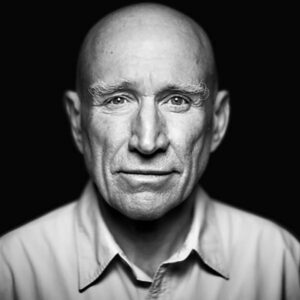
Sebastiao Salgado
Shared publisher: Aperture, Phaidon
21 photobook(s) in the library

Joel Meyerowitz
Shared publisher: Aperture, Phaidon
9 photobook(s) in the library
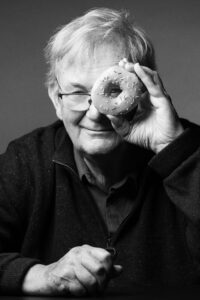
Martin Parr
Shared publisher: Aperture, Phaidon Press Limited
21 photobook(s) in the library
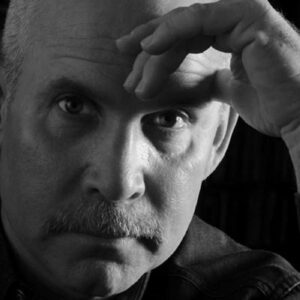
Steve McCurry
Shared publisher: Phaidon, Phaidon Press Limited
18 photobook(s) in the library
COMMUNITY DISCUSSION
Discuss this entry
Share interpretations, reading notes, and source-aware questions. For catalog corrections, use the feedback form below.
No discussion yet. Start the first focused conversation.
Sign in to join the discussion.
Optionally receive a digest when related photobooks are added to the catalog.
See something incorrect? Sign in to suggest a correction or report an issue.