Photographer
Geoffrey James
Geoffrey James (b. 1942, Canada) is a Canadian photographer known for his refined landscape and architectural photography, often focusing on historical sites, gardens, and cultural landscapes. His work reflects a deep engagement with history, memory, and the passage of time.
James’s photographic approach is characterized by clarity, precision, and a contemplative tone. He frequently uses large-format cameras to capture detailed and carefully composed images, emphasizing structure, space, and subtle shifts in light.
His work has been widely exhibited and is included in major public collections. For collectors, James’s photography is valued for its formal discipline, historical sensitivity, and its contribution to landscape and architectural photography within a contemporary context.

Selected Works & Key Projects
A source-backed introduction to individual photographs and significant bodies of work.
Key projects
Project · 1993
Asbestos
Asbestos is James’s 1993 series of 29 landscape photographs made around Thetford Mines and Black Lake, Quebec. Prompted by the scale of the region’s open-pit mine and its spoil heaps, the project turns an industrial extraction zone into a sustained photographic subject. Its force comes from James’s measured, formally attentive treatment of damaged terrain: rather than supplying explanatory spectacle, the photographs let altered earth, mass, and surface carry the unease. The series was exhibited at The Power Plant in 1993–94, accompanied by a Richard Rhodes catalogue, and later included in the National Gallery of Canada’s Utopia/Dystopia retrospective. It merits selection as James’s decisive dystopian counterpoint to his garden photographs.
View source ↗
Project · 1997
Running Fence
Running Fence is James’s 1997 photographic project on the first fourteen miles of the U.S.–Mexico border fence, from the Pacific Ocean to the Otay Mountains. Its title deliberately invokes Christo and Jeanne-Claude’s temporary 1976 artwork, but James photographs an actual enforcement barrier built from recycled Gulf War landing-strip metal under Operation Gatekeeper. He uses landscape, infrastructure, and long sightlines to examine the border’s visual authority rather than to narrate individual crossings. First exhibited in 1998, the project travelled to seven Canadian venues through 2000 and generated a catalogue with essays by journalist Sebastian Rotella and critic Dot Tuer. It merits selection for joining James’s landscape practice to a durable, politically charged architecture of exclusion.
View source ↗
Project · 2013
Inside Kingston Penitentiary
Inside Kingston Penitentiary records James’s six months of access to Kingston Penitentiary during its final operating year, before the maximum-security institution closed in 2013. Working across cells, corridors, programs, staff spaces, grounds, and inmate-made markings, he made a visual record of a prison that had rarely been extensively photographed during its 178-year history. The project’s achievement is its refusal of a single, sensational prison image: architecture, routine, personal traces, and containment produce a complex account of carceral life. It was presented by the Agnes Etherington Art Centre and published as a 2014 book, with works entering the National Gallery of Canada. It merits selection as James’s most sustained interior study of an institution and a closing historical record.
View source ↗Selected photographs

1997
The End of the Fence, Looking West from the series Running Fence
This gelatin silver photograph is part of James’s 1997 Running Fence survey of the first fourteen miles of the U.S.–Mexico border barrier near San Diego. By looking west to the point where the fence ends at the Pacific, it makes a heavily engineered boundary appear contingent rather than absolute: a line in the landscape with a visible terminus. The image condenses the series’ attention to border iconography without resorting to reportage. Its inclusion in MoMA’s collection and in the project’s touring exhibition record its institutional reception. It merits selection as the series’ clearest image of a political barrier meeting an open horizon.
Work source ↗
1997 · Colonia Libertad
House Overlooking the Fence, Colonia Libertad
House Overlooking the Fence, Colonia Libertad belongs to Running Fence, James’s 1997 examination of the border barrier between San Diego and Tijuana. The title identifies a dwelling above the fence, making the photograph’s central achievement the collision of ordinary domestic vantage point and militarized infrastructure. Rather than treating the border as an abstract line, James shows how it organizes neighbouring life and sightlines. The photograph participated in a project circulated through multiple Canadian institutions and represented in MoMA’s collection. It deserves selection because its compressed relation of house, elevation, and fence gives the larger series a human-scale account of division without depending on a visible figure.
Work source ↗
1997 · Otay Mesa
Looking Towards Mexico, Otay Mesa, from the series Running Fence
Looking Towards Mexico, Otay Mesa is a 1997 photograph from Running Fence, James’s sustained view of the early U.S.–Mexico border barrier from the Pacific to the Otay Mountains. Its deliberately directional title turns looking itself into the subject: the camera faces Mexico from a mesa where the fence regulates movement while photography preserves a line of sight. In the broader series, James used the landscape and built barrier to address border iconography during an era of accelerating globalization. Shown through the project’s extensive touring circulation and held by MoMA, this photograph merits selection for making distance, terrain, and restricted passage legible in one restrained view.
Work source ↗
1993
Black Lake
Black Lake is a gelatin silver print from James’s 1993 Asbestos series, made around the mining landscapes of Thetford Mines and Black Lake, Quebec. The project shifted his attention from designed gardens to extraction’s aftermath, using landscape photography’s descriptive calm to confront immense spoil heaps and altered ground. This approach avoids illustrative disaster imagery; the visual force lies in the tension between carefully composed tonal form and a site marked by industrial disturbance. Black Lake was included in the 1993–94 Power Plant exhibition and later in the National Gallery of Canada’s career survey. It merits selection as a concentrated example of James’s move from cultivated landscape to environmental and social residue.
Work source ↗1978 · Victoria, British Columbia, Canada
Victoria, British Columbia
Victoria, British Columbia is an early 1978 gelatin silver print whose notably elongated image format establishes panoramic seeing as more than a technical novelty. The narrow horizontal field asks the viewer to read place across an extended interval, foregrounding spatial structure and the relation between built and natural surroundings. That formal decision anticipates the panoramic and large-format landscape practice for which James later became known, while remaining a discrete early photograph rather than part of those later projects. Purchased by the National Gallery of Canada in 1985, it has an unusually early institutional history. It merits selection as a compact foundation for James’s subsequent long-form investigations of landscape shaped by human use.
Work source ↗-
1964
Education
Degree in modern history
James graduated in modern history from Wadham College, Oxford.
Source: National Gallery of Canada Verified Sep 3, 2026
-
1966
Career milestone
Moved to Canada
James moved to Canada.
Source: National Gallery of Canada Verified Sep 3, 2026
-
1967–1982
Career milestone
Editorial and arts-administration work
He worked as associate editor at Time in Montreal from 1967 to 1975, then led the Canada Council's Visual Arts, Film and Video section in Ottawa from 1975 to 1982.
Source: National Gallery of Canada Verified Sep 3, 2026
-
1993
Series
Asbestos
James made the Asbestos series on the slag heaps left by Quebec asbestos mines.
Source: National Gallery of Canada Verified Sep 3, 2026
-
1997
Series
Running Fence
James photographed the 14-mile metal border fence along the California–Mexico border.
Source: National Gallery of Canada Verified Sep 3, 2026
-
2008
Exhibition
Utopia/Dystopia: The Photographs of Geoffrey James
The National Gallery of Canada organized a retrospective under this title, and published a 176-page hardcover catalogue in 2008.
Source: National Gallery of Canada Verified Sep 3, 2026
-
2013
Series
Inside Kingston Penitentiary
James documented Kingston Penitentiary during the spring and summer before its September closure.
Source: Canadian Art Verified Sep 3, 2026
-
2016–2019
Award
Toronto's first Photo Laureate
Toronto City Council appointed James as the city’s first Photo Laureate in April 2016; the City later described his term as three years.
Source: City of Toronto Verified Sep 3, 2026
Collection
National Gallery of Canada
The National Gallery of Canada holds Victoria, British Columbia (1978), purchased in 1985.
Verified 2026-09-03National Gallery of Canada
Collection
Museum of Modern Art
MoMA's Photography collection includes multiple 1997 works from James’s Running Fence series.
Verified 2026-09-03Museum of Modern Art
Collection
Canadian Centre for Architecture
The CCA identifies five James photographs of Olmsted-designed parks in its collection, including Long Meadow, Prospect Park and The Lake, Central Park.
Verified 2026-09-03Canadian Centre for Architecture
Collection
Art Gallery of Ontario
The AGO collection includes Black Lake (1993), received as a gift from Alison and Alan Schwartz in 2001.
Verified 2026-09-03Art Gallery of Ontario
Archive
Art Gallery of Ontario, E. P. Taylor Library & Archives
The AGO’s artists’ books collection has significant holdings of Geoffrey James’s books.
Verified 2026-09-03Art Gallery of Ontario
Representation
Stephen Bulger Gallery
The Polygon Gallery stated in 2024 that James is represented by Stephen Bulger Gallery in Toronto.
Verified 2026-09-03The Polygon Gallery
Representation
Equinox Gallery
The Polygon Gallery stated in 2024 that James is represented by Equinox Gallery in Vancouver.
Verified 2026-09-03The Polygon Gallery
Olmsted, Burley, Friedlander, James (opens a new site)
A Canadian Centre for Architecture article that reproduces James’s reflections on photographing parks designed by Frederick Law Olmsted and lists five of his related works in the CCA collection.
Geoffrey James: Inside Kingston Penitentiary (opens a new site)
Rosie Prata interviews James about photographing Kingston Penitentiary in 2013, access to the institution, and the project’s accompanying book and exhibition.
Geoffrey James: The Landscape and the Camera (opens a new site)
A 2008 feature introducing the National Gallery of Canada's career survey Utopia/Dystopia and outlining James's movement from historic gardens toward mining, border, suburban, and urban subjects.
Travelling Light: Views of Ontario (opens a new site)
A video presentation featuring the work of eight Ontario photographic artists, including Geoffrey James, curated by Scott McLeod.
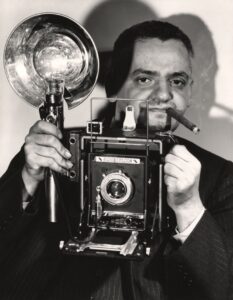
Weegee
Shared publisher: Presentation House Gallery
14 photobook(s) in the library
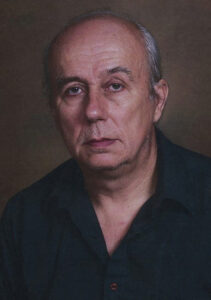
Mark Ruwedel
Shared publisher: Presentation House Gallery
9 photobook(s) in the library

Roy Arden
Shared publisher: Presentation House Gallery
5 photobook(s) in the library
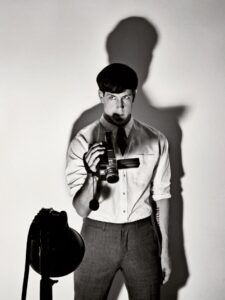
Jeremy Shaw
Shared publisher: Presentation House Gallery
2 photobook(s) in the library
COMMUNITY DISCUSSION
Discuss this entry
Share interpretations, reading notes, and source-aware questions. For catalog corrections, use the feedback form below.
No discussion yet. Start the first focused conversation.
Sign in to join the discussion.
Optionally receive a digest when related photobooks are added to the catalog.
See something incorrect? Sign in to suggest a correction or report an issue.