Photographer
James Mollison
James Mollison (b. 1973, Kenya; raised in the United Kingdom) is a British photographer known for his typological and concept-driven projects that explore identity, culture, and global diversity. His work often adopts a systematic visual approach, presenting subjects in structured formats that reveal patterns and contrasts across different societies.
Mollison gained international recognition for projects such as Where Children Sleep and The Disciples, in which he examines living conditions, fandom, and collective identity through comparative imagery. His photographs are characterized by clarity, neutrality, and a conceptual framework that invites viewers to reflect on social and cultural differences.
His photobooks have been widely published and are valued for their accessibility and strong visual ideas, often appealing to both general audiences and collectors. For collectors, Mollison’s work stands out for its clear conceptual structure, educational dimension, and its contribution to contemporary documentary photography with a global perspective.
James Mollison (born 1973) is a British photographer and artist, born in Nairobi, Kenya, and raised in England. He studied photography at Bournemouth and worked as an assistant to a photo editor before establishing an independent practice. His acclaimed series include ‘The Disciples’, documenting music fans’ tattoos, ‘Where Children Sleep’, a global survey of children’s bedrooms, and ‘Animal Ark’, pairing human portraits with similar animal poses. His books have been published internationally and exhibited at museums such as the Victoria and Albert Museum and the International Center of Photography.


Selected Works & Key Projects
A source-backed introduction to individual photographs and significant bodies of work.
Key projects
Project · 2010
Where Children Sleep
Where Children Sleep is an ongoing project built from portraits of children and photographs of their bedrooms. Mollison conceived it while considering the importance of his own childhood bedroom and as a way to address children’s rights and the social conditions affecting young people without limiting the work to children in the developing world. The first 2010 book contained 56 diptychs; the 2023 second volume contains 73. Each child’s account appears beneath the portrait, making the paired image-and-text structure central to the project’s documentary method.
View source ↗Project · 2015
Playground
Playground is a series of 59 photographs of school playgrounds. Mollison’s official account describes the 2015 Aperture book as photographs of children at play that examine the complicated dynamics of play and the environments in which children learn. The series matters within his practice because it shifts attention from the individual portrait or bedroom to the shared institutional space: each wide view makes a schoolyard the subject while recording children’s activity within it. Its geographic range, visible in the official selection of schools from several countries, supports comparison across distinct educational settings.
View source ↗Project · 2008
The Disciples
The Disciples comprises panoramic portraits of music fans made before and after concerts. Published by Chris Boot in 2008 with an essay by Desmond Morris, the project is significant among Mollison’s social-and-cultural investigations because its recurring portrait format makes concert audiences, rather than performers, the sustained subject. The catalogue presentation identifies a substantial 128-page publication and a sequence of named images, establishing the series as a developed photographic project rather than an isolated commission. It merits selection for turning fan identity, dress, and collective affiliation into a consistent comparative portrait typology.
View source ↗Selected photographs

· Mathare, Nairobi, Kenya
Valley View School, Mathare, Nairobi, Kenya
This photograph is one of the 59 school-playground views in Playground and is identified by Mollison’s official project page as made at Valley View School in Mathare, Nairobi. It merits separate selection because it concentrates the series’ stated interest in play and learning environments into a precisely named school and neighborhood. Within the project’s comparative structure, this image provides a specific Nairobi reference point rather than an abstract illustration of childhood. Its elevated, expansive view also makes both the playground activity and the surrounding built setting available for sustained looking.
Work source ↗-
2004
Photobook
James and Other Apes
Mollison's first monograph, published by Steidl, presents a series of portraits of captive apes paired with self-portraits of the artist mimicking their expressions. The work engages with human-animal resemblance, the ethics of zoos, and the construction of identity through portraiture. It established his conceptual approach and gained recognition for its sensitive yet provocative juxtaposition, marking his entry into the international photography scene.
Source: Wikipedia Verified Sep 5, 2026
-
2008
Photobook
The Disciples
In this series, Mollison photographs individuals who bear the names of the twelve biblical apostles. The portraits explore themes of naming, faith, and identity, often using the subjects' environments to reflect their personal interpretations of their names. The project demonstrates his interest in how identity is shaped by external labels and was published as a book, further diversifying his body of work.
Source: Wikipedia Verified Sep 5, 2026
-
2010
Photobook
Where Children Sleep
This widely exhibited series documents children from diverse social backgrounds worldwide in their personal sleeping environments. By juxtaposing images of bedrooms from wealthy and impoverished contexts, Mollison highlights global inequality and childhood vulnerability. The project became a landmark in social documentary photography, prompting public and educational use, and solidified his reputation as a photographer who merges aesthetic rigor with humanitarian concern.
Source: Wikipedia Verified Sep 5, 2026
-
2014
Photobook
Playground
In 'Playground', Mollison captures aerial images of school playgrounds across different countries, revealing patterns of usage, cultural practices, and social dynamics. The project employed a novel photographic technique (shooting from a ladder), offering a bird's-eye perspective that transforms mundane spaces into abstract compositions. It exemplifies his ability to find visual complexity in everyday environments and was published as a monograph, furthering his exploration of childhood and space.
Source: Wikipedia Verified Sep 5, 2026
Representation
INSTITUTE
INSTITUTE is a New York- and London-based photography agency and production company that represents James Mollison, managing his commercial commissions and licensing across editorial and advertising contexts. This representation is noted on the agency's official photographer page and is a standard professional affiliation for Mollison's client-based work, distinct from his fine-art exhibitions and book publications.
Verified 2026-09-05INSTITUTE Photographer Page
Publishing relationship
Aperture Foundation
Aperture Foundation published the US edition of James Mollison's book 'Where Children Sleep' (2010). This project portrays children from twenty-one countries in both their bedrooms and as full-length portraits, drawing attention to global issues like poverty and conflict. The book achieved wide distribution and critical notice, marking a key publication in Mollison's career and a significant contribution to documentary photography.
Verified 2026-09-05Aperture Book Listing
About (opens a new site)
The photographer’s official biography outlines Mollison’s concept-driven approach to social and cultural subjects. It identifies major monographs including James & Other Apes, The Memory of Pablo Escobar, The Disciples, Where Children Sleep, and Playground; records his education and work at Fabrica; notes his 2011–2014 role as creative editor of Colors with Patrick Waterhouse; and lists the 2009 Royal Photographic Society Vic Odden Award.
Europe Migrant Crisis: James Mollison Photographs Objects Refugees Carry (opens a new site)
TIME documents a 2015 photo essay made with refugees at a stop in Nickelsdorf, Austria. Mollison made portraits in a makeshift tent studio and photographed possessions that participants chose to retain during their journeys, including medication, photographs, phones, papers, and personal keepsakes. The article connects the objects to the participants’ accounts of separation, loss, health needs, and efforts to remain in contact with relatives, providing editorial context for this documentary assignment.
Meet the Artists Who Play With the Rules of Documentary Photography (opens a new site)
This TIME feature examines Mollison’s Playground in relation to composite photography and documentary truth. It reports that he photographed school breaks from an elevated viewpoint, then combined selected events and expressions from the same break into layered tableaux he called “still time-lapses.” The article places this method in a wider discussion of photographic manipulation, arguing that such work tests conventional assumptions about veracity and subjectivity while openly disclosing its constructed process.
The Disciples (opens a new site)
Mollison’s official project page presents The Disciples as a series of 56 photo montages of music fans outside concerts. Alongside named concert images and their locations and dates, the page provides a five-minute sample drawn from a 28-minute projection video. It is a direct project resource for studying the series’ panoramic fan portraits and its presentation format, rather than a secondary interpretation of the work.
'Where Children Sleep': An Intimate Portrayal of How… (opens a new site)
This PBS NewsHour clip introduces Where Children Sleep through Mollison’s premise that children’s sleeping spaces can reveal important facts about their lives. It presents the project as an examination of unequal circumstances at birth, using bedrooms as the visual point of entry. The short broadcast is a concise audiovisual introduction for viewers seeking Mollison’s own project framing rather than a general career survey.
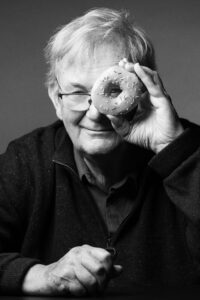
Martin Parr
Shared publisher: Aperture, Hoxton Mini Press
21 photobook(s) in the library
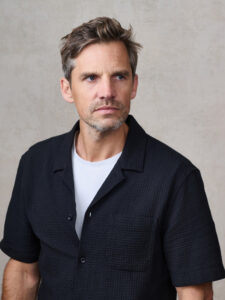
Simon Roberts
Shared publisher: Chris Boot, Hoxton Mini Press
3 photobook(s) in the library
Robin Schwartz
Shared publisher: Aperture, Hoxton Mini Press
3 photobook(s) in the library
Richard Renaldi
Shared publisher: Aperture, Hoxton Mini Press
3 photobook(s) in the library
COMMUNITY DISCUSSION
Discuss this entry
Share interpretations, reading notes, and source-aware questions. For catalog corrections, use the feedback form below.
No discussion yet. Start the first focused conversation.
Sign in to join the discussion.
Optionally receive a digest when related photobooks are added to the catalog.
See something incorrect? Sign in to suggest a correction or report an issue.