Photographer
Ansel Adams
Ansel Adams (1902–1984) was an American photographer and environmentalist whose black‑and‑white landscapes of the American West remain among the most iconic images in photographic history. Born in San Francisco and introduced to photography during a family trip to Yosemite in 1916, Adams soon became deeply connected to the Sierra Nevada, a relationship that shaped both his artistic vision and his lifelong advocacy for wilderness preservation. He became one of the founders of Group f/64, promoting “pure photography” characterized by sharp focus, rich tonal range, and meticulous printing. His technical innovations—including the Zone System, developed with Fred Archer—reshaped photographic practice by allowing photographers to control exposure and development with unprecedented precision.
Adams’s photographs, such as “Moonrise, Hernandez, New Mexico” and his numerous Yosemite landscapes, present nature with clarity, luminosity, and expressive depth. Beyond aesthetic achievement, his work played a significant role in American conservation, supporting the expansion and protection of national parks through books, exhibitions, and political advocacy. His decades‑long association with the Sierra Club reinforced his belief that photography could serve as a powerful tool for environmental activism. Adams also shaped the institutional recognition of photography as fine art: he helped establish the photography department at the Museum of Modern Art, co‑founded Aperture magazine, and later co‑founded the Center for Creative Photography at the University of Arizona.
Over his lifetime, Adams became one of the most influential photographers in the United States, receiving the Presidential Medal of Freedom in 1980 for his artistic and environmental contributions. His legacy endures through museum collections, publications, environmental efforts, and the continued visibility of his images in both popular culture and the fine‑art world. His work remains a benchmark of technical mastery and an enduring testament to the power of landscape photography.
Ansel Easton Adams (February 20, 1902–April 22, 1984) was an American photographer and environmental advocate best known for black-and-white landscapes of the American West. After receiving his first camera during a 1916 visit to Yosemite National Park, he developed his photography through repeated visits to the Sierra Nevada and his involvement with the Sierra Club. He joined the organization at 17, was elected to its board in 1934, and served there for 37 years.
Adams moved away from pictorialism during the 1920s in favor of sharply focused, carefully exposed photographs with an extensive tonal range. His 1927 image Monolith, the Face of Half Dome became an important expression of his approach to visualizing a finished print before exposure. In 1932, he formed Group f/64 with photographers including Imogen Cunningham and Edward Weston. He later developed the Zone System with Fred Archer, linking exposure, negative development, and printing to the intended tonal result.
His photographs also supported conservation campaigns. Sierra Nevada: The John Muir Trail (1938) and his congressional testimony contributed to the establishment of Kings Canyon National Park in 1940. He photographed lands administered by the U.S. Department of the Interior beginning in 1941 and documented the Manzanar incarceration camp during World War II. Adams advised the Museum of Modern Art’s photography department, established a photography department at the California School of Fine Arts in 1945, helped found Aperture in 1952, and co-founded the Center for Creative Photography at the University of Arizona. He received the Presidential Medal of Freedom in 1980.


Selected Works & Key Projects
A source-backed introduction to individual photographs and significant bodies of work.
Key projects

Project · 1927
Parmelian Prints of the High Sierras
Published in 1927, Parmelian Prints of the High Sierras is Adams’s first photographic portfolio. The Library of Congress records eighteen landscape plates, including Monolith, the Face of Half Dome, and identifies Yosemite Valley, the Upper Merced Basin, and the High Sierras among its subjects. Each print was signed, and the portfolio was issued in an edition of 150 copies. It merits selection because it establishes the portfolio format through which Adams presented an authored sequence of Sierra landscapes, while introducing the photograph that the Library of Congress identifies as career-changing.
View source ↗
Project · 1941–1942
Ansel Adams: The Mural Project, 1941–1942
The National Park Service commissioned Adams in 1941 to make photographs for a Department of the Interior Building mural centered on nature as protected in United States national parks. The project was stopped during World War II and was never resumed, but the photographs remained. The National Archives holds 226 photographs made for it, dating from 1941–42 and encompassing parks, monuments, pueblos, Boulder Dam, and the Owens Valley. This is a major project rather than a single-image achievement: it joined an institutional conservation theme to a broad photographic survey of western places.
View source ↗
Project · 1943
Ansel Adams’s Photographs of Japanese-American Internment at Manzanar
In 1943 Adams photographed Japanese Americans incarcerated at the Manzanar War Relocation Center. The Library of Congress describes the body of work as a departure from his signature landscape practice: more than 200 images include chiefly portraits alongside daily life, farming, sports, and leisure. Adams donated 209 prints and 242 original negatives to the Library between 1965 and 1968. The project merits selection because it is identified by the Library as his most significant war-related undertaking, and because it documents an incarcerated community rather than treating the western landscape as his sole subject.
View source ↗Selected photographs

1927 · Yosemite Valley, California, United States
Monolith, the Face of Half Dome
Made in 1927, Monolith, the Face of Half Dome presents Yosemite’s granite formation as a steep, darkly silhouetted mass above snow and conifers. The Library of Congress states that this photograph changed Adams’s career; it appeared that year with seventeen other images in his first portfolio, Parmelian Prints of the High Sierras. The photograph merits selection not simply as a Yosemite view, but as the pivotal image attached to Adams’s transition into an established photographic career and to his first sustained portfolio statement.
Work source ↗
1941 · Hernandez, New Mexico, United States
Moonrise, Hernandez, New Mexico
Moonrise, Hernandez, New Mexico was made in 1941. A LACMA collection record describes a black-and-white landscape in which a full moon hangs above a village, adobe church, cemetery crosses, snow-capped mountains, and a dark sky. The National Gallery of Art included the picture among the well-known photographs in Adams’s Museum Set. It merits selection because its carefully organized relation of celestial light, settlement, cemetery, and distant mountains makes it a concentrated example of the expansive western landscape imagery that institutions repeatedly selected to represent his achievement.
Work source ↗1944 · Yosemite National Park, California, United States
Clearing Winter Storm, Yosemite National Park, California
Clearing Winter Storm, Yosemite National Park, California was made in 1944; the National Gallery of Art’s collection record identifies its medium as a gelatin silver print and its series as the Museum Set. Its visual record describes a snow-covered valley, mountainous terrain, clouds partially veiling peaks, and a waterfall at right. The National Gallery’s 1985 Museum Set exhibition named it among Adams’s most famous photographs. It merits selection because the image combines weather, valley scale, snowfall, cloud, and waterfall in a single Yosemite composition later chosen by Adams for his self-defined survey of his highest-quality work.
Work source ↗1942 · Grand Teton National Park, Wyoming, United States
The Tetons and the Snake River
The Tetons and the Snake River was made in Grand Teton National Park, Wyoming, in 1942. The National Archives identifies it as National Archives Identifier 519904 and local identifier 79-AAG-1, within the National Park Service series Ansel Adams Photographs of National Parks and Monuments. The picture was produced for Adams’s Department of the Interior mural commission, whose national-park conservation theme was interrupted by World War II. It merits selection because an individual, sweeping western landscape became a durable surviving image of a much larger federal photographic project that was never realized as its intended mural.
Work source ↗-
1927
Series
Publication of Parmelian Prints of the High Sierra
Adams published his first photographic portfolio, Parmelian Prints of the High Sierra. Early sales to San Francisco art patrons helped demonstrate that photography could become his profession.
Source: The Ansel Adams Gallery Verified Aug 31, 2026
-
1930
Photobook
Publication of Taos Pueblo
Adams and writer Mary Austin published Taos Pueblo through the Grabhorn Press. The edition comprised 108 copies, each containing twelve original silver-bromide photographs printed by Adams.
Source: The Ansel Adams Gallery Verified Aug 31, 2026
-
1932
Career milestone
Formation and First Exhibition of Group f/64
At the invitation of Adams and Willard Van Dyke, several Bay Area photographers formed Group f/64 in 1932. Its manifesto accompanied a de Young Museum exhibition held from November 15 through December 31.
Source: The Museum of Modern Art Verified Aug 31, 2026
-
1940–1941
Exhibition
Sixty Photographs: A Survey of Camera Esthetics
Adams and Beaumont Newhall organized the inaugural exhibition of MoMA’s Department of Photography. It opened on December 31, 1940, and continued through January 12, 1941.
Source: The Museum of Modern Art Verified Aug 31, 2026
-
1941–1942
Series
National Park Service Mural Photography Project
The National Park Service commissioned Adams in 1941 to photograph landscapes protected within U.S. national parks for a Department of the Interior mural. The project ended during World War II, but its 1941–1942 photographs survived as a series.
Source: National Archives and Records Administration Verified Aug 31, 2026
-
1944
Exhibition
Manzanar: Photographs by Ansel Adams of Loyal Japanese-American Relocation Center
MoMA exhibited Adams’s photographs of Japanese Americans incarcerated at Manzanar from November 10 through December 24, 1944.
Source: The Museum of Modern Art Verified Aug 31, 2026
-
1946
Education
Founded a Photography Department at the California School of Fine Arts
Adams founded a department at the California School of Fine Arts in San Francisco devoted to photography as both an art and a profession.
Source: Aperture Verified Aug 31, 2026
-
1952
Career milestone
Co-founded Aperture
Adams joined photographers and critics including Minor White, Dorothea Lange, Barbara Morgan, and Nancy and Beaumont Newhall in founding Aperture. Its first quarterly issue appeared in San Francisco in 1952.
Source: Aperture Verified Aug 31, 2026
-
1965–1968
Collection acquisition
Donation of the Manzanar Photographs to the Library of Congress
Between 1965 and 1968, Adams donated 209 photographic prints and 242 original negatives from his Manzanar project to the Library of Congress.
Source: Library of Congress Verified Aug 31, 2026
-
1975
Archive
Co-founded the Center for Creative Photography and Established an Inaugural Archive
Adams co-founded the Center for Creative Photography in 1975. His archive was one of the Center’s five inaugural archives and became part of its permanent research collections.
Source: Center for Creative Photography, University of Arizona Verified Aug 31, 2026
-
1979
Exhibition
Ansel Adams and the West at MoMA
The Museum of Modern Art presented Ansel Adams and the West from September 5 through October 28, 1979, with Adams as the featured artist.
Source: The Museum of Modern Art Verified Aug 31, 2026
-
1980
Award
Received the Presidential Medal of Freedom
President Jimmy Carter presented Adams with the Presidential Medal of Freedom on June 9, 1980, recognizing his work as a photographer and environmental advocate.
Source: National Archives and Records Administration Verified Aug 31, 2026
Archive
Center for Creative Photography, University of Arizona
Adams co-founded the Center in 1975. His inaugural archive includes more than 2,500 fine prints and extensive archival materials.
Verified 2026-08-31Center for Creative Photography — Ansel Adams
Estate
Ansel Adams Publishing Rights Trust
Adams established the Trust in 1976. It owns the copyright to his images and authorizes publication and use of his work.
Verified 2026-08-31The Ansel Adams Gallery — Glossary of Photography Terms
Gallery relationship
The Ansel Adams Gallery
The gallery represents Adams’s work and offers original photographs, authorized editions, and reproductions.
Verified 2026-08-31The Ansel Adams Gallery — Artists
Collection
Library of Congress
The Library’s Prints and Photographs Division houses Adams’s Manzanar collection, donated as 209 prints and 242 original negatives between 1965 and 1968.
Verified 2026-08-31Library of Congress — Ansel Adams's Photographs of Japanese-American Internment at Manzanar
Collection
The Museum of Modern Art
MoMA’s artist record presents 270 works by Adams online and documents their inclusion in collection galleries and exhibitions.
Verified 2026-08-31MoMA — Ansel Adams
Collection
National Gallery of Art
The National Gallery of Art’s artist record lists 96 works by Adams, including photographs given by Virginia B. Adams.
Verified 2026-08-31National Gallery of Art — Ansel Adams
Collection
San Francisco Museum of Modern Art
SFMOMA’s artist record lists numerous Adams photographs under “Works in the Collection.”
Verified 2026-08-31SFMOMA — Ansel Adams
Collection
J. Paul Getty Museum
In 2012, the museum received 25 Adams photographs from “The Museum Set,” augmenting its existing collection of 40 works by him.
Verified 2026-08-31Getty — J. Paul Getty Museum Acquires 25 Ansel Adams Photographs
Collection
Museum of Fine Arts, Boston
The museum holds the Lane Collection, formerly the largest private collection of Adams photographs.
Verified 2026-08-31Museum of Fine Arts Boston — Ansel Adams
Collection
Philadelphia Museum of Art
A 2008 exhibition drew more than 40 Adams photographs from the museum’s extensive holdings of his work.
Verified 2026-08-31Philadelphia Museum of Art — Transcending the Literal
Influence & affinity
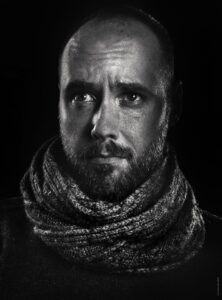
Adam Welch
Welch derived lessons from Adams’s deliberate working methods, visualization, careful composition, and use of a tripod.
Verified 2026-08-31Digital Photography School — Lessons from Minor White, Ansel Adams, and Syl Arena
Shared movement
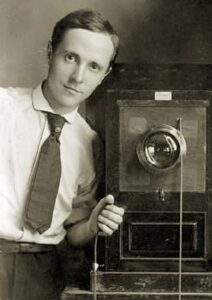
Edward Weston
Weston and Adams were among the Bay Area photographers who helped found Group f/64 in 1932.
Verified 2026-08-31J. Paul Getty Museum — Imogen Cunningham: A Retrospective
Shared movement
Imogen Cunningham
Cunningham and Adams were among the Bay Area photographers who helped found Group f/64 in 1932.
Verified 2026-08-31J. Paul Getty Museum — Imogen Cunningham: A Retrospective
Ansel Adams: Conversations with Ansel Adams (opens a new site)
The Bancroft Library’s Oral History Center at UC Berkeley preserves this extensive first-person interview conducted in 1972, 1974, and 1975. Adams discusses his photographic techniques and equipment, publications, exhibitions, Sierra Nevada expeditions, environmental work, and relationships with other major photographers and artists.
Getty Showcases Photographs by Ansel Adams (opens a new site)
The J. Paul Getty Museum explains Adams’s Museum Set project and compares late prints with versions made earlier in his career. This is especially useful for understanding that his photographs were not fixed mechanical records: Adams repeatedly reinterpreted negatives through precise darkroom printing and deliberately shaped his institutional legacy.
Discovering Ansel Adams (opens a new site)
This Cincinnati Art Museum exhibition page documents a major 2024–2025 presentation organized from the Center for Creative Photography’s Ansel Adams Archive. Its overview, selected works, interpretive media, and archival emphasis illuminate Adams’s formative experiments, commercial work, mountaineering, printmaking, and emergence as a conservation advocate.
Ansel Adams's Book Born Free and Equal (opens a new site)
The Library of Congress provides authoritative context for Adams’s 1944 book about Japanese Americans incarcerated at Manzanar. It expands understanding beyond his famous wilderness landscapes and connects his photographs to wartime politics, citizenship, documentary practice, and the limitations of his approach.
Ansel Adams at 100 (opens a new site)
MoMA documents the landmark retrospective organized by SFMOMA and influential photography curator John Szarkowski. Concentrating on the 1920s and 1930s and presenting unfamiliar work alongside the icons, the exhibition remains an important critical reappraisal of Adams as an experimental artist and working photographer.
I used to think Ansel Adams’s photographs were boring. This exhibition changed that. (opens a new site)
Pulitzer Prize-winning critic Sebastian Smee’s Washington Post review provides a rigorous reassessment of Adams rather than routine praise. It examines the constructed idea of pristine wilderness, Adams’s lesser-known urban and Manzanar photographs, and contemporary artists who complicate his treatment of land, Indigenous presence, incarceration, and environmental change.
Ansel Adams, Then and Now (opens a new site)
Produced by the Museum of Fine Arts, Boston, this exhibition video places Adams’s iconic prints beside nineteenth-century survey photography and work by contemporary artists. It is useful for seeing how his landscape vocabulary influenced later photographers while prompting debates about environmental change, land use, and representation.
CAM Presents: Discovering Ansel Adams—Curators in Conversation (opens a new site)
Published by the Cincinnati Art Museum, this conversation features Rebecca A. Senf, chief curator at the Center for Creative Photography and a leading scholar of Adams’s early work. Drawing on the definitive Adams archive, it explains his creative development, professional strategies, and transformation from amateur to influential modernist photographer.
Ansel Adams: A Documentary Film (opens a new site)
This feature-length American Experience documentary from PBS and GBH combines Adams’s photographs and writings with archival footage and interviews with curators, historians, photographers, environmentalists, relatives, and colleagues. It is the strongest single audiovisual introduction to his life, technique, environmental advocacy, and conception of the American West.
Ansel Adams | Oklahoma: A Closer Look (opens a new site)
This 2025 segment from OETA, Oklahoma’s PBS station, offers concise recent coverage of the touring Discovering Ansel Adams exhibition at the Oklahoma City Museum of Art. It gives viewers a current visual introduction to rare early prints, archival materials, and the scholarship reconsidering how Adams developed his mature style.
COMMUNITY DISCUSSION
Discuss this entry
Share interpretations, reading notes, and source-aware questions. For catalog corrections, use the feedback form below.
No discussion yet. Start the first focused conversation.
Sign in to join the discussion.
Optionally receive a digest when related photobooks are added to the catalog.
See something incorrect? Sign in to suggest a correction or report an issue.