Photographer
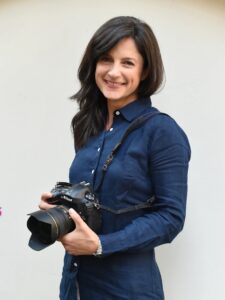
Charlotte Schmitz
Charlotte Schmitz is a German documentary photographer who grew up in the Danish minority in Germany, near Flensburg, and is now based at the German-Danish border. Her bicultural background and fluency in six languages have shaped a practice focused on identity, migration, and belonging. She is a National Geographic Explorer and has been recognized by platforms such as Visura and the Fonds Pascal Decroos for her collaborative approach and long-term research.
Schmitz’s visual language is defined by collaboration and sustained engagement with communities, challenging traditional documentary perspectives that often maintain a distance between photographer and subject. She works on long-term projects that incorporate research and participatory elements, allowing her subjects to have a voice in how their lives are represented. Her subjects range from refugees and sex workers to supporters of Erdogan, reflecting an interest in political and social margins. This method positions her within a broader movement in contemporary photography that prioritizes ethics, consent, and shared authorship.
Among her projects, she has been featured in publications such as Qantara, which described her work as between documentation and activism. Her Instagram profile notes a book of photographs of friends and families, suggesting an interest in intimate, community-based narratives. She was also profiled by World Press Photo’s blog as a “neighborhood photographer,” indicating a commitment to local storytelling. While specific photobook titles are not widely documented in search results, her ongoing projects and collaborations point to a deepening body of work.
As an emerging photographer, Schmitz is part of a generation that questions the ethics and power dynamics of documentary practice. Her collaborative methods align with broader movements in photography that prioritize long-term relationships and community involvement. Her work has been supported by journalism funds and residencies, indicating institutional recognition. She continues to develop projects that bridge documentary and activism, often focusing on communities at the edges of society.
For collectors interested in contemporary documentary and collaborative practices, Schmitz’s work offers a thoughtful counterpoint to traditional photojournalism. Her emphasis on long-term research and community involvement suggests that future publications will be carefully considered. While no major photobook has yet been widely distributed, her growing body of work and online presence—particularly through her Instagram—provide an entry point for those following her career. As she develops new projects, her potential to produce meaningful photobooks makes her a photographer to watch.
Alfstad& Contemporary states that Charlotte Schmitz grew up in the cultural setting of the Danish minority near Flensburg. After an exchange year in Ecuador, she completed a Danish secondary-school education. The gallery records that she studied photojournalism and documentary photography at the University of Applied Sciences and Arts in Hanover. Its biography describes her as living between Berlin and Istanbul at the time of publication and notes that she speaks German, English, Danish, Spanish, French, and Turkish. The accompanying endorsement by Cristina de Middel characterizes Schmitz’s work as personal, experimental, and engaged with contemporary issues.
British Journal of Photography selected Charlotte Schmitz for its 2019 Ones to Watch programme, a group of 19 emerging image-makers chosen from nearly 750 nominations. The profile says she studied photojournalism and documentary photography in Hanover, but emphasizes that her work moves beyond descriptive documentary through collaboration and experimentation. It identifies Polaroid photography as central to her method: the limited number of exposures encourages conversation and permits participants to shape the image. The article discusses projects including Take me to Jermany, La Puente, I am so beautiful, so beautiful, and work made around Moria on Lesbos, all linked by her effort to make photographed people co-authors of their narratives.
Charlotte Schmitz (born 1988, Germany) is presented by Galerie Prima as an artist whose photographic practice uses collaborative methods and a deliberately personal approach. The gallery states that she grew up in Germany’s Danish minority, studied documentary photography in Hanover and visual culture in Copenhagen, and has exhibited internationally. It identifies La Puente as the first recipient of the FotoEvidence W Award in 2019 and notes her feminist interest in collaboration and self-determination. The biography also credits her with founding The Journal, a global collective for women and non-binary photographers, in March 2020.
LFI describes Charlotte Schmitz as a documentary photographer and journalist who combines collaborative methods with long-term research to challenge conventional documentary-photography perspectives. It states that she grew up in Germany’s Danish minority, earned a BA in documentary photography in Hanover, and completed an MA in visual culture in Copenhagen. According to LFI, her work has appeared in outlets including The Washington Post, Der Spiegel, and Die Zeit, and has been exhibited in the United States, Turkey, Austria, and Japan. The profile also records her 2019 FotoEvidence W Award for La Puente and places her current home and work near Flensburg on the Baltic Sea.
Award history
- 2026
Fotobus Library Award
Photography Book Award · Winner
One of ten equal winning photobooks; no ranked order.


-
2012
Series
Begins photographing in Balat, Istanbul
Fotografiska Berlin states that Schmitz first travelled to Istanbul in 2012, when she was 24, and began photographing the Balat neighborhood. The museum identifies this encounter as the beginning of a long-term body of work made through repeated visits and relationships with local families.
Source: Fotografiska Berlin Verified Oct 14, 2026
-
2015–2016
Series
Creates Take me to Jermany
Artdoc reports that Schmitz made the Polaroid series Take me to Jermany between 2015 and 2016. The project follows asylum seekers’ dangerous routes from Turkey toward Europe and incorporates handwritten testimony by the people photographed, making their words part of the photographic object.
Source: Artdoc Photography Magazine Verified Oct 14, 2026
-
2019
Career milestone
Selected for British Journal of Photography’s Ones to Watch
British Journal of Photography included Schmitz in its 2019 Ones to Watch selection. The publication describes the annual feature as a group of 19 emerging image-makers chosen from nearly 750 nominations, and presented her participatory documentary practice through projects including La Puente and Take me to Jermany.
Source: British Journal of Photography / 1854 Photography Verified Oct 14, 2026
-
2019
Award
Wins the FotoEvidence W Award for La Puente
FotoEvidence names Charlotte Schmitz the winner of its 2019 W Award for La Puente. The publisher describes the work as photographs made collaboratively with women working at La Puente, a brothel in Machala, Ecuador: participants chose poses and used nail polish on Polaroids, initially for anonymity and also as a creative intervention.
Source: FotoEvidence Verified Oct 14, 2026
-
2020
Photobook
La Puente is issued by FotoEvidence
FotoEvidence’s book catalogue lists La Puente by Charlotte Schmitz as a 2020 title and identifies it as the winner of the 2019 FotoEvidence W Award. Its dedicated book page records a first edition with 132 pages, 98 Polaroids, 13 bedsheet photographs, and a personal narrative by Schmitz.
Source: FotoEvidence Verified Oct 14, 2026
-
March 2020
Career milestone
Founds The Journal Collective
Friends of Friends identifies Schmitz as the founder of The Journal Collective and dates its founding to March 2020. The article describes the online photography collective as supporting women and non-binary photographers in sharing personal visual narratives from diverse locations and experiences.
Source: Friends of Friends Verified Oct 14, 2026
-
October 2025
Photobook
Publishes Balat
PhMuseum lists Balat as a 2025 photobook by Schmitz, published by VenAmiga in October. It documents women, families, domestic interiors, and celebrations in Istanbul’s Balat neighborhood from 2012 to 2025. The listing credits Schmitz for photographs and text and notes that women and families involved in the project participated in decisions about inclusion, design, and text review.
Source: PhMuseum Verified Oct 14, 2026
-
12 November 2025 – 19 January 2026
Exhibition
Balat at Fotografiska Berlin
Fotografiska Berlin presented Schmitz’s Balat from 12 November 2025 through 19 January 2026. The exhibition brought together around 50 photographs made over more than a decade, documenting everyday life, weddings, and celebrations in the Istanbul neighborhood while addressing the area’s transformation through gentrification.
Source: Fotografiska Berlin Verified Oct 14, 2026

Rania Matar
Shared publisher: White Lion Publishing
6 photobook(s) in the library

Susan Meiselas
Shared publisher: White Lion Publishing
5 photobook(s) in the library

Sim Chi Yin
Shared publisher: White Lion Publishing
4 photobook(s) in the library
Ami Vitale
Shared publisher: White Lion Publishing
4 photobook(s) in the library
COMMUNITY DISCUSSION
Discuss this entry
Share interpretations, reading notes, and source-aware questions. For catalog corrections, use the feedback form below.
No discussion yet. Start the first focused conversation.
Sign in to join the discussion.
Optionally receive a digest when related photobooks are added to the catalog.
See something incorrect? Sign in to suggest a correction or report an issue.