Photographer
Justine Kurland
Justine Kurland (born 1969 in Warsaw, New York) is an American photographer known for her staged, narrative-driven images of American landscapes and the fringe communities that inhabit them. She earned her BFA from the School of Visual Arts in 1996 and her MFA from Yale University in 1998, studying under Gregory Crewdson.
Kurland first gained recognition with the exhibition “Another Girl, Another Planet” (1999), which debuted her celebrated “Girl Pictures” series—staged tableau photographs of adolescent girls portrayed as runaways or feral wanderers in suburban wastelands and wilderness settings. These images, made between 1997 and 2002, challenged traditional representations of girlhood and positioned young women at the center of a radical, utopian imaginary.
Throughout the 2000s, Kurland traveled extensively across the United States and abroad, creating photographic series focused on utopian communes, spiritual seekers, and everyday forms of alternative living. After becoming a mother, she shifted toward photographing pregnant women, mothers, and later trains, hobos, and mechanics—subjects influenced by her son’s evolving interests, extending her exploration of American identity and masculinity.
Her recent work includes the SCUMB Manifesto collage series, which reclaims space for women by physically deconstructing books by canonical male photographers. Kurland’s photographs have been widely exhibited and are held in major museum collections, including the Whitney Museum of American Art, MoMA, the Guggenheim Museum, the Carnegie Museum of Art, and the Getty Museum.


Selected Works & Key Projects
A source-backed introduction to individual photographs and significant bodies of work.
Key projects

Project · 1997–2002
Girl Pictures
Girl Pictures is Kurland’s 1997–2002 series of staged color photographs of adolescent girls encountered during North American road trips. Working with locations, costumes, and collaborative posing, she made apparently candid scenes in which friendship, boredom, danger, and fantasy occupy woods, wastelands, parking lots, and fields. The project matters historically because its early exhibition context was associated with a rising attention to women photographers and to images shaped by a female gaze; it also redirected the American road and frontier tradition away from male wandering. It merits selection as the body of work that established Kurland’s enduring method: using constructed fiction to propose—and complicate—freedom. ([newyorker.com](https://www.newyorker.com/culture/photo-booth/justine-kurland-captures-the-lawless-energy-of-teen-age-girls?utm_source=openai))
View source ↗
Project · 2005–2010
This Train
This Train pairs photographs of Kurland and her young son living on the road with landscapes crossed by freight trains. Made with a 4×5 camera, the project turns patient waits at rail lines and intimate family episodes into parallel sequences; its concertina book format places the two strands back-to-back. The pairing matters because it revises two photographic conventions at once: the American road picture and the family album. Rather than separating monumental landscape from care work, it makes their coexistence visible, while the train photographs bring the histories embedded in western expansion and rail infrastructure into the project’s frame. It merits selection as Kurland’s sustained redefinition of mobility through queer single motherhood. ([justinekurland.com](https://www.justinekurland.com/work/this-train?utm_source=openai))
View source ↗Project · 2019–2021
SCUMB Manifesto
SCUMB Manifesto is a group of unique collages made by dismantling and recombining pages from roughly 150 photobooks by straight white male photographers in Kurland’s library. The original covers and endpapers determine each work’s support and scale, so the physical book remains visible even as its authorship and imagery are disrupted. Drawing its title from Valerie Solanas’s SCUM Manifesto, the project turns collage into a material critique of who has controlled photographic value and historical narrative. It merits selection as Kurland’s decisive move from staging alternative worlds in photographs to physically revising the photobook canon; MoMA’s collection and major 2022 photobook selections document its reception. ([mackbooks.us](https://www.mackbooks.us/products/scumb-manifesto-br-justine-kurland?utm_source=openai))
View source ↗Selected photographs
2001
Toi Toi Fairies
In this large chromogenic print, three children stand barefoot in a stream wearing matching blue clothes and improvised plumed “wings.” The carefully arranged costume, gesture, and dense woodland setting make make-believe appear briefly credible, a characteristic tension in Kurland’s early staged tableaux. The image is a strong selection because it condenses the feminist reworking of pastoral and runaway mythology associated with Girl Pictures: girls do not decorate a wilderness already defined by male adventure; they invent its rites and inhabitants. Its inclusion in the National Gallery of Art’s collection also documents institutional recognition of this formative period. ([nga.gov](https://www.nga.gov/artworks/150597-toi-toi-fairies?utm_source=openai))
Work source ↗2001 · Apache Junction, Arizona
The Pig Roast (Apache Junction, Arizona)
The Pig Roast (Apache Junction, Arizona) stages an adolescent beside a pig on a spit while a child occupies the desert behind her. Its uneasy calm is crucial: the clean shoes, composed posture, and sparse scrubland keep the scene suspended between improvised survival and theatrical play. The photograph belongs to the early work through which Kurland made young women active figures in an American landscape long coded through masculine mobility and conquest. It merits selection as a particularly lucid example of her ability to use a color tableau not to resolve fiction and fact, but to make their friction visible. ([nga.gov](https://www.nga.gov/artworks/150596-pig-roast-apache-junction-arizona?utm_source=openai))
Work source ↗2000
Roadkill
Roadkill is a 2000 chromogenic print from Kurland’s early road-made body of work, preserved by the National Gallery of Art at the large 30-by-40-inch scale used for this group. Its title introduces mortality and roadside violence into an oeuvre often remembered for youthful freedom and pastoral escape. That dissonance is the work’s value: it prevents Kurland’s alternative American landscape from reading as uncomplicated utopia. Selected alongside her staged images of girls in marginal terrain, Roadkill marks the darker register within a practice that repeatedly placed adolescence, vulnerability, and the myth of the open road in productive tension. ([nga.gov](https://www.nga.gov/artworks/150595-roadkill?utm_source=openai))
Work source ↗1999
Wild Things
Wild Things is a 1999 chromogenic print in the National Gallery of Art, made at the outset of the photographs that established Kurland’s reputation for elaborately composed, apparently unguarded scenes of girlhood. The title usefully sharpens a central question in that work: who is allowed to seem wild in the American landscape, and under whose gaze? Rather than treating youth and nature as innocent décor, Kurland’s early tableaux made space for unruly, self-directed female companionship. This print merits selection as part of that historically noted turn toward staged photography that blurred documentary appearance and constructed narrative. ([nga.gov](https://www.nga.gov/artworks/150598-wild-things?utm_source=openai))
Work source ↗1999
12 Point Buck
12 Point Buck shows two figures carrying a deer through a thick, leaf-strewn wood. Its achievement lies in withholding a stable reading: the large color photograph can suggest a hunt, a journey, or an improvised drama, while the carriers remain neither romantic heroes nor passive victims. Kurland uses the visual authority of a detailed landscape tableau to unsettle inherited ideas of wilderness and frontier self-reliance. The work merits selection because it is a concentrated early example of her staged-yet-plausible storytelling, and because museum scholarship has situated such pictures within the renewed attention to women as both subjects and makers of photography. ([nga.gov](https://www.nga.gov/artworks/150592-12-point-buck?utm_source=openai))
Work source ↗-
1969
Career milestone
Born in Warsaw, New York
Kurland was born in Warsaw, New York.
Source: National Museum of Women in the Arts Verified Sep 3, 2026
-
1997–2002
Series
Girl Pictures
Kurland made the Girl Pictures series of staged images of teenage girls on the road in the American wilderness.
Source: Aperture Verified Sep 3, 2026
-
1998
Education
MFA from Yale University
Kurland earned her MFA from Yale University.
Source: National Museum of Women in the Arts Verified Sep 3, 2026
-
1999
Exhibition
Another Girl, Another Planet
Kurland exhibited in the group exhibition Another Girl, Another Planet.
Source: National Museum of Women in the Arts Verified Sep 3, 2026
-
May 26, 2020
Photobook
Justine Kurland: Girl Pictures
Aperture published the book Justine Kurland: Girl Pictures, containing 76 images.
Source: Aperture Verified Sep 3, 2026
-
March 2022
Photobook
SCUMB Manifesto
MACK published SCUMB Manifesto, a volume of Kurland’s collages made from reconfigured photobooks by male artists.
Source: MACK Verified Sep 3, 2026
-
February 2024
Photobook
This Train
MACK published This Train as a concertina-format book presenting two interwoven photographic narratives from Kurland’s road trips with her child.
Source: MACK Verified Sep 3, 2026
Collection
National Gallery of Art
The National Gallery of Art holds Toi Toi Fairies (2001), donated by the Heather and Tony Podesta Collection in 2009.
Verified 2026-09-03National Gallery of Art
Collection
National Museum of Women in the Arts
The museum holds Waterfall, Mama Babies (2006), a gift of the Heather and Tony Podesta Collection.
Verified 2026-09-03National Museum of Women in the Arts
Collection
Whitney Museum of American Art
The Whitney Museum of American Art holds Little River (2002), a chromogenic print acquired with funds from its Photography Committee.
Verified 2026-09-03Whitney Museum of American Art
Collection
Detroit Institute of Arts
The Detroit Institute of Arts holds Frog Swamp (2001), a chromogenic print given to the museum in 2001.
Verified 2026-09-03Detroit Institute of Arts
Collection
Museum of Modern Art
MoMA’s artist record lists four Kurland works online, including Bathers (1998) and three works from SCUMB Manifesto (2020).
Verified 2026-09-03Museum of Modern Art
Representation
Higher Pictures
PhotoWork Foundation states that Kurland works with Higher Pictures in New York.
Verified 2026-09-03PhotoWork Foundation
In Justine Kurland’s Photographs, a Mother and Son Hit the Road (opens a new site)
This review considers This Train, including its paired sequences of Kurland and her son on the road and photographs of rail infrastructure in American landscapes.
Justine Kurland by Bean Gilsdorf (opens a new site)
An interview focused on Kurland’s collages for the Society for Cutting Up Men’s Books and the questions raised by cutting, reconfiguring, and viewing photographic images.
Justine Kurland Reflects on Her Photographs of Teenage Girl Runaways (opens a new site)
Kurland’s 2020 Aperture essay discusses the development of Girl Pictures and its imagined community of teenage runaways.
Justine Kurland's New Series Examines Her Family of Origin (opens a new site)
An excerpt from Aperture Foundation and Parsons School of Design’s Family lecture series. The panel addresses photographic work about family and community and includes Kurland, Zun Lee, and Diana Markosian.
Justine Kurland on Photography as Utopia (opens a new site)
A MoMA Art for All video in which Kurland discusses alternative worlds in relation to girlhood, play, freedom, staged photographs, and collage.
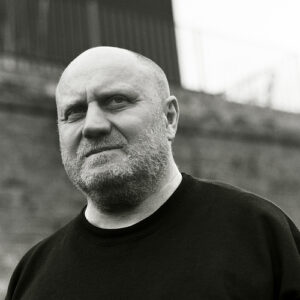
Nick Waplington
Shared publisher: Aperture, MACK
18 photobook(s) in the library
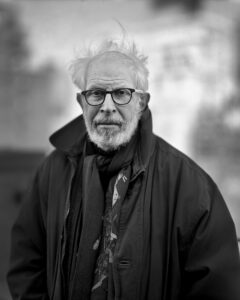
Stephen Shore
Shared publisher: Aperture, MACK
14 photobook(s) in the library

Jason Fulford
Shared publisher: Aperture, MACK
13 photobook(s) in the library
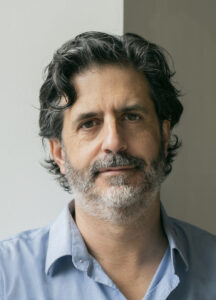
Alec Soth
Shared publisher: Aperture, MACK
13 photobook(s) in the library
COMMUNITY DISCUSSION
Discuss this entry
Share interpretations, reading notes, and source-aware questions. For catalog corrections, use the feedback form below.
No discussion yet. Start the first focused conversation.
Sign in to join the discussion.
Optionally receive a digest when related photobooks are added to the catalog.
See something incorrect? Sign in to suggest a correction or report an issue.