Photographer
Jerry L. Thompson
Jerry L. Thompson is an American photographer and writer known for contemplative black-and-white images of everyday American places and for essays on the nature of photography. He lives in Amenia, New York, and has worked for decades as a photographer, teacher, and author. Thompson studied at Yale University, where he was a student of Walker Evans. Evans’s precise, literary approach to documentary photography left a lasting mark on Thompson’s sensibility, placing him within an American tradition grounded in direct observation, quiet formal control, and sustained attention to vernacular subjects.
Thompson’s visual language is refined but understated. He photographs rural landscapes, industrial structures, modest interiors, and small-town streets, finding formal richness in subjects that might otherwise appear unremarkable. Light, texture, and structure are carefully balanced, while subtle tonal range gives his photographs a palpable sense of time and place. His reserve recalls Evans, yet his patient attention to ordinary details also connects his work with photographers such as Lee Friedlander and Nicholas Nixon. Rather than imposing a dramatic interpretation, Thompson allows meaning to emerge through sustained looking.
Writing is integral to this practice. His essay “Truth and Photography” and his book-length study How Photography Works, published by MIT Press, examine photography’s complicated relationship with truth. For Thompson, the medium is not merely a recording device but a way of thinking about reality, memory, and perception. His writing demonstrates an ability to connect practical questions of photographic craft with broader philosophical concerns, making him an important interpreter of the medium as well as a maker of images.
Among Thompson’s most significant bodies of work is his documentation of Coney Island and the Village. Begun in the 1970s, the project was revisited and substantially edited over three decades before being published by Daylight in 2006 as Coney Island and the Village. The photographs register the changing social and physical character of Coney Island’s boardwalk and Greenwich Village’s bohemian streets, shaping a nuanced account of decline, memory, and change. Thompson also wrote the introductory text for the 2000 edition of Walker Evans’s American Photographs, drawing on his close knowledge of Evans’s work and legacy. From 1973 to 1980, he taught at Yale University, helping connect his artistic and critical concerns to emerging photographers.
For photobook collectors, Coney Island and the Village is the essential entry point to Thompson’s photography. Its carefully sequenced black-and-white images bring together work made across three decades in a cohesive, reflective edit. The book’s restrained presentation leaves room for the photographs to develop their quiet force. Thompson’s writing, especially “Truth and Photography” and his contributions on Evans, is equally valuable to readers interested in the relationship between photographic practice, criticism, and American documentary traditions. Though his output is not large, his position as both artist and writer gives his books a distinctive and lasting significance.
〔PBL-BIO/2〕
Jerry L. Thompson (born 1946) is an American photographer and author. He is best known for his work as an assistant to photographer Walker Evans during Evans’s final years (1973–1975), and for his own photographs of the American landscape and portraits. Thompson also wrote ‘The Last Years of Walker Evans’ (1996), a memoir of his time with Evans. His work is held in major institutions, including the Metropolitan Museum of Art.

Selected Works & Key Projects
A source-backed introduction to individual photographs and significant bodies of work.
Selected photographs

1973 · Coney Island
Coney Island
This 1973 gelatin silver print portrays a young man at Coney Island. The Whitney Museum’s image description identifies an afro, a patched vest, and a copy of Seven Immortals; its collection record supplies the work’s date, medium, and acquisition. It merits selection as a specifically documented image from Thompson’s early Coney Island portrait work, a body of work identified by the Smithsonian as part of his early-1970s practice. The photograph’s presence in the Whitney collection makes it a particularly accessible institutional representative of that project.
Work source ↗
1973 · Coney Island
[Young Man in Striped Cap, Coney Island]
The Metropolitan Museum of Art catalogs this 1973 work as a gelatin silver print and identifies it as [Young Man in Striped Cap, Coney Island]. The work was among photographs found in an original envelope inscribed for Walker Evans and a Yale photography show, and it entered the Met through the Walker Evans Archive in 1994. It merits selection as a second, precisely titled institutional record from Thompson’s Coney Island work and because the Met documents its exhibition in Coney Island: Visions of an American Dreamland, 1861–2008, a traveling survey devoted to the site’s visual history.
Work source ↗
1980
Untitled from the series Lincoln Kirstein and Home
MoMA catalogs this work as an inkjet print, dated circa 1980, from the series Lincoln Kirstein and Home. Its collection image shows a domestic display assembled from a framed work, a standing figure, candles, and other objects. This photograph merits selection because it is an identified component of a named series represented by multiple works in MoMA’s online artist record. It also provides a counterpoint to Thompson’s Coney Island portraits and sculpture documentation: rather than isolating a sitter or museum object, the title and image place the work within a sustained engagement with Lincoln Kirstein and his home.
Work source ↗
1973 · Chesapeake Bay
Walker Evans Aboard the S.S. Delaware, Chesapeake Bay
Dated October 17, 1973, this photograph depicts Walker Evans aboard the S.S. Delaware in Chesapeake Bay. The Metropolitan Museum of Art identifies the medium as a Polaroid SX-70 instant internal dye-diffusion transfer print and records the work as part of the Walker Evans Archive. It merits selection because it fixes Thompson’s photographic record of Evans in a precisely dated setting and medium. The archive provenance gives the work particular documentary value within Thompson’s photographs of Evans, while the Met’s collection record establishes its continuing institutional availability for research.
Work source ↗
1973 · Old Lyme
Walker Evans, Old Lyme
The Metropolitan Museum of Art catalogs this gelatin silver print as Walker Evans, Old Lyme, dated January 1973. It entered the museum through the Walker Evans Archive in 1994. This work merits selection because its exact title, date, medium, and archive provenance identify it securely within Thompson’s photographs of Evans. The image is also a useful representative of the smaller-format prints preserved in the Met’s Photography Department: the museum records an image size of 11.9 by 9.3 centimeters, supporting attention to the work as a specific physical photographic object rather than solely as a portrait subject.
Work source ↗-
1973–1975
Career milestone
Assistant to Walker Evans
Thompson served as Evans's assistant during the photographer's final years. He helped organize Evans's negatives and archives, gaining an intimate perspective on his working methods. This experience directly shaped Thompson's later writing and photography, and he became a key source of information about Evans's later career. The period is documented in his memoir published in 1988.
Source: Wikipedia: Walker Evans Verified Sep 5, 2026
-
1988
Photobook
The Last Years of Walker Evans
This book combines Thompson's photographs with his recollections of working alongside Evans. It provides a rare behind-the-scenes look at the influential photographer's final period, discussing Evans's methods, thoughts, and daily routines. The work is valued for its authenticity and has become an essential resource for understanding Evans's late practice. It also showcases Thompson's own sensitive portraiture and documentary skills.
Source: Yale University Press Verified Sep 5, 2026
-
2003
Photobook
Truth and Photography
A collection of essays that explore the nature of photographic truth and the act of seeing. Drawing on his years as a practitioner and assistant, Thompson reflects on how photographs construct meaning and the ethics of representation. The book has been praised for its clear-eyed and thoughtful analysis, influencing discussions on documentary photography. It establishes Thompson as an important critic as well as a photographer.
Source: David R. Godine Publisher Verified Sep 5, 2026
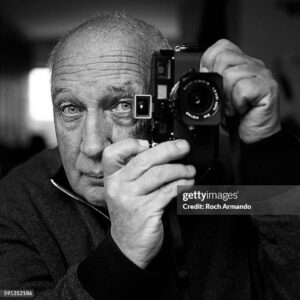
Raymond Depardon
Shared publisher: Thames & Hudson
16 photobook(s) in the library
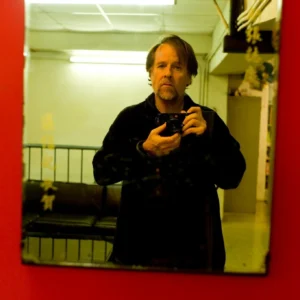
Alex Webb
Shared publisher: Thames & Hudson
15 photobook(s) in the library
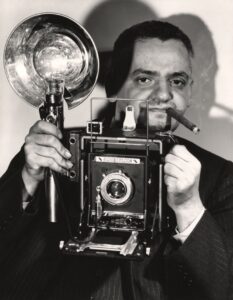
Weegee
Shared publisher: Thames & Hudson
14 photobook(s) in the library
Josef Koudelka
Shared publisher: Thames & Hudson
13 photobook(s) in the library
COMMUNITY DISCUSSION
Discuss this entry
Share interpretations, reading notes, and source-aware questions. For catalog corrections, use the feedback form below.
No discussion yet. Start the first focused conversation.
Sign in to join the discussion.
Optionally receive a digest when related photobooks are added to the catalog.
See something incorrect? Sign in to suggest a correction or report an issue.