Photographer
Robert Capa
Robert Capa (1913–1954), born Endre Ernő Friedmann in Budapest, was a Hungarian-American photojournalist whose fearless approach to documenting conflict made him one of the most influential war photographers of the twentieth century. Forced to flee political repression in Hungary as a teenager, he moved first to Berlin and later to Paris, where he and photographer Gerda Taro invented the persona “Robert Capa” to market their work more successfully.
Capa first gained international attention for his coverage of the Spanish Civil War beginning in 1936. His photograph “The Falling Soldier,” purporting to capture the instant a Republican militiaman was shot, became one of the most iconic and debated war images ever published. After Taro’s death in 1937, Capa continued to work tirelessly, covering the Sino-Japanese War and later emigrating to New York in 1939.
During World War II, Capa produced some of the most enduring images of the conflict, including his legendary photographs of the D-Day landing at Omaha Beach—taken while coming ashore with the first assault wave as the only civilian photographer present. He also documented campaigns in North Africa, Sicily, Italy, the liberation of Paris, and the Battle of the Bulge. His wartime work embodied his famous credo: “If your photographs aren’t good enough, you’re not close enough.”
In 1947, Capa co-founded Magnum Photos with Henri Cartier-Bresson, David “Chim” Seymour, George Rodger, and William Vandivert, establishing the first cooperative agency for independent photojournalists. Though he continued covering conflicts—including the 1948 Arab–Israeli War—he increasingly devoted his energy to guiding Magnum’s younger members. In 1954, while on assignment for Life magazine in Indochina, he stepped on a landmine and was killed. His legacy endures through his photographs, his influence on generations of photojournalists, and the Robert Capa Gold Medal, awarded annually for exceptional courage in photography.
Robert Capa (born Endre Ernő Friedmann, 1913–1954) was a Hungarian-American war photographer and photojournalist. He fled Hungary due to political repression and later established himself in Paris, where he adopted the name Robert Capa. He covered five wars, including the Spanish Civil War, World War II, and the First Indochina War. Notably, he co-founded Magnum Photos in 1947 with Henri Cartier-Bresson and others. Capa died after stepping on a landmine in Indochina. His work, including the iconic ‘The Falling Soldier’ and D-Day photographs, profoundly shaped war photography.


Selected Works & Key Projects
A source-backed introduction to individual photographs and significant bodies of work.
Key projects
Project · 1936–1939
Spanish Civil War Coverage
Capa’s Spanish Civil War work is a sustained body of reporting made during the 1936–39 conflict. ICP identifies recovered negatives by Capa, Gerda Taro, and Chim as an important foundation for modern war photography, while Magnum records that Capa’s coverage appeared regularly from 1936 onward. The project merits selection because it established the arena in which Capa first gained an international reputation, joined battle imagery to civilian experience, and produced photographs that were published internationally. It also remains central to archival research: 4,500 recovered negatives by the three photographers reshaped study of this work.
View source ↗Project · 1938
Death in the Making
Death in the Making is Capa’s first book, published in 1938, and incorporates photographs by Capa, Gerda Taro, and Chim alongside text. ICP describes it as a wartime photobook intended in part to build awareness and support for Republican Spain against Francisco Franco’s fascist insurrection. Its selection is warranted at project level because the work turns dispersed reportage into a designed political narrative, following both temporary Republican successes and wartime terror. Although initially distributed in limited numbers, ICP records that it later became a landmark in photobook history; later archival research has also clarified the individual photographers’ contributions.
View source ↗
Project · 1944
Normandy Invasion
Capa’s Normandy Invasion coverage includes the landing of American troops on Omaha Beach on June 6, 1944. Magnum states that he photographed while advancing with the soldiers during the assault, and characterizes the resulting pictures as a historic record of the Allied invasion of German-occupied France. This project merits selection for its direct proximity to a defining operation of the European war and for its place within Capa’s documented Second World War coverage, which Magnum identifies as genre-defining. At project scale, it preserves an event rather than reducing the achievement to a single frame.
View source ↗Selected photographs

1936 · Spain
The Falling Soldier
This photograph, dated September 1936 by Magnum, depicts a Loyalist soldier at the instant Capa identified as his fatal wounding. Magnum’s biography states that the image earned Capa international recognition and became a potent symbol of war. It warrants selection from his individual photographs because its importance is specifically attached to one compressed human moment: a soldier’s fall stands for the mortal stakes of the Spanish Civil War. It is also a useful anchor for the wider Spanish project, whose subsequent publications and recovered negatives document a much broader conflict.
Work source ↗
1944 · Normandy, France
Omaha Beach during the D-Day Landings
Made on June 6, 1944, this image shows American troops during the Omaha Beach landing. Magnum describes Capa’s Omaha Beach photographs as an invaluable historic record of the Allied invasion and notes that he photographed while moving forward with the soldiers. The photograph merits selection because the individual frame places a soldier in the water amid the landing operation, making proximity to combat visible rather than abstract. It is one of the best-known images associated with Capa’s Normandy coverage and has been issued by Magnum as an estate-stamped gelatin-silver fine print.
Work source ↗-
1936
Career milestone
Adoption of the pseudonym Robert Capa
Endre Friedmann assumed the invented persona of 'Robert Capa' with his partner Gerda Taro to command higher fees for war photographs. This professional identity became his permanent public name, shaping his reputation as a daring frontline photojournalist and enabling bold access to combat zones.
Source: Wikipedia Verified Sep 5, 2026
-
1936–1939
Series
Coverage of the Spanish Civil War
Capa and Taro documented the struggle between the Republic and Franco's nationalists, producing some of the most famous images of the war. His photograph of a loyalist soldier at the instant of death, 'The Falling Soldier', became an emblem of the conflict and defined his intimate, action-focused style.
Source: Wikipedia Verified Sep 5, 2026
-
1938
Career milestone
Coverage of the Second Sino-Japanese War
Capa traveled to China on assignment for Life and other outlets to document the Chinese resistance against Japanese invasion. His photos from this period broadened his scope from European battles to Asian conflict, reinforcing his role as a global war correspondent.
Source: Wikipedia Verified Sep 5, 2026
-
1941–1945
Career milestone
World War II coverage in Europe and North Africa
As a correspondent for Life and other magazines, Capa covered major campaigns, including the Normandy landings. On D-Day at Omaha Beach he exposed several rolls of film; only eleven frames survived a processing accident, yet become icons of frontline journalism. He also documented the liberation of Paris.
Source: Wikipedia Verified Sep 5, 2026
-
1947
Career milestone
Co-founded Magnum Photos
With Henri Cartier-Bresson, David Seymour, George Rodger, and William Vandivert, Capa established the cooperative agency Magnum Photos in Paris. The agency granted photographers copyright ownership and control over assignments, fostering personal projects and reshaping post-war photojournalism as an art and profession.
Source: Wikipedia Verified Sep 5, 2026
-
1947
Photobook
Publication of 'Slightly Out of Focus'
Capa's autobiographical war memoir combined his memorable photographs with witty, first-person narrative, offering a unique blend of reportage and personal reflection. The book became a classic of war literature and underscored his belief that photographers should be intimate participants rather than detached observers.
Source: Wikipedia Verified Sep 5, 2026
-
1948–1949
Career milestone
Documentation of the 1948 Arab-Israeli War
Capa photographed the early days of the state of Israel and its war with neighboring states. His images captured the human cost and resilience of civilians and soldiers alike, extending his coverage to modern Middle East conflicts.
Source: Wikipedia Verified Sep 5, 2026
-
1954
Career milestone
Death in Indochina
While covering the French Indochina War in Vietnam for Life, Capa stepped on a landmine and was killed at age 40. His death highlighted the occupational hazards of conflict photographers and cemented his legendary status as a committed war correspondent.
Source: Wikipedia Verified Sep 5, 2026
Archive
International Center of Photography
The ICP holds the Robert Capa Archive, comprising negatives, contact sheets, and personal papers. Founded by Capa's brother Cornell Capa in 1974 to preserve the legacy of Capa and other concerned photographers, the archive chronicles Capa's coverage of five wars. It serves as the primary institutional repository for his work, supporting scholarship and exhibitions.
Verified 2026-09-05Wikipedia – Robert Capa
Representation
Magnum Photos
Capa co-founded Magnum Photos in 1947 along with Henri Cartier-Bresson, David Seymour, George Rodger, and William Vandivert. As a cooperative agency, Magnum represents Capa's work and has distributed his photographs worldwide. The agency's modern website features his portfolio, ensuring ongoing visibility and licensing of his images.
Verified 2026-09-05Magnum Photos – Robert Capa
Collaboration
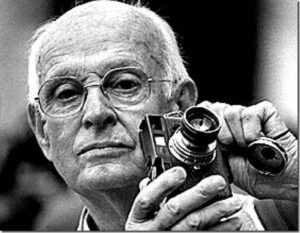
Henri Cartier-Bresson
Robert Capa, a Hungarian war photographer, was a close colleague and co-founder of Magnum Photos alongside Cartier-Bresson in 1947. Their working relationship spanned the agency's formative years, and they shared assignments across conflict and humanitarian zones. Though Capa favored active battlefronts while Cartier-Bresson sought the decisive moment, their complementary approaches defined a humanistic vision that guided Magnum's documentary ethos.
Verified 2026-09-04Wikipedia – Robert Capa
Collaboration
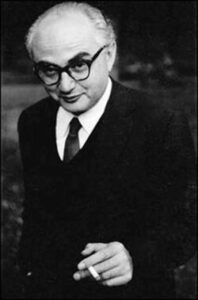
David Seymour
Capa collaborated with David Seymour (known as Chim) during the Spanish Civil War and later together they co-founded Magnum Photos in 1947. Their working relationship exemplified mutual support among war photographers and was essential to the establishment of an independent photographer-run agency.
Verified 2026-09-05Magnum Photos – History
Robert Capa: Photographs (opens a new site)
The Philadelphia Museum of Art’s exhibition record describes a 1997–1998 retrospective drawn largely from the Robert Capa Archive at ICP, supplemented by Spanish Civil War prints from Cornell Capa’s collection and photographs by Gerda Taro. It frames Capa’s coverage of five wars alongside a broader concern with individual experience, making it a useful museum source for the range and human focus of his work.
This Is War! Robert Capa at Work (opens a new site)
This International Center of Photography exhibition page presents Robert Capa at Work as a reassessment of Capa’s photojournalistic innovations during the 1930s and 1940s. The resource is especially valuable for studying how assignments, contact sheets, captions, magazine layouts, and surviving prints can clarify the making and publication of his photographs rather than treating individual images in isolation.
Robert Capa (opens a new site)
International Center of Photography’s archive record introduces Capa as André Friedmann, outlines his move from Hungary to Berlin and then Paris, and notes his early work as a darkroom assistant. It is a useful institutional starting point because it situates his career within ICP’s archival context and documents his associations with Henri Cartier-Bresson and David Seymour in Paris.
The World We Wanted to Live In: Robert Capa (opens a new site)
RTVE’s Spanish-language documentary examines Capa’s professional trajectory and the historical impact of his visual treatment of the Spanish Civil War, including the exodus to France. Directed by Oriol Querol i Ferre, it provides a longer-form audiovisual resource centered on Capa’s Spanish work and on the historical consequences of representing conflict and displacement photographically.
Robert Capa Photo Retrospective (opens a new site)
This Charlie Rose interview brings together Capa biographer Richard Whelan and Michael Hoffman, curator of a Robert Capa exhibition at the Philadelphia Museum of Art. The discussion is a valuable recorded supplement to exhibition research because it connects biographical interpretation with curatorial presentation and addresses the photographer’s career through the lens of his war photography.
COMMUNITY DISCUSSION
Discuss this entry
Share interpretations, reading notes, and source-aware questions. For catalog corrections, use the feedback form below.
No discussion yet. Start the first focused conversation.
Sign in to join the discussion.
Optionally receive a digest when related photobooks are added to the catalog.
See something incorrect? Sign in to suggest a correction or report an issue.