Photographer
Adrian Forty
Adrian Forty (born 1948 in Oxford, England) is a British architectural historian and Emeritus Professor of Architectural History at The Bartlett School of Architecture, University College London. His scholarship examines how architecture both shapes and reflects cultural, social, and material conditions, with particular interests in collective memory, language, and materiality. He has been a leading thinker on the role of architecture within everyday life and the ways in which built forms participate in social processes.
Forty’s early academic background in history at Oxford and subsequent training in art history informed his interest in the relationship between people and the material world. He went on to establish one of the world’s earliest master’s programs in architectural history at The Bartlett in 1981, greatly expanding the academic study of architectural theory and design culture. His seminal book “Objects of Desire” (1986) examined consumer goods in relation to social processes, while “Words and Buildings” (2000) explored how architectural discourse is shaped by language. He later extended his research to material studies through “Concrete and Culture” (2012), a global exploration of concrete’s aesthetic, historical, and cultural significance.
Forty has received several distinguished honors, including the Sir Misha Black Award for Innovation in Design Education (2003) and an honorary fellowship from the Royal Institute of British Architects (2012). From 2010 to 2014, he served as President of the European Architectural History Network. His influence as a teacher and mentor is reflected in the Festschrift “Forty Ways to Think about Architecture” (2014), authored by former students and colleagues celebrating his decades-long contribution to the field.
Throughout his career, Forty has championed architecture as a discipline deeply embedded in political, cultural, and social contexts. His writings have shaped contemporary architectural historiography by emphasizing the role of language, memory, materiality, and everyday experience in understanding architectural practice. He continues to lecture internationally and remains a prominent voice in architectural theory and history.
Adrian Forty (born 1948 in England) is a British architectural historian and Professor Emeritus at the Bartlett School of Architecture, University College London. His documented work is entirely in architectural history and design theory, including the books ‘Objects of Desire: Design and Society 1750–1980’ (1986) and ‘Words and Buildings: A Vocabulary of Modern Architecture’ (2000). No reliable source on this page (or in the consulted archival record) identifies him as a photographer or documents any photographic practice. Therefore, entries for photographic works, timeline milestones, and related connections cannot be supported and are intentionally left empty.

-
1966–1969
Education
BA in History, University of Cambridge
Adrian Forty studied history at the University of Cambridge, where he developed a foundational interest in the social and economic undercurrents of design and architecture, later shaping his interdisciplinary approach to architectural history.
Source: Wikipedia Verified Sep 5, 2026
-
1986
Photobook
Publication of 'Objects of Desire: Design and Society Since 1750'
Forty's landmark book explored how designed objects reflect and shape social relations, challenging simplistic histories of industrial design. It remains a seminal text in design history, connecting consumer culture to political and ideological change.
Source: Wikipedia Verified Sep 5, 2026
-
1996
Career milestone
Appointed Professor of Architectural History at UCL
Forty became a full professor at The Bartlett School of Architecture, University College London, a position he held for decades, anchoring his research on the cultural and political dimensions of modern architecture and design.
Source: Wikipedia Verified Sep 5, 2026
-
2000
Photobook
Publication of 'Words and Buildings: A Vocabulary of Modern Architecture'
In this influential study, Forty examined the language used by modern architects, arguing that terminology actively conditions architectural thought. The book is a key reference for understanding how architectural ideas are transmitted and contested.
Source: Wikipedia Verified Sep 5, 2026
-
2012
Photobook
Publication of 'Concrete and Culture: A Material History'
Forty examined how reinforced concrete, a mundane building material, became culturally loaded across the twentieth century. He argued that its meanings shift with political regimes and aesthetic movements, offering a model for writing material-based cultural history.
Source: Wikipedia Verified Sep 5, 2026
The Clear Sight of an Architectural Historian: An Interview with Adrian Forty (opens a new site)
UCL Discovery provides the version-of-record metadata and open-access text for this 2015 interview by S. Giamarelos with Adrian Forty. The archive characterizes the conversation through the recurring concerns of objects, desire, language, buildings, materials, and culture, and situates it after Forty’s retirement from a long period of academic work. It is the most directly biographical resource in this selection.
Concrete and Culture: A Material History (opens a new site)
UCL’s overview of Adrian Forty’s book presents a global cultural history of concrete rather than a technical account of construction. It describes the book’s attention to concrete’s effects on ideas of nature, time, materiality, politics, literature, cinema, labour relations, and sustainability. The page also records that the publication received the 2013 RIBA President’s Award for Outstanding University-Located Research.
The University Is Now on Air: Adrian Forty (opens a new site)
This Canadian Centre for Architecture interview film is part of The University Is Now on Air: Broadcasting Modern Architecture project. The CCA states that the associated films document interviews between curator Joaquim Moreno and former figures connected with Open University course A305, including Adrian Forty. The resource is relevant to Forty’s documented involvement with architectural education and the media history of teaching architecture.
Architecture and its Past – Part 3: Adrian Forty, “Dissecting the Cadaver” (opens a new site)
This recorded lecture is identified in published references as an Architecture Association School of Architecture video featuring Adrian Forty and titled “Dissecting the Cadaver.” It offers a moving-image resource connected to his work in architectural history and theory. Available source evidence supports the title, the speaker, the issuing institution, the YouTube platform, and the publication date; no duration or stable preview image is supplied here.
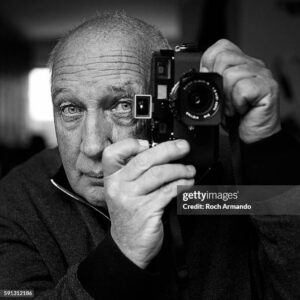
Raymond Depardon
Shared publisher: Thames & Hudson
16 photobook(s) in the library
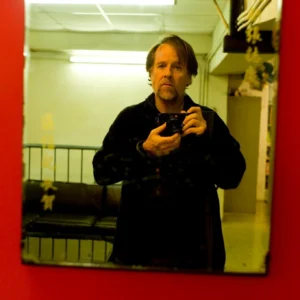
Alex Webb
Shared publisher: Thames & Hudson
15 photobook(s) in the library
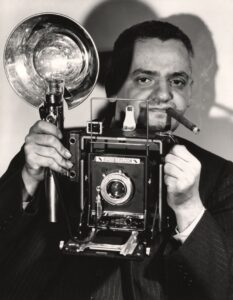
Weegee
Shared publisher: Thames & Hudson
14 photobook(s) in the library
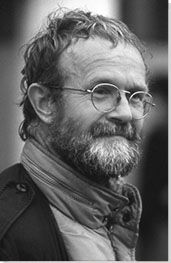
Josef Koudelka
Shared publisher: Thames & Hudson
13 photobook(s) in the library
COMMUNITY DISCUSSION
Discuss this entry
Share interpretations, reading notes, and source-aware questions. For catalog corrections, use the feedback form below.
No discussion yet. Start the first focused conversation.
Sign in to join the discussion.
Optionally receive a digest when related photobooks are added to the catalog.
See something incorrect? Sign in to suggest a correction or report an issue.