Photographer
Lisette Model
Lisette Model (1901–1983) was an Austrian-born American photographer celebrated for her uncompromising, emotionally charged street photography. Born Elise Amelie Felicie Stern in Vienna, she grew up in a cultured, multilingual household and studied music with composer Arnold Schoenberg, whom she later described as her greatest artistic influence. After her father’s death, she moved to Paris, where she pursued both music and visual art before discovering photography through her sister and fellow émigré photographers.
Model’s first major series, “Promenade des Anglais” (1934), produced in Nice, showcased her bold, satirical approach to photographing the affluent leisure class. These striking images were published in European journals and established her early reputation. In 1938, she and her husband, painter Evsa Model, emigrated to New York, where the city’s dynamism became her primary subject. Throughout the 1940s her work appeared in leading publications such as Harper’s Bazaar, PM’s Weekly, and US Camera, and she joined the Photo League while exhibiting in major shows, including MoMA’s landmark 1940 survey “Sixty Photographs.”
Model’s New York photographs—portraits of ordinary passersby, reflections in shop windows, and unguarded scenes of urban life—helped redefine American documentary photography. Known for her direct, visceral style, she photographed instinctively and without hesitation, seeking moments of psychological intensity and human truth. Her work influenced the direction of photographic modernism and resonated with the Surrealist interest in the uncanny details of the everyday.
Beginning in 1951, she taught at the New School for Social Research for more than thirty years. As one of the most influential photography educators of the postwar period, she mentored numerous students who became major figures, including Diane Arbus. Model’s photographs are held in major museum collections such as the National Gallery of Canada, the J. Paul Getty Museum, and the National Portrait Gallery. Her legacy endures through her groundbreaking street photography and her profound impact as a teacher.
Lisette Model was an Austrian-born American photographer known for her candid street photography in Paris and New York, as well as her portraits of musicians and eccentrics. She began studying music with Arnold Schoenberg but turned to photography in the 1930s. Her work often featured social commentary, using a hand-held camera to capture subjects with directness and psychological insight. She moved to the United States in 1938 and later taught at the New School for Social Research, influencing many students including Diane Arbus. Model’s photography gained recognition for its empathetic yet unflinching portrayal of everyday life.


Selected Works & Key Projects
A source-backed introduction to individual photographs and significant bodies of work.
Key projects

Project · 1934–1935
Promenade des Anglais
Model began this series of portraits on Nice’s Promenade des Anglais in July 1934. Its close studies of wealthy sitters—people lounging in chairs, smoking, or reading—are among her most celebrated photographs. The series matters because it established a socially critical approach to affluent public leisure: Centre Pompidou characterizes one 1937 image as a forceful critique of the Riviera bourgeoisie, while MoMA records that the photographs were published in Regards in 1935. It merits selection as the early body of work in which Model made class, bodily presence, and candid observation central photographic subjects.
View source ↗
Project · 1939–1945
Window Reflections
Made after Model’s move to New York, the Window Reflections series uses plate glass to merge passersby, merchandise, architecture, and street traffic into layered images. LACMA identifies it as the first body of work she made in her adopted city and notes its fusion of street bustle with luxury display. The series is significant for its allover visual organization, compared by LACMA to the equal weighting of tones in Schoenberg’s twelve-tone method. The Met further places these photographs between European photographic currents and the emerging shadowed mood of film noir, making the series a key statement of Model’s urban modernism.
View source ↗
Project · 1945–1961
Jazz Musicians
Model’s jazz photographs are closely framed studies of musicians performing, made between 1945 and 1961. The Met describes nine images of now-famous players, including John Lewis, George Lewis, Louis Armstrong, and Dizzy Gillespie, and emphasizes Model’s concentration on fleeting emotional states without confronting the performers directly. This project is significant because it joins her musical background to a photographic language of dynamic composition and offbeat lighting; it also records an unrealized plan for a book with poems by Langston Hughes. It merits selection as her sustained, intimate contribution to visual histories of jazz performance.
View source ↗Selected photographs
1937 · Nice, France
French Riviera [Promenade des Anglais, Nice]
This 1937 gelatin silver print shows a seated woman on the Promenade des Anglais and belongs to the body of work through which Model examined the social world of the Riviera. Centre Pompidou places the photograph within social realism and describes it as a forceful critique of the Côte d’Azur bourgeoisie; it also records that Model published related photographs in Regards the following year. The work merits selection because it makes the project’s social argument concrete in an individual, tightly focused portrait, while being held in the French national modern-art collection.
Work source ↗
1939 · New York City, United States
First Reflection, New York
First Reflection, New York is a gelatin silver print made in 1939–40 and printed in the 1940s. The Met identifies it as part of Model’s Reflections series of plate-glass-window photographs, in which a mysterious figure’s interior reflection becomes a field of flickering bulbs and difficult-to-read signs. The museum calls these works seminal, locating them at the meeting point of Atget and New Vision photography and noting their anticipation of film noir’s brooding, shadow-filled aesthetic. This photograph merits selection as a concentrated example of how Model turned a city window into a psychologically charged urban image.
Work source ↗1941 · United States
Reflections
This circa-1941 gelatin silver print layers silhouetted people and automobiles with the reflected façade of a city building. LACMA identifies it as part of the Window Reflections series, Model’s first body of work in her adopted city, and describes that series as conflating street activity with the glamour of luxury goods. Its selection is warranted not simply as an example of reflection photography, but because LACMA connects its even distribution of visual tones to the allover structure of Schoenberg’s twelve-tone technique. The image therefore crystallizes the series’ urban subject and its distinctive compositional logic.
Work source ↗1939 · New York City, United States
Coney Island Bather, New York
Coney Island Bather, New York, a circa-1939 gelatin silver print, depicts a reclining woman on wet sand with waves behind her. The Met identifies the sitter as one of Model’s most iconic subjects and states that the image came from her first assignment for Harper’s Bazaar. In 1941 the magazine published an alternate, standing view of the same woman for a story about Coney Island bathing; the reclining “cheesecake” pose was apparently judged too provocative for that use. This photograph merits selection for its documented editorial origin, its unusual publication history, and its central place among Model’s Coney Island subjects.
Work source ↗1956 · New York City, United States
[John Lewis, New York Jazz Festival]
This gelatin silver print, dated 1956–61, portrays pianist John Lewis at the New York Jazz Festival. The Met includes it among nine closely framed photographs made between 1945 and 1961 of musicians absorbed in performance. The museum notes that Model generally presented players individually, sometimes with a graphic backdrop or another musician, and that her jazz pictures register transitory emotional states without direct engagement between photographer and performer. It merits selection as a named portrait within Model’s sustained jazz project, linking her characteristic intimate framing to a major twentieth-century musician and to New York’s festival scene.
Work source ↗-
1933
Career milestone
Turned to Photography
After receiving a camera from her sister, Lisette Model decided to become a photographer, leaving her earlier training as a musician and composer.
Source: Wikipedia Verified Sep 5, 2026
-
1934
Series
Promenade des Anglais Series
In Nice, France, Model photographed the idle wealthy strolling the Promenade des Anglais, creating a satirical yet compassionate portrait of class and appearance that set the theme for her later work.
Source: Wikipedia Verified Sep 5, 2026
-
1938
Career milestone
Emigration to New York
Model and her husband Evsa fled Europe and settled in New York, where she turned her lens onto the city’s streets and diverse inhabitants.
Source: Wikipedia Verified Sep 5, 2026
-
1941
Exhibition
First Solo Exhibition at the Photo League
Model’s first one-person show took place at the New York Photo League, a hub for socially conscious documentary photography.
Source: Wikipedia Verified Sep 5, 2026
-
1947
Education
Begins Teaching at the New School
Model began a long association with the New School for Social Research, where she influenced students including Diane Arbus.
Source: Wikipedia Verified Sep 5, 2026
Collection
Museum of Modern Art (MoMA)
MoMA holds a significant collection of Lisette Model's photographs, including her iconic street portraits from the 1930s-40s. The museum's acquisition and exhibition of her work contributed to her recognition as a major figure in 20th-century photography. Her prints are part of the permanent collection, accessible via the MoMA website.
Verified 2026-09-05Wikipedia – Lisette Model
Collection
Metropolitan Museum of Art
The Metropolitan Museum of Art in New York holds examples of Lisette Model's photography, reflecting her influence on street and documentary photography. Her works are part of the museum's photography collection, which includes both vintage and later prints.
Verified 2026-09-05Wikipedia – Lisette Model
Collection
San Francisco Museum of Modern Art (SFMOMA)
SFMOMA houses a number of Lisette Model's photographs, demonstrating her lasting importance on the West Coast as well as in New York. The museum's collection includes her work from various periods, often exhibited in thematic contexts.
Verified 2026-09-05Wikipedia – Lisette Model
Other institution
Photo League
Lisette Model was a member of the Photo League, a New York-based collective of photographers active in social documentary work during the 1930s-50s. Her association with this group placed her among progressive photographers who used the medium for social change.
Verified 2026-09-05Wikipedia – Lisette Model
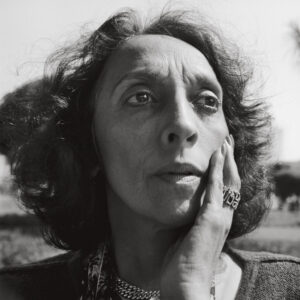
Influence & affinity
Rosalind Fox Solomon
Solomon studied with photographer Lisette Model in the early 1970s, who influenced her direct and empathetic portraiture.
Verified 2026-09-03Wikipedia
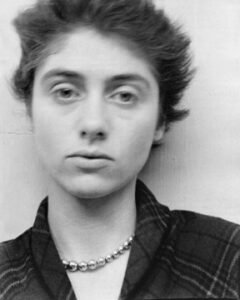
Influence & affinity
Diane Arbus
Lisette Model was a prominent American photographer and teacher who taught Diane Arbus in the late 1950s. Model encouraged Arbus to pursue her own subjects with directness and psychological depth, significantly influencing Arbus's mature style. Arbus later acknowledged Model's impact on her approach to portraiture and street photography.
Verified 2026-09-05Wikipedia – Diane Arbus
Lisette Model (opens a new site)
Fundación MAPFRE’s collection-catalogue profile situates Model within North American direct photography. It identifies her direct portraiture, low viewpoints, radical framing, and high-contrast black-and-white printing, and names Promenade des Anglais, Reflections, and Running Legs among her noted series. The entry also addresses her teaching and its documented impact on later photographers.
Lisette Model biography (opens a new site)
A year-by-year museum chronology covering Model’s Vienna and Paris training, her move to New York in 1938, early publications and exhibitions, teaching, jazz work, and later retrospectives. It is a useful factual starting point because it ties major photographs and series to dated professional milestones.
What Lisette Model Saw in Jazz (opens a new site)
David A. Graham’s editorial essay examines Model’s jazz photographs and her unrealized plan for a book pairing the images with an essay by Langston Hughes. It notes that she left approximately 1,800 negatives from the project, many unprinted, and reproduces photographs of musicians including Miles Davis, Art Taylor, Billie Holiday, Ray Nance, and Duke Ellington.
Special interview with Larry Fink talking about Lisette Model (opens a new site)
An interview with photographer Larry Fink, presented by CAMERA and conducted by Monica Poggi, curator of CAMERA’s Lisette Model exhibition. CAMERA states that Fink took private courses with Model in 1958 and that their encounter developed into a close friendship. The program is especially useful for studying Model’s teaching through the testimony of a former student.
COMMUNITY DISCUSSION
Discuss this entry
Share interpretations, reading notes, and source-aware questions. For catalog corrections, use the feedback form below.
No discussion yet. Start the first focused conversation.
Sign in to join the discussion.
Optionally receive a digest when related photobooks are added to the catalog.
See something incorrect? Sign in to suggest a correction or report an issue.