Photographer
Daniel Gordon
Daniel Gordon (born 1980) is an American artist who lives and works in Brooklyn, New York. He belongs to a generation of image-makers who treat the camera less as a window onto the world than as a device for recording things that did not previously exist. Where a documentary photographer goes out to find a subject, Gordon builds one first, out of printed pictures and paper, and only then photographs it. This reversal — construction before exposure — is the hinge on which his whole practice turns.
His visual language is immediately recognisable: saturated colour, compressed and slightly unstable space, and forms that seem to hover between two and three dimensions. The raw material is photographic — images culled from magazines, catalogues, packaging and the internet — which he prints, cuts, crushes, tapes and layers into physical objects. Fruits, flowers, vases, faces and bodies are assembled as paper sculptures and then re-photographed, so that the final print is simultaneously a document of a real object and an obvious fabrication. Edges of cut paper, seams, wrinkles and tape remain visible, deliberately refusing the seamlessness of digital compositing even as the pictures borrow its brightness.
Across his career he has returned repeatedly to a few enduring subjects: the still life, especially arrangements of fruit and flowers; the portrait, in which sitters are reconstituted from fragments of other photographs; and larger studio tableaux in which human figures, props and backgrounds are all made from the same printed material. What distinguishes these works from the collage tradition is that nothing is pasted flat onto a surface. The collage happens in three-dimensional space, in front of the lens, so the camera is not a neutral recorder but the final stage of the making process. The result occupies an awkward, productive place between photography, sculpture and painting, and it invites the viewer to keep asking what is being depicted and what is merely printed.
Critically, Gordon’s work is often discussed in relation to the Pictures Generation and to later artists who work with appropriation and digital image culture, though his method differs from theirs in its insistence on physical craft and studio labour. Where appropriation art recycles existing images as images, he converts them back into matter and then re-photographs it. This makes his pictures unusually revealing about how photographs circulate: as cheap, disposable, endlessly reproducible surfaces that can nevertheless be handled, torn and rebuilt. His teaching and his presence in the contemporary photography conversation have kept that question — what a photograph is made of — alive for a younger generation of artists.
For collectors of photobooks and contemporary photography, Gordon’s work rewards close physical attention. Because the subject is literally paper, the printed page is an unusually sympathetic home for it; the grain of the reproduction, the weight of the stock and the sequencing of images can either amplify or flatten the tension between flatness and volume that drives the work. It is worth looking at how individual pictures are cropped and paired, since his arrangements depend on adjacency and colour rhythm rather than on single heroic images. A useful entry point is to follow the still lifes first, then the portraits, and to notice how the same construction logic scales up from a domestic tabletop to a full studio set.
Aperture’s catalogue page for Daniel Gordon’s Still Life documents the artist’s monograph from the photography publisher, presenting a body of colour still-life pictures made from collaged paper, printed imagery and studio-built forms that he assembles and then photographs. Publishing the work as a sustained sequence clarifies what distinguishes the series: rather than photographing found reality, Gordon photographs a temporary sculpture he has made, so the print is evidence of a physical event. It is the most widely distributed gathering of this central strand of his work and a standard reference for it.
An editorial interview with Daniel Gordon published by Interview, in which the photographer speaks about the making of his collage-based images: the sourcing of printed and digital material, the building of objects in the studio, and the decision to photograph those objects rather than assemble a picture on a screen. First-person accounts of this kind are valuable because the work’s meaning depends on the labour and improvisation behind the finished print, and the magazine is an established editorial venue rather than a promotional listing.
The Museum of Modern Art’s online presentation of New Photography 2010 documents Daniel Gordon’s inclusion in the museum’s recurring survey of recent photographic work. His contribution centred on large colour photographs of three-dimensional tableaux that he builds by hand out of printed and screen-sourced images and then re-photographs, so the finished picture records a physical, constructed object rather than a digital composite. MoMA’s selection placed this method inside a period conversation about photographic authorship in an image-saturated culture, and this exhibition remains the showing most often cited when his practice is introduced.
The New York Times topic page collects the paper’s coverage relating to Daniel Gordon, gathering reviews, profiles and exhibition notices in one index. As a record of press reception it shows how consistently his work has been discussed in the mainstream art and photography pages over successive exhibitions and publications, and it provides dated, editorially vetted documentation that can be used to corroborate claims made elsewhere. It is useful precisely because it is an index of secondary literature rather than a single promotional text.

Selected Works & Key Projects
A source-backed introduction to individual photographs and significant bodies of work.
Key projects
Project · 2007
Thin Skin II
Thin Skin II was a 2007 exhibition at Zach Feuer Gallery in New York. Its accompanying text describes photographs of temporary sculptures assembled from other photographs, usually found online, and identifies works such as Jacob and Justine as surrogate portraits of Gordon’s brother and sister. The presentation is significant within his larger practice because it foregrounded an early tension that would remain central: intimate or grotesque subject matter appears through deliberately awkward photographic construction. It merits selection as a documented early statement of Gordon’s challenge to conventional photographic beauty, finish, and documentary expectation.
View source ↗Project · 2010–2011
Still Lifes, Portraits & Parts
Still Lifes, Portraits & Parts brought together photographs made over 2010–11 for Gordon’s first solo exhibition at Wallspace and his first one-person New York presentation since 2007. The exhibition organized its works as still lifes, portraits, and “parts”: images between landscape and abstraction made from elements reused from other pictures. Gordon sourced images online, built temporary three-dimensional paper tableaux, photographed them with an 8 × 10 view camera, then dismantled and reused their components. This project merits selection because it explicitly crystallized the recycling-based procedure and three-part taxonomy central to his early mature practice.
View source ↗Selected photographs
2020
Still Life with Tennis Balls and Racket
Still Life with Tennis Balls and Racket belongs to the lockdown-period body of work presented in Green Apples and Boots. Huxley-Parlour identifies the 2020 photograph as a scene containing Nike Air Max trainers, fruit, tennis balls, and a racket against a neon geometric pattern. The displayed objects are covered with cutout images of themselves, so functional things become constructed imitations. This photograph merits selection because it concentrates the exhibition’s documented turn to household possessions and exercise equipment, making Gordon’s questions of reproduction, material construction, and still-life convention unusually legible in one work.
Work source ↗2021
Summer Still Life with Lobster and Fern
Summer Still Life with Lobster and Fern was included in Green Apples and Boots as a 2021 pigment print. The gallery describes it as a hybrid still life in which Gordon combines his own photographs, magazine images, and online printouts, relocating them within a constructed scene of flowers, fruit, foliage, and patterns. Differing lighting and viewpoints make the tableau intentionally unstable, while the arrangement joins pasted reproductions to objects that appear materially present. It merits selection because it offers a clearly documented example of Gordon using the historical still-life format to stage several visual realities in one photographic frame.
Work source ↗-
1980
Career milestone
Born in Boston, Massachusetts
Daniel Gordon was born in Boston, Massachusetts, in 1980. This is the earliest documented biographical fact in his public record and sets the American East Coast framework in which he later trained as an artist and built a photographic practice.
Source: Wikipedia Verified Sep 29, 2026
-
2001–2004
Series
Flying Pictures
"Flying Pictures" is an early body of work in which Gordon photographed himself leaping into the air, timing exposures so that his body appears suspended. Made while he was a student and shortly after, the series is documented as an important early project and marks the beginning of his long-standing use of staged, physical actions in front of the camera.
Source: Wikipedia Verified Sep 29, 2026
-
2003
Education
BA, Bard College
Gordon received a BA from Bard College in Annandale-on-Hudson, New York. Bard is documented as his undergraduate institution and precedes his graduate training in photography, forming the first formal stage of his art education.
Source: Wikipedia Verified Sep 29, 2026
-
2006
Education
MFA, Yale University School of Art
Gordon earned an MFA from Yale University in 2006. The degree is documented as his terminal graduate qualification and places his formation within a prominent American photography program before he began exhibiting in New York.
Source: Wikipedia Verified Sep 29, 2026
-
From 2010
Series
Photographed paper constructions: still lifes and portraits
From around 2010 Gordon built three-dimensional still lifes and portrait subjects out of cut and glued paper, then photographed the resulting constructions rather than presenting them as sculpture. The images are documented as central to his mature practice, using vivid colour, crude seams and visible paper texture to complicate the boundary between photograph and handmade object.
Source: Wikipedia Verified Sep 29, 2026
-
2019
Photobook
Monograph "Houseplants"
Aperture published a monograph of Gordon's plant imagery under the title "Houseplants" in 2019. The volume gathers photographs in which domestic plants, reconstructed in paper and photographed, extend his interest in the still life tradition into book form.
Source: Aperture Verified Sep 29, 2026
Representation
Nazarian / Curcio
Nazarian / Curcio announced on June 17, 2023 that it was welcoming Daniel Gordon to its artist program. The gallery’s current artist page presents Gordon’s works and biography.
Verified 2026-09-29Nazarian / Curcio, “Now Representing Daniel Gordon”
Collection
Museum of Modern Art (MoMA)
MoMA’s artist record lists two Daniel Gordon works online: Nude Portrait (2008) and Red Headed Woman (2008). Its collection record for Nude Portrait identifies the work as a chromogenic print in MoMA’s Department of Photography.
Verified 2026-09-29Museum of Modern Art, Daniel Gordon artist record
Collection
Solomon R. Guggenheim Museum
A Guggenheim media alert for its 2019 Young Collectors Party names Daniel Gordon among artists represented in the Guggenheim collection through acquisitions supported by the Young Collectors Council Art Fund.
Verified 2026-09-29Solomon R. Guggenheim Museum, 2019 Young Collectors Party media alert
Collection
Pier 24 Photography
Nazarian / Curcio’s Daniel Gordon artist profile states that Gordon’s work resides in the collection of Pier 24, San Francisco. The same profile records his participation in Pier 24’s 2016 exhibition Secondhand.
Verified 2026-09-29Nazarian / Curcio, Daniel Gordon artist page
Collection
Foam
Nazarian / Curcio’s Daniel Gordon artist profile identifies Foam Museum in Amsterdam as a collection holding Gordon’s work. It also lists Gordon’s 2014 solo exhibition Shadows, Patterns, Pears at Foam Museum.
Verified 2026-09-29Nazarian / Curcio, Daniel Gordon artist page
Collection
Los Angeles County Museum of Art (LACMA)
Nazarian / Curcio’s Daniel Gordon artist profile lists the Los Angeles County Museum of Art among the institutions whose collections contain Gordon’s work.
Verified 2026-09-29Nazarian / Curcio, Daniel Gordon artist page
Collection
Museum of Fine Arts, Houston
Nazarian / Curcio’s Daniel Gordon artist profile lists the Museum of Fine Arts, Houston among the collections in which Gordon’s work resides.
Verified 2026-09-29Nazarian / Curcio, Daniel Gordon artist page
Collection
Norton Museum of Art
Nazarian / Curcio’s Daniel Gordon artist profile lists the Norton Museum of Art in West Palm Beach, Florida, among the institutions whose collections contain Gordon’s work.
Verified 2026-09-29Nazarian / Curcio, Daniel Gordon artist page
Collection
High Museum of Art
Nazarian / Curcio’s Daniel Gordon artist profile names the High Museum of Art in Atlanta as a collection holding Gordon’s work.
Verified 2026-09-29Nazarian / Curcio, Daniel Gordon artist page
Collection
Fine Arts Museums of San Francisco
Nazarian / Curcio’s Daniel Gordon artist profile lists the Fine Arts Museums of San Francisco among the collections in which Gordon’s work resides.
Verified 2026-09-29Nazarian / Curcio, Daniel Gordon artist page
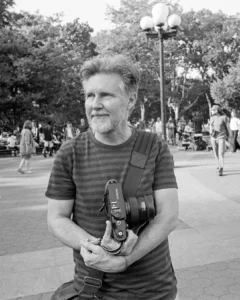
Mark Steinmetz
Shared publisher: Chose Commune
10 photobook(s) in the library
Rebecca Norris Webb
Shared publisher: Chose Commune
9 photobook(s) in the library
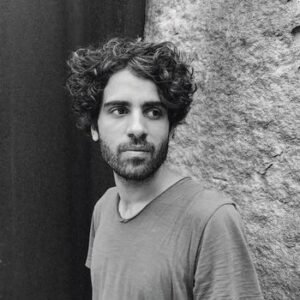
Vasantha Yogananthan
Shared publisher: Chose Commune
8 photobook(s) in the library
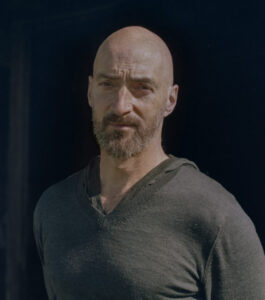
Raymond Meeks
Shared publisher: Chose Commune
7 photobook(s) in the library
COMMUNITY DISCUSSION
Discuss this entry
Share interpretations, reading notes, and source-aware questions. For catalog corrections, use the feedback form below.
No discussion yet. Start the first focused conversation.
Sign in to join the discussion.
Optionally receive a digest when related photobooks are added to the catalog.
See something incorrect? Sign in to suggest a correction or report an issue.