Photographer
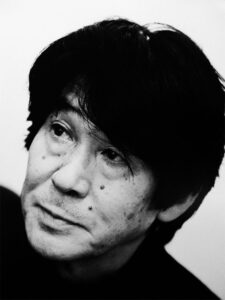
Kazuo Kitai
Kitai Kazuo (北井一夫) is a Japanese photographer born in 1944 whose career took shape amid the political ferment of postwar Japan. He came of age during the turbulent 1960s, when student movements, campus occupations and disputes over land and modernization were reshaping the country’s public life, and he belongs to a documentary tradition that understood the camera as a means of standing beside the people it pictured rather than observing them from a safe distance.
Working almost entirely in black-and-white 35mm, Kitai developed a deliberately unspectacular visual language: dense grain, available light, close framing and sequences that follow the rhythm of events instead of isolating heroic single images. His photographs of barricades, meetings and demonstrations are notable for what surrounds the confrontation — faces in a crowd, hands, food, the improvised clutter of an occupied building. In this respect his instincts differ from the more self-consciously conceptual experimentation associated with the Provoke generation; where those photographers pushed toward fragmentation and abstraction, Kitai kept faith with narrative and with ordinary people. He carried the same attention into quieter subjects, photographing rural communities and everyday labour with a patience that has little to do with reportage deadlines.
Two strands of work define his reputation. The first is his long engagement with the Sanrizuka struggle, the resistance of farming families to the construction of Narita airport, which he photographed over an extended period and which eventually appeared in book form. The second is his village photography, made in the Japanese countryside and gathered into a photobook that presents rural life not as nostalgia but as a way of living under pressure from modernization. Across both projects his method is consistent: return repeatedly, stay long enough to become familiar, and let the accumulation of ordinary moments carry the argument.
Kitai’s position in Japanese photography is that of a persistent documentarian rather than a theorist. His pictures appeared in the mainstream photography press of his time, and his work has since entered museum collections, including those of the Museum of Fine Arts, Houston and the Art Institute of Chicago. That institutional recognition matters, but it also flattens him: reading Kitai only as a recorder of protest misses the emotional register of his images, and reading him only as a chronicler of rural Japan misses the politics that shaped his eye. The most useful view is of a photographer for whom engagement and intimacy were the same act.
For photobook readers, Kitai rewards attention to sequencing and to the relationship between images rather than to individual frames. His books work as narratives, with pacing that reflects long acquaintance with a place and its people; the printing and design choices in the original Japanese editions are part of how that narrative is delivered. A reasonable entry point is to begin with his work on the Sanrizuka struggle and then move to the village pictures, since the two together show how a documentary practice can shift subject without changing its underlying ethic.
Kazuo Kitai (北井 一夫, born 1944) is a Japanese documentary photographer. He was born in Anshan, in territory then administered by Japan as Manchukuo, and was repatriated to Japan as a child after the Second World War. He entered the photography department of Nihon University but left before graduating. His early visibility came from photographs of 1960s political protest; from 1969 he spent several years photographing the farming community resisting the construction of Narita Airport at Sanrizuka. He then turned toward rural village life, most notably in the 1976 book To the Village. Working in black-and-white reportage, he is counted among the central figures of postwar Japanese documentary photography.
The Japanese-language Wikipedia entry places Kitai within the history of postwar Japanese photography. It records his birth in 1944 in Anshan, then part of Manchukuo; his admission to the photography department of Nihon University’s College of Art and his departure before graduation; and his presentation of protest photographs in 1965. It traces his long-term Sanrizuka series on residents’ opposition to Narita Airport, begun in 1969, and the rural projects that followed, including the 1976 book To the Village, in which his attention moved from urban confrontation to farming communities. These bodies of work underpin his standing as a documentary photographer.


Selected Works & Key Projects
A source-backed introduction to individual photographs and significant bodies of work.
Key projects
Project · 1964–1965
Resistance
Resistance developed from Kitai’s student photographs of demonstrations opposing a proposed U.S. atomic-submarine visit to Yokosuka. The Museum of Fine Arts, Houston records that he deliberately worked with expired film and accepted blur and poor focus rather than the prevailing expectation of polished, rigorously composed prints; he self-published the photographs as a large-format booklet in 1965. This early project merits selection because it establishes Kitai’s direct engagement with the political struggles of the 1960s and introduces the anti-formal, urgent photographic method that preceded Barricade.
View source ↗Project · 1969–1971
Sanrizuka
Sanrizuka documents farmers resisting construction of Narita Airport. Fujifilm Square states that Kitai worked from the same standpoint as his subjects and that the 1971 photobook received the Photographic Society of Japan Newcomer’s Award in 1972. Tokyo Photographic Art Museum further identifies the series’ photographs of farmers’ daily lives within the struggle as work acclaimed for setting a new standard in documentary photography. The project is essential within Kitai’s oeuvre because it joins political conflict to sustained attention to ordinary life, a shift that shaped the empathetic orientation of his later rural pictures.
View source ↗Selected photographs
1968 · Japan
Students at Meeting
Students at Meeting is a 1968 gelatin silver print from Barricade in the Museum of Fine Arts, Houston. The museum identifies Barricade as Kitai’s best-known series and explains that he spent four months behind the barricades at Nihon University, recording both the confrontation with authorities and the protesters’ shared everyday routines. This photograph is a strong individual selection because it is a specifically titled, collection-held work from that central project, and because MFAH included it in its 2015 exhibition For A New World to Come: Experiments in Japanese Art and Photography, 1968–1979.
Work source ↗1975 · Japan
Fisherman
Fisherman is a 1975 photograph from The People of Sakaigawa in the Museum für Kunst und Gewerbe Hamburg’s photography and new media collection. The museum’s record identifies the work as both artistic photography and portrait photography, and indexes an older seated fisherman with fishing equipment as its subject matter. This is a useful selection from Kitai’s wider work because it is a named, dated, collection-held photograph from a distinct series centered on people in Sakaigawa. It also marks the continuity of Kitai’s attention to individual lives after the politically charged projects of the 1960s and early 1970s.
Work source ↗1976 · Japan
Edible Wild Plants Collection
Edible Wild Plants Collection is a 1976 gelatin silver print from To The Villages in the National Museum of Asian Art collection. The Smithsonian’s object record documents both its place in the series and its exhibition in Japan Modern: Photography from the Gloria Katz and Willard Huyck Collection in 2018–19. It is a significant selection not because the source assigns it a separate superlative, but because it is a specifically identified, publicly collected and exhibited photograph from Kitai’s award-winning rural project. In that context, it represents the project’s sustained attention to everyday village subject matter.
Work source ↗-
1944
Career milestone
Born in Anshan, China
Kazuo Kitai was born in Anshan, China, in 1944. The Tokyo Photographic Art Museum identifies Anshan as being in what is now northeastern China.
Source: Tokyo Photographic Art Museum Verified Sep 29, 2026
-
1965
Education
Left Nihon University’s photography program
In 1965, Kitai withdrew from the photography program in the College of Art at Nihon University. That same year marks the beginning of a publicly documented independent publishing activity.
Source: FUJIFILM SQUARE Verified Sep 29, 2026
-
1965
Photobook
Self-published Resistance
Kitai self-published Resistance, a photobook concerning protests against a U.S. nuclear-submarine port call at Yokosuka. The Tokyo Photographic Art Museum records it as his 1965 self-published book.
Source: Tokyo Photographic Art Museum Verified Sep 29, 2026
-
1969
Series
Sanrizuka published in Asahi Graph
Kitai’s Sanrizuka series, documenting resistance to construction of Narita International Airport, was published in Asahi Graph in 1969. The museum notes that its insider-oriented depiction of farmers’ daily lives helped establish a new standard for documentary photography.
Source: Tokyo Photographic Art Museum Verified Sep 29, 2026
-
1972
Award
Received the 22nd Photographic Society of Japan Newcomer Award
Kitai received the 22nd Photographic Society of Japan Newcomer Award in 1972. FUJIFILM SQUARE associates the recognition with his photobook Sanrizuka, published by Nora-sha.
Source: FUJIFILM SQUARE Verified Sep 29, 2026
-
1973
Career milestone
Visited China after diplomatic normalization
In 1973, Kitai traveled to China with Ihei Kimura and others after normalization of diplomatic relations. His official biography states that he subsequently returned to China repeatedly and presented the series China.
Source: Kazuo Kitai Production Verified Sep 29, 2026
-
1974–1976
Series
Murae—To the Villages began and received the first Kimura Ihee Award
Beginning in 1974, Asahi Camera ran Kitai’s long-term series Murae—To the Villages. In 1976, the series received the first Kimura Ihee Award. The Tokyo Photographic Art Museum identifies the rural-life photographs as a body of work that solidified his reputation.
Source: Tokyo Photographic Art Museum Verified Sep 29, 2026
-
1981
Photobook
Published Tales of Shinsekai
Kitai published Tales of Shinsekai in 1981. The book documents the lives of ordinary residents in Osaka’s Shinsekai district, extending his attention from rural communities and protest movements to urban everyday life.
Source: Tokyo Photographic Art Museum Verified Sep 29, 2026
-
1989
Photobook
Published Funabashi Story
Kitai published Funabashi Story in 1989. Combining text and photographs, the book describes the lives of people in Funabashi, a Tokyo suburb; the museum characterizes the related photographs as scenes of daily life in new residential areas.
Source: Tokyo Photographic Art Museum Verified Sep 29, 2026
-
November 24, 2012–January 27, 2013
Exhibition
Somehow Familiar Places at the Tokyo Photographic Art Museum
The Tokyo Photographic Art Museum presented Kitai Kazuo: Somehow Familiar Places from November 24, 2012, to January 27, 2013. The museum described it as his first solo exhibition at a museum and a retrospective spanning significant series from his student years through then-recent work.
Source: Tokyo Photographic Art Museum Verified Sep 29, 2026
Collection
Museum of Fine Arts, Houston
The Museum of Fine Arts, Houston holds work by Kazuo Kitai within its photography collection and included him in the 2015 survey 'For a New World to Come: Experiments in Japanese Art and Photography, 1968–1979,' which examined the experimental Japanese photography produced by Kitai's generation. This institutional holding documents the place of his documentary practice in a major North American museum collection of postwar Japanese photography.
Verified 2026-09-29Museum of Fine Arts, Houston
Collection
Tokyo Photographic Art Museum
The Tokyo Photographic Art Museum, Japan's principal public museum devoted to photography, collects and researches the documentary photography of the 1960s and 1970s to which Kazuo Kitai's work belongs, providing an institutional context in which his prints and publications are preserved and studied alongside those of his contemporaries.
Verified 2026-09-29Tokyo Photographic Art Museum
Shared exhibition
Daido Moriyama
Kazuo Kitai and Daido Moriyama belong to the same generation of Japanese photographers who, from the late 1960s, rejected postwar humanist reportage in favour of rougher, more subjective documentary imagery. Their work has been presented together in survey exhibitions of that movement, such as 'Provoke: Between Protest and Performance,' which framed their documentary and experimental street photography as part of one generational break.
Verified 2026-09-29Wikipedia
Curator’s Talk – KITAI Kazuo: Gazing at the Present Moment (opens a new site)
The Japan Foundation’s event page introduces a curator’s talk by Fujimura Satomi on Kitai’s career and distinctive approach. It characterizes his work as ranging from Japanese rural landscapes to protests of the 1960s and 1970s, with attention to ordinary lives and to photography’s relationship with Japan’s political and social change. The page states that the programme was co-presented with The Photographers’ Gallery and connected to Kitai’s first solo exhibition in Paris.
A Witness to Resistance (opens a new site)
A 2017 Aperture interview by Tsuyoshi Ito in which Kazuo Kitai discusses his photographs of student demonstrations, the Nihon University barricades, and Sanrizuka. Kitai explains his shift from photographing confrontations toward making images grounded in sustained relationships with subjects and their ordinary lives. The article identifies Sanrizuka as a 1969–72 project and To the Villages as a later series made between 1973 and 1981.
Kazuo Kitai: Agitators (opens a new site)
Zen Foto Gallery’s Japanese-language article accompanies its publication of Kagekiha (Agitators). It situates the photographs in demonstrations and riots made between 1965 and 1968, naming locations including Tokyo and Sasebo and identifying issues represented in the protests. The text also describes Sanrizuka as a pivotal body of work linking Kitai’s frontline pictures of unrest with his later rural photographs, and records Zen Foto’s publication of the book.
COMMUNITY DISCUSSION
Discuss this entry
Share interpretations, reading notes, and source-aware questions. For catalog corrections, use the feedback form below.
No discussion yet. Start the first focused conversation.
Sign in to join the discussion.
Optionally receive a digest when related photobooks are added to the catalog.
See something incorrect? Sign in to suggest a correction or report an issue.