Photographer
Hans Eijkelboom
Hans Eijkelboom (b. 1949, Arnhem) is a Dutch conceptual photographer whose work has probed the tension between individual expression and collective uniformity since the late 1970s. Coming from a blue-collar family, he entered the art world during the rise of conceptual art in the Netherlands, and his practice helped shape a generation of Dutch photographers who treated the camera as an instrument for systematic social investigation rather than spontaneous snapshot. Over five decades, Eijkelboom has built a reputation for projects that are at once wry, obsessive, and anthropologically sharp, earning him a place in major surveys of contemporary photography.
Eijkelboom’s visual language is distinguished by its rigorous, almost bureaucratic method. Instead of seeking the decisive moment, he often positions himself at a fixed spot on a busy street—in Shanghai, New York, Amsterdam, or Paris—and photographs every passer-by for a set period, sometimes hours. He then organizes the resulting images into grids or sequences that reveal repeated styles, colors, and gestures. This approach turns street photography inside out: rather than celebrating individual uniqueness, it exposes the quiet conformity of global consumer culture. His subjects become data points in a typology of urban appearance, and the camera becomes a tool for measuring social pressure.
The project most associated with this method is People of the 21st Century, a quasi-sociological archive built over more than two decades, in which Eijkelboom collected thousands of street portraits that juxtapose residents of different cities by their clothing, body language, and accessories. Early works also foreshadowed his concern with identity: With My Family (1978) saw him assume the role of father in staged portraits with various families, a sly commentary on the construction of domestic roles. Both projects have been shown internationally and have entered the canon of conceptual art photography.
Eijkelboom’s historical importance lies in his blending of performance, documentary, and institutional critique. He was included in documenta 14 in 2017, a platform that champions artists who question social and political structures, and that same year The Hague Museum of Photography mounted a major retrospective covering his entire career. Critics have often read his grids as a mirror of contemporary fears about mass consumption and the loss of selfhood in an age of globalized retail fashion. Yet Eijkelboom retains a deadpan humor, refusing to moralize; he presents the viewer with a factual inventory of how people actually present themselves, leaving judgment open. This ambiguity has kept his work relevant in debates about surveillance, identity, and photographic ethics.
For photobook collectors, Eijkelboom offers a model of how a single conceptual frame can generate compelling print editions. His books and catalogs typically reproduce his grids in full-page sequences, allowing readers to see the rhythm of visual repetition far more effectively than in a gallery. The sequencing and design often echo the grid-based logic of his practice, making each volume a conceptual object rather than a mere record. Collectors interested in postwar European conceptual photography or the history of street photography will likely find his works an essential counterpart to artists like the Bechers or John Baldessari, albeit with a more vernacular, street-level eye. A useful entry point is his major retrospective catalog, which consolidates both early and late series in one volume.
〔PBL-BIO/2〕
Hans Eijkelboom (born 1949 in Arnhem) is a Dutch conceptual photographer and artist. He studied at the Academy of Art in Arnhem and later at the Gerrit Rietveld Academie in Amsterdam. Eijkelboom is best known for his street photography series that document urban fashion and social types, such as ‘People of the Twenty-First Century’ (2014), in which he photographs pedestrians on busy city streets and groups them by clothing patterns. His works are held in prominent museum collections and he has exhibited at institutions like the Museum of Modern Art in New York and the Stedelijk Museum in Amsterdam. He is considered a pioneer of the typological approach in contemporary photography, influenced by August Sander and Bernd and Hilla Becher.

Selected Works & Key Projects
A source-backed introduction to individual photographs and significant bodies of work.
Key projects
Project · 1992
Photo Notes
Begun in 1992, Photo Notes is Eijkelboom’s long-running method of observing pedestrians in busy urban areas, identifying a repeated garment or behaviour, and arranging the resulting images into grids. The method shifts attention from the isolated street encounter to recurrence across a crowd. Phaidon describes the project as the basis for a cumulative portrait made across more than two decades, while Fotomuseum Den Haag notes that the body of work had grown to almost 6,000 notes. It merits selection as the sustained project through which his investigation of individuality within consumer society became most extensive.
View source ↗Project · 1973
With My Family
For With My Family, Eijkelboom asked mothers and two children to sit with him on a sofa, producing photographs that resemble ordinary family snapshots. Fotomuseum Den Haag explains that the series gains its force through comparison: viewed together, the images question how readily the father’s role can be substituted. The project is a significant early statement of his concern with identity as a social construction rather than a fixed personal fact. It merits selection because it uses a simple, repeatable photographic situation to make family resemblance, domestic convention, and the artist’s own place within the image unstable.
View source ↗Selected photographs

1971
A Shower Of Rain
This 1971 work is presented by Leica Fotografie International as a horizontal sequence of six colour images. The pictured figure stands before dense vegetation and is progressively soaked, ending bent forward beneath the rain. Its serial form makes duration—not a single decisive instant—the subject of the photograph. The image was selected for Leica Fotografie International’s presentation of Eijkelboom’s photographic concepts, where the early works are described in relation to 1970s conceptual art. It merits inclusion as a concise visual example of his early use of repeated self-presentation and procedural sequencing.
Work source ↗-
1994
Series
People of the Twenty-First Century
Begun in 1994, this ongoing series presents decisive photographs of people on busy city streets, often arranged in grids to compare clothing, posture, and expression. The work systematically abstracts individuals into types, reflecting on identity in mass consumer culture. It gained international attention for its insight into urban social patterns and was consolidated into a major photobook by Phaidon in 2014, securing Eijkelboom’s place among leading conceptual documentarians.
Source: Wikipedia Verified Sep 5, 2026
-
2013
Photobook
Paris New York Shanghai
Published in 2013, this photobook presents a three-city street survey, capturing pedestrians in each location with an identical frontal method. The grids reveal striking similarities in globalized fashion and body language, exposing how consumer culture transcends geography. Critically praised for its rigorous formal structure and sociological depth, the book extends Eijkelboom’s studies of urban identity and was widely exhibited, reinforcing his reputation as a master of typological photography.
Source: Wikipedia Verified Sep 5, 2026
-
2014
Photobook
People of the Twenty-First Century (Photobook)
This 2014 Phaidon publication compiles two decades of street images, organizing hundreds of photographs into thematic grids based on clothing, color, or gesture. The book became a landmark in conceptual photography, demonstrating how repetitive imaging reveals collective social norms and individual quirks. It was selected for numerous best-of lists and influenced later street photographers. Its systematic methodology, contrasted with intimate encounters, remains essential for understanding Eijkelboom’s radical approach to documentary.
Source: Wikipedia Verified Sep 5, 2026
Collection
Rijksmuseum
The Rijksmuseum holds works by Hans Eijkelboom in its photography collection, including series such as 'People of the Twenty-First Century'. The acquisition documents his place within Dutch and international photographic history, particularly his typological street photography.
Verified 2026-09-05Rijksmuseum collection search
Collection
Stedelijk Museum Amsterdam
The Stedelijk Museum Amsterdam holds photographs by Hans Eijkelboom, reflecting his long-term engagement with urban life and social typologies. His work is part of the museum's collection of contemporary photography.
Verified 2026-09-05Stedelijk Museum collection
Archive
Netherlands Photo Museum (Nederlands Fotomuseum)
The Netherlands Photo Museum archives and exhibits the work of Hans Eijkelboom, including his major series. The museum's archive and exhibitions have contributed to the public and scholarly visibility of his typological practice.
Verified 2026-09-05Nederlands Fotomuseum artist page
Representation
Galerie Paul Andriesse
Galerie Paul Andriesse has represented Hans Eijkelboom and has held exhibitions of his photographic series. The gallery's representation has been part of the commercial and curatorial context of his work.
Verified 2026-09-05Galerie Paul Andriesse – Hans Eijkelboom
Publishing relationship
WMG (World Wide Publishing / Hans Eijkelboom self-published books)
Hans Eijkelboom has published numerous photobooks, many through his own publishing imprint WMG. This self-publishing practice has been central to distributing his typological projects and has influenced the photobook field.
Verified 2026-09-05Book description at Bibliotheek (Dutch library catalog example)
Influence & affinity
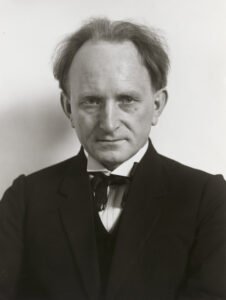
August Sander
Hans Eijkelboom's typological approach in series such as 'People of the Twenty-First Century' is commonly compared to August Sander's systematic portrait studies. Eijkelboom has acknowledged the documentary tradition that Sander represents.
Verified 2026-09-05Exhibition catalogue text from Museum (Van Abbemuseum or Kunsthal) – example
Hans Eijkelboom: “Fewer and fewer people are part of a group” (opens a new site)
In this conversation with Valentin Diaconov, Eijkelboom describes defining himself as an artist who uses photography. He discusses the recurring uncertainty of beginning work in the street, his attention to how people act and look, and his interest in the reciprocal influence of individual and society.
Hans Eijkelboom: Photographische Konzepte, 1970 bis heute (opens a new site)
This exhibition text from Die Photographische Sammlung traces Eijkelboom’s connection to Conceptual art and outlines the concerns of his serial projects: idealized images, photographic clichés, prejudice, and typologies. It identifies his diary-like photographic protocols and Photo Notes as central bodies of work, and notes the 2014 publication of the latter as People of the Twenty-First Century.
Hans Eijkelboom (opens a new site)
Casino Luxembourg presents Eijkelboom’s Paris – New York – Shanghai in connection with its exhibition Second Lives, Jeux masqués et autres Je. The video description states that the project photographs similarly dressed people in Paris, New York, and Shanghai, addressing how clothing can carry different cultural meanings within global consumer society.
Fotograaf Hans Eijkelboom over uniformiteit in de winkelstraat (opens a new site)
This 71-second Dutch television clip, credited to DWDD and dated 25 September 2017, features Eijkelboom discussing uniformity in shopping streets. Wikimedia Commons provides the downloadable audiovisual file, identifies the original YouTube source, and records the video’s Creative Commons Attribution 3.0 license status.
COMMUNITY DISCUSSION
Discuss this entry
Share interpretations, reading notes, and source-aware questions. For catalog corrections, use the feedback form below.
No discussion yet. Start the first focused conversation.
Sign in to join the discussion.
Optionally receive a digest when related photobooks are added to the catalog.
See something incorrect? Sign in to suggest a correction or report an issue.