Photographer
Weiwei Ai
Ai Weiwei (born 1957 in Beijing) is a Chinese contemporary artist and human rights activist whose career spans sculpture, installation, architecture, photography, and film. Rising to prominence in the early 2000s, he became a global symbol of artistic dissent, yet his creative practice resists easy categorization. This biography focuses on his photographic work while acknowledging the broader multi-media context that shapes his vision.
Ai’s visual language is characterized by a rigorous blending of documentary realism and conceptual provocation. He often uses photography as a tool for direct witness, capturing actions, installations, and everyday scenes with an unflinching eye. Unlike purely aesthetic photographers, his images are frequently embedded in political critique—whether they depict migrant camps, refugee crises, or his own confrontations with censorship. This method distinguishes him from peers who treat photography as autonomous art; for Ai, the camera is an activist’s instrument, yet one that retains a sophisticated formal awareness.
Among his most significant photographic bodies of work is his documentation of the 2008 Sichuan earthquake, particularly his series on collapsed school buildings, which he used to expose government negligence and cover-ups. He also produced a major body of photographs for his trilogy of films on refugees (such as “Human Flow” and “Rohingya”), where still images carry the same ethical urgency as moving pictures. His conceptual use of found images—like the celebrated “Study of Perspective” series—reinterprets iconic landmarks to question power and perception. These works matter because they transform photography into a medium of accountability, merging art with moral testimony.
Ai’s career is inseparable from his activism. After being detained in 2011 and later placed under house arrest, his influence grew internationally, leading to exhibitions at major venues like Documenta and the Venice Biennale. He has received numerous honors, but his impact lies less in institutional recognition than in demonstrating how an artist can operate under repression. His work continually challenges viewers to consider the borders between art, politics, and human rights, and his embrace of social media has extended his reach far beyond gallery walls.
For photobook collectors, Ai’s publications are valuable not just as visual records but as politically charged objects. His carefully designed books—often produced in collaboration with international publishers—feature stark sequencing and meticulous printing that amplify the rawness of his subjects. Titles like “Ai Weiwei: According to What?” and his monograph “Photography” offer entry points into his practice, though even individual portfolios on platforms like Instagram reveal his eye for the decisive moment. Collectors should approach his work with an appreciation for its documentary power and its defiance of comfortable aestheticism, recognizing that each image carries a weight that extends far beyond the page.
〔PBL-BIO/2〕

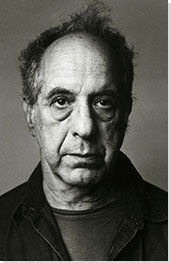
Robert Frank
Shared publisher: 5 Continents Editions
19 photobook(s) in the library
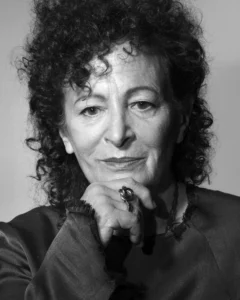
Nan Goldin
Shared publisher: 5 Continents Editions
17 photobook(s) in the library
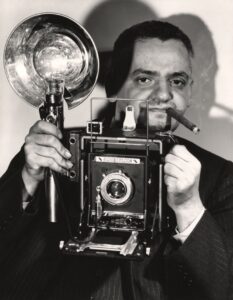
Weegee
Shared publisher: 5 Continents Editions
14 photobook(s) in the library
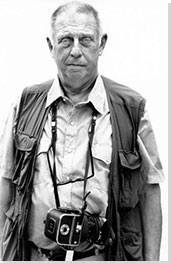
Lee Friedlander
Shared publisher: 5 Continents Editions
13 photobook(s) in the library
COMMUNITY DISCUSSION
Discuss this entry
Share interpretations, reading notes, and source-aware questions. For catalog corrections, use the feedback form below.
No discussion yet. Start the first focused conversation.
Sign in to join the discussion.
Optionally receive a digest when related photobooks are added to the catalog.
See something incorrect? Sign in to suggest a correction or report an issue.