Photographer
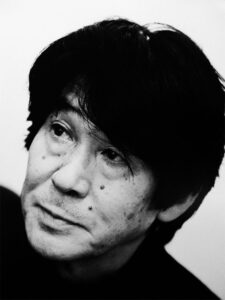
Luigi Ghirri
Luigi Ghirri (1943–1992) was one of the most influential Italian photographers of the postwar era, an artist whose quiet, luminous color images reshaped how photography grappled with the relation between the visible world and images of it. Born in Scandiano in the Emilia-Romagna region, he first trained as a surveyor, a background that gave him a lasting sensitivity to geometry, boundaries, and the constructed order of landscapes. He began photographing in the late 1960s and quickly developed a distinctive voice that set him apart from the documentary and humanist traditions dominating Italian photography at the time.
Ghirri’s visual language is characterized by frontal, almost naive compositions, soft natural light, and a muted palette that renders even ordinary Italian scenes—shop windows, seaside promenades, postcards, maps, and suburban facades—with an uncanny stillness. His work is often described as conceptual, yet it never feels cerebral; instead, it invites a meditative pause. Unlike contemporaries who sought the dramatic moment or social evidence, Ghirri was drawn to the unremarkable, to the surfaces where reality already looks like an image. He explored how photographs circulate as cultural objects, questioning the boundary between lived place and depicted place.
Among his most significant projects is the landmark book ‘Kodachrome’ (1978), which he designed himself, a sequence of square color photographs taken along Italian roads that celebrate the everyday sublime. Another key work is ‘Atlante’ (1973–74), based on his childhood atlas, where he used photographs of maps and globes as a meta-commentary on seeing and representing the world. His later series ‘Il profilo delle nuvole’ (The Profile of Clouds) and his engagement with Il paesaggio italiano—a collaboration with Luigi Ghirri’s wider creative circles—further established him as a critical thinker of landscape and image. Ghirri also participated in the influential group ‘Un’ esposizione’ and published essays on photography, weaving his practice into Italian intellectual life.
Though Ghirri died prematurely in 1992 at the age of 49, his influence has only grown. Retrospectives at major international institutions, such as the one organized by Matthew Marks Gallery in New York and publications from the Fondazione Luigi Ghirri in Reggio Emilia, have secured his place in the canon of color photography. He is now seen as a precursor to many contemporary photographers who examine the vernacular, the banal, and the pictorial in everyday spaces, and his work continues to inform debates about photography’s ability to represent reality without irony.
For photobook collectors, Ghirri’s own publications are particularly rewarding. He was deeply involved in the editing, sequencing, and graphic design of his books, viewing them as autonomous artworks. The 1978 ‘Kodachrome’—later republished in expanded editions—and the posthumous anthologies such as ‘Luigi Ghirri: The Complete Essays’ offer insight into his serial thinking. Collectors are advised to explore primary editions carefully, because his original books are rare and are valued for their intimate, handcrafted feel, but careful attention to provenance and condition is essential. A useful entry point is the Fondazione’s online archive and the exhibition catalogues it has published, which give a trustworthy overview of his oeuvre and its bibliography.
〔PBL-BIO/2〕
Luigi Ghirri (1943–1992) was an Italian photographer known for his pioneering use of color and conceptual approach to landscape and everyday life. Working as a surveyor, he began photographing in the late 1960s. His series such as ‘Kodachrome’ (1978) and his involvement in the collective project ‘Paesaggio Italiano’ (1984) explored the constructed nature of images. Ghirri often captured postcards, signs, and facades, questioning reality and representation. He died prematurely in 1992 after a long illness. His work gained international recognition posthumously, influencing contemporary art photography.


Selected Works & Key Projects
A source-backed introduction to individual photographs and significant bodies of work.
Key projects
Project · 1970–1978
Kodachrome
In the early 1970s, Ghirri began using Kodachrome slide film to photograph the ordinary Italian landscape, focusing on billboards, road signs, and façades that often replicate nature or other images. This series, later collected in the 1978 book 'Kodachrome,' decisively challenged the boundaries between original and reproduction, reality and representation. Ghirri's carefully cropped compositions make viewers question what is actually photographed versus what is a painted or printed simulacrum. The project placed him at the forefront of Italian color photography and is widely cited as a foundational work of conceptual landscape photography, influencing artists such as Jeff Wall and Thomas Struth.
View source ↗Selected photographs
1971 · Modena, Italy
Modena, 1971
In 'Modena, 1971' Ghirri photographs a humble building wall that is painted with an illusionistic landscape—a row of trees and distant hills. A real signpost protrudes from the surface, blurring the line between physical depth and painted depth. The image is a perfect example of his early interest in trompe-l'oeil and how photography can reproduce such deceits. It is significant because it condenses the central idea of the Kodachrome series: that contemporary Italian space is saturated with pictorial replicas of nature. The photograph has become one of Ghirri's most reproduced works, often used to illustrate his critique of a society living among images of itself.
Work source ↗-
1970
Career milestone
Begins making photographs
Ghirri made his first photographs during holidays and weekends, later grouping them as Fotografie del periodo iniziale. He also began Paesaggi di cartone (Cardboard Landscapes), photographing found visual material and everyday urban-peripheral subjects near Modena. The foundation records that his commitment to colour photography belonged to this early direction.
Source: Fondazione Luigi Ghirri — Biography Verified Sep 5, 2026
-
1972
Exhibition
First solo exhibition: Luigi Ghirri: Fotografie 1970–71
Ghirri’s first solo exhibition, Luigi Ghirri: Fotografie 1970–71, was held at the Canalgrande Hotel’s Sette Arti Club circle in Modena. The works were selected by Ghirri and Franco Vaccari, who also wrote the catalogue introduction. Treccani dates the exhibition to December 1972.
Source: Treccani — Dizionario Biografico degli Italiani Verified Sep 5, 2026
-
January 1974
Exhibition
Paesaggi di cartone at Il Diaframma, Milan
Lanfranco Colombo presented Ghirri’s Paesaggi di cartone at the Il Diaframma gallery in Milan in January 1974. The exhibition was accompanied by a catalogue containing a text by Massimo Mussini. The event brought this early body of photographs into a Milan gallery context and marked an important early professional presentation.
Source: Treccani — Dizionario Biografico degli Italiani Verified Sep 5, 2026
-
1975
Award
Named a Time-Life “discovery”
Time-Life named Ghirri a “discovery” of the year and published an extensive portfolio of his work in Photography Year 1975. In the same year, he participated in Art as Photography—Photography as Art in Kassel, an exhibition that subsequently travelled to Chalon-sur-Saône, where his work also appeared in Photographie Italienne at the Musée Nicéphore Niépce.
Source: Fondazione Luigi Ghirri — Biography Verified Sep 5, 2026
-
1977
Representation
Co-founds Punto e Virgola
With Paola Borgonzoni and photographer Giovanni Chiaramonte, Ghirri established Punto e Virgola, a publishing house intended to produce projects focused on Italian photographic culture. Treccani records that the house specialized in photography and was founded in 1978; the Fondazione Luigi Ghirri chronology places its establishment under 1977.
Source: Fondazione Luigi Ghirri — Biography Verified Sep 5, 2026
-
1978
Photobook
Publication of Kodachrome
Punto e Virgola published Ghirri’s first book, Kodachrome. Conceived as a narrative monograph, it drew principally on Paesaggi di cartone and Fotografie del periodo iniziale, projects developed over his first eight working years. The Fondazione states that the publication also initiated his use of the archive as a “reservoir of images”; Contrejour co-published the book and presented an accompanying exhibition.
Source: Fondazione Luigi Ghirri — Biography Verified Sep 5, 2026
-
1979
Exhibition
Vera Fotografia retrospective, Università di Parma
The retrospective Vera Fotografia at the Università di Parma, organized by Arturo Carlo Quintavalle and Massimo Mussini, assembled approximately 700 photographs in fourteen narrative sequences. It gathered all projects Ghirri had made to that point, and the accompanying book included texts by Quintavalle, Mussini, and Ghirri. The foundation characterizes this exhibition as a decisive change in his work and reputation.
Source: Fondazione Luigi Ghirri — Biography Verified Sep 5, 2026
-
1980
Exhibition
Solo exhibition at Light Gallery, New York
Following Charles Traub’s invitation, Ghirri presented Still-Life and Topographie-Iconographie in a solo exhibition at Light Gallery in New York. The foundation places this exhibition alongside the Ferrara presentation of Vera Fotografia, marking the circulation of his recent projects outside Italy and in a major New York photography-gallery setting.
Source: Fondazione Luigi Ghirri — Biography Verified Sep 5, 2026
-
1983–1986
Series
Esplorazioni sulla via Emilia
Ghirri developed and coordinated Esplorazioni sulla via Emilia, a multidisciplinary project to reinterpret the ancient Via Emilia and the territory it crosses in relation to urbanization and industrialization. The exhibition Esplorazioni sulla via Emilia: Vedute nel paesaggio opened in Bologna and subsequently travelled in Italy and internationally. Ghirri grouped his photographs from the project into a series dated 1983–86, with some also entering Paesaggio Italiano.
Source: Fondazione Luigi Ghirri — Biography Verified Sep 5, 2026
-
1984
Exhibition
Organizes Viaggio in Italia
With Gianni Leone and Enzo Velati, Ghirri organized Viaggio in Italia as both a book and an exhibition travelling from Bari to Reggio Emilia. It included Italian and non-Italian artists and addressed Italy’s image after the country’s major transformations in the 1960s and 1970s. The project framed photography as a new narrative instrument for the Italian landscape.
Source: Fondazione Luigi Ghirri — Biography Verified Sep 5, 2026
-
1989
Photobook
Paesaggio Italiano monograph and exhibition
Ghirri conceived Paesaggio Italiano as a monograph and an exhibition first presented in Reggio Emilia, then in Mantua and at Italian Cultural Institute venues in South America. The foundation identifies it as a fundamental expression of his ideas and describes its approach as an innovative reinterpretation of landscape photography. The book juxtaposed Ghirri’s photographs with other images, his writings, and critical contributions.
Source: Fondazione Luigi Ghirri — Biography Verified Sep 5, 2026
-
14 February 1992
Career milestone
Death in Roncocesi
Ghirri died suddenly at home in Roncocesi on 14 February 1992. In his final period he had assembled Atlante Metropolitano, published projects on the Reggia of Caserta and Viaggio dentro un’antico labirinto, and begun planning work on Giorgio Morandi’s interiors as well as projects concerning still life and isolated houses in the Po Valley.
Source: Fondazione Luigi Ghirri — Biography Verified Sep 5, 2026
Museum relationship
Museum of Modern Art
The Museum of Modern Art (MoMA) in New York holds a significant collection of Luigi Ghirri’s photographs, including early color works and later landscape studies. In 2018, MoMA organized a major retrospective titled “Luigi Ghirri: The Map and the Territory,” which traced his engagement with representation, perception, and the Italian landscape. This exhibition affirmed his international importance and his influence on contemporary photography, while the museum’s acquisition of his prints underscores his recognized place in the history of the medium.
Verified 2026-09-05Wikipedia – Luigi Ghirri
Collection
The J. Paul Getty Museum
The J. Paul Getty Museum in Los Angeles holds prints by Luigi Ghirri in its permanent collection. These acquisitions reflect the museum’s recognition of Ghirri’s role in the development of color photography and his poetic, metaphysical approach to everyday landscapes. The Getty’s holdings make his work accessible to scholars and the public, contributing to a broader understanding of postwar European photography and the conceptual currents that shaped it.
Verified 2026-09-05Wikipedia – Luigi Ghirri
Archive
Archivio Luigi Ghirri
The Archivio Luigi Ghirri, based in Reggio Emilia, serves as the official repository for the photographer’s negatives, prints, personal papers, and library. It is located within the Biblioteca Panizzi and preserves Ghirri’s artistic legacy, making materials available for research and exhibition. The archive is essential for understanding his creative process, his role in Italian conceptual photography, and his collaborations with artists and writers during the 1970s and 1980s.
Verified 2026-09-05Wikipedia – Luigi Ghirri
Luigi Ghirri – Wikipedia (opens a new site)
Comprehensive encyclopedia entry on Luigi Ghirri, an Italian photographer known for his conceptual color landscapes and architectural scenes, influential in the visual culture of the 1970s-80s.



COMMUNITY DISCUSSION
Discuss this entry
Share interpretations, reading notes, and source-aware questions. For catalog corrections, use the feedback form below.
No discussion yet. Start the first focused conversation.
Sign in to join the discussion.
Optionally receive a digest when related photobooks are added to the catalog.
See something incorrect? Sign in to suggest a correction or report an issue.