Photographer
Simon Norfolk
Simon Norfolk is a Nigerian-born British photographer, born on 24 January 1963, who has built his career around the architecture and landscape of conflict rather than its immediate violence. Based in Brighton & Hove on the south coast of England, and for a period also living in Kabul, he has worked on assignment for publications including National Geographic, The New York Times Magazine and The Guardian Weekend while pursuing long-term independent projects that appear as books and museum exhibitions.
Norfolk’s visual language is deliberately unhurried and forensic. Working with large-format cameras on a tripod, he composes wide, quiet views of ruins, fortifications, bunkers, palaces and memorial sites, often in a cool, muted palette that withholds the drama audiences expect from war imagery. The result sits somewhere between architectural photography and documentary: the viewer is invited to read a scene for evidence of what happened there — the residue of bombing, the geometry of a defensive wall, the way light falls across a ruined interior — rather than to witness an event. That distance is the point, and it separates his pictures from the spot-news tradition. His subject is consistently aftermath: memory, erasure, and the recurring ways in which landscapes absorb and conceal violence.
This approach shapes the four monographs for which he is best known. For Most of It I Have No Words (1998) is a study of landscapes associated with genocide and mass killing, using empty terrain and ordinary buildings as memorial surfaces. Afghanistan: Chronotopia (2002) examines the layered remains of successive wars and of imported modernities in Afghanistan, treating destruction as an archaeological subject rather than a news story. Bleed (2005) turns to Bosnia, and Burke + Norfolk (2011) sets his own images of Afghanistan in a devised dialogue with the nineteenth-century photographs of John Burke, raising questions about repetition, colonial looking and photographic time. Across these books the camera is used less to report than to interrogate how places carry history.
His work has been recognised with the Prix Dialogue de l’Humanité at Rencontres d’Arles (2005), an Infinity Award from the International Center for Photography (2004), multiple World Press Photo and Sony World Photography Awards, the European Publishers Award for Photography and, in 2013, the Prix Pictet Commission. He was shortlisted for the Citibank Prize, now the Deutsche Börse Photography Prize, in 2003. Examples of the work are held by institutions including Tate Modern in London and the Museum of Fine Arts, Houston, which places him within an institutional conversation about conflict imagery rather than solely a journalistic one.
For readers and collectors of photobooks, Norfolk is a useful example of the long-term, publisher-supported project. Most of his monographs have appeared through Dewi Lewis Publishing, and they reward attention to sequencing, design and printing as much as to individual images, since each book builds its argument across spreads and through the rhythm of repetition. A sensible entry point is Afghanistan: Chronotopia or the earlier For Most of It I Have No Words; Burke + Norfolk is the most conceptually intricate and best appreciated after the earlier Afghan work. His example matters because it demonstrates how a photographer can sustain a distinct visual argument over decades without relying on the urgency of the news cycle.
Encyclopedia entry on the British photographer Simon Norfolk, recorded as born in Lagos, Nigeria, in 1963. It notes his studies in philosophy at Oxford and in documentary photography at Newport, and explains his move to a large-format view camera to photograph war as landscape, a method explicitly indebted to nineteenth-century photographers such as Roger Fenton. Monographs covered include ‘For Most of It I Have No Words’, ‘Afghanistan: Chronotopia’ and ‘Burke + Norfolk’, alongside awards and museum collections.
Website of Dewi Lewis Publishing, the British photography-book publisher based in Stockport, which has issued several of Simon Norfolk’s monographs. Its catalogue presents him as a photographer whose long-term projects examine the landscapes of war, genocide and memory, and documents the publication of ‘For Most of It I Have No Words’, ‘Afghanistan: Chronotopia’ and ‘Burke + Norfolk’. As a primary publishing record it shows how his sequences were edited and framed as books.
Panos Pictures, the London-based independent photo agency, lists Simon Norfolk among the photographers it represents. His agency portfolio gathers commissioned and personal work on conflict, its aftermath and the built environment, together with credits and exhibition information. As a representation record it documents the editorial channel through which his reportage entered the international press, complementing the book and gallery presentation of the same bodies of work.


Selected Works & Key Projects
A source-backed introduction to individual photographs and significant bodies of work.
Key projects
Project · 2002
Afghanistan: Chronotopia
Norfolk’s Afghanistan: Chronotopia treats a war-damaged landscape as a record of accumulated time rather than as a single event. The project identifies differing physical residues of successive conflicts—Soviet military hardware, cleared building shells, mined ground, and recent aerial destruction—and reads them as archaeological evidence. Its title adapts “chronotope” to describe a place in which space and time are encountered together. The work merits selection because it establishes Norfolk’s sustained method of using landscape, ruins, and forensic traces to make the human consequences of war visible beyond conventional news imagery.
View source ↗Project · 2010–2011
Burke + Norfolk
Burke + Norfolk is Norfolk’s cross-temporal engagement with photographs made in Afghanistan by John Burke during the Second Anglo-Afghan War. Asked by Tate Modern in 2010 to make new Afghan work, Norfolk returned to the country and sought contemporary counterparts to Burke’s nineteenth-century views. The project pairs historical and contemporary photographic approaches to examine continuities in imperial conflict and its representation. It merits selection for its documented Tate Modern solo presentation in 2011, its substantial exhibition history, and its recognition with World Press Photo and Sony World Photography awards.
View source ↗Project
When I am Laid in Earth
When I am Laid in Earth maps the retreat of the Lewis Glacier on Mount Kenya through photographs made with lines of fire. Norfolk states that each fire line marks a documented former glacier front, while the distance from flame to the present ice edge registers melting. He developed the project with Project Pressure using historic maps, GPS data, and published mapping surveys, describing the method as a reverse mapping of loss. It merits selection because it extends his landscape practice from warfare to environmental change while retaining his concern with evidence, time, and traces in terrain.
View source ↗Selected photographs
2001 · Kabul, Afghanistan
Rusting anti-aircraft cannon casings on Kohe Asmai (known as "Radio TV Mountain") in central Kabul
This large chromogenic print records rusting anti-aircraft cannon casings on Kohe Asmai in central Kabul. The Museum of Fine Arts, Houston catalogs it as part of Afghanistan: Chronotopia and dates it to 2001. Its importance within the project lies in the literal presence of military debris in an urban landscape: the work supplies a concrete example of the series’ attention to material remains rather than action imagery. The museum purchased the photograph in 2006 with funding honoring Christopher Rauschenberg, confirming its place in a major public photography collection.
Work source ↗2003 · Baghdad, Iraq
Date Grove, Haifa Street, Baghdad
This chromogenic print presents a sunlit date grove on Haifa Street, Baghdad. Cleveland Museum of Art identifies spent shells, abandoned boots, and a crumpled tarpaulin within the scene, details that complicate its apparently peaceful surface and establish it as a site of war. The picture is a particularly strong selection from Norfolk’s work because it makes the viewer search a visually attractive landscape for evidence of conflict, directly expressing his stated concern with war’s effects on people and environment. The museum acquired the work through its Julius L. Greenfield Photography Acquisition Fund in 2008.
Work source ↗2003 · Paghman, Afghanistan
King Amanullah's 1919 Victory Arch at Paghman
King Amanullah’s 1919 Victory Arch at Paghman is a 2003 chromogenic print in the Metropolitan Museum of Art’s Department of Photographs. The work’s title fixes attention on a monument that joins Afghan place, national commemoration, and a precise historical reference. It merits selection as a recognizable Norfolk photograph because the Met has accessioned it as an individual work, not merely as documentation of a larger project. Its inclusion in the museum’s collection provides a durable institutional record of Norfolk’s use of architecture and landscape as subjects for photographic study.
Work source ↗2003 · Baghdad, Iraq
The North Gate of Baghdad
The North Gate of Baghdad is a 2003 chromogenic print held by the Metropolitan Museum of Art. The museum classifies the work as a photograph and records it in its Department of Photographs under a title that identifies a specific Baghdad landmark. This photograph merits selection because it is one of Norfolk’s individually accessioned Iraqi works at the Met, giving his engagement with the built environment of conflict a clear institutional presence. Its paired emphasis on a named urban gateway and a 2003 date locates the picture within Norfolk’s sustained photographic attention to historically charged sites.
Work source ↗2010 · Herat, Afghanistan
‘The Museum of the Jihad’, Herat. A diorama illustrating the city rising up against the Soviets.
This 2010–2011 chromogenic print depicts a diorama at Herat’s Museum of the Jihad illustrating the city’s uprising against Soviet forces. The Museum of Fine Arts, Houston catalogs the photograph within Burke + Norfolk: Photographs from the War in Afghanistan and identifies Herat as its depicted place. The work merits selection because it brings Norfolk’s inquiry into war imagery inside a museum display of war memory itself: a photograph records a constructed historical scene. It is also a documented example from the Burke + Norfolk portfolio, printed by Norfolk in September 2011.
Work source ↗-
1963
Career milestone
Born in Lagos, Nigeria
Simon Norfolk was born in Lagos, Nigeria, in 1963. The International Center of Photography identifies him as British and records this birthplace in its archive profile.
Source: International Center of Photography Verified Oct 4, 2026
-
1990–1994
Career milestone
Staff photographer for left-wing magazines
Norfolk worked as a staff photographer for far-left magazines from 1990 to 1994. ICP also notes that his 1990s reporting addressed racism, Northern Ireland, the fall of the Berlin Wall, and resistance to the Gulf War.
Source: International Center of Photography Verified Oct 4, 2026
-
1998
Photobook
For Most of It I Have No Words: Genocide, Landscape, Memory
Norfolk’s monograph For Most of It I Have No Words: Genocide, Landscape, Memory was published in 1998. ICP lists it among his authored books, while the World Photography Organisation describes it as a work about landscapes of genocide.
Source: International Center of Photography Verified Oct 4, 2026
-
2002
Photobook
Afghanistan: chronotopia published and receives European Publishers Award
Afghanistan: chronotopia was published in 2002. ICP states that Norfolk’s photographs of Afghanistan in the book won the 2002 European Publishers Award; the same source records that the project was subsequently shortlisted for the 2003 Citibank Photography Prize.
Source: International Center of Photography Verified Oct 4, 2026
-
2003
Award
Olivier Rebbot Award for work in The New York Times Magazine
ICP records that Norfolk’s work published in The New York Times Magazine received the Foreign Press Club of America’s Olivier Rebbot Award in 2003. Its award profile also records the 2003 shortlisting of Afghanistan: chronotopia for the Citibank Photography Prize.
Source: International Center of Photography Verified Oct 4, 2026
-
11 April 2004
Award
ICP Infinity Award for Photojournalism
Norfolk was a recipient of the International Center of Photography’s 2004 Infinity Award in the Photojournalism category. ICP’s award page dates the recognition to 11 April 2004 and situates it after his Afghanistan and refugee-camp work.
Source: International Center of Photography Verified Oct 4, 2026
-
2005
Award
Le Prix Dialogue at Les Rencontres d’Arles
The International Center of Photography records that Norfolk won Le Prix Dialogue at Les Rencontres d’Arles in 2005. This recognition followed the publication and award success of his Afghanistan project and is listed by ICP among his principal distinctions.
Source: International Center of Photography Verified Oct 4, 2026
-
2006
Exhibition
Included in Ecotopia: The Second ICP Triennial of Photography and Video
Norfolk was included in Ecotopia: The Second ICP Triennial of Photography and Video at the International Center of Photography. ICP identifies his exhibited work as The North Gate of Baghdad (After Corot), 2003, from the series Scenes from a Liberated Iraq.
Source: International Center of Photography Verified Oct 4, 2026
-
2011
Exhibition
Burke + Norfolk shown at Tate Modern
The World Photography Organisation states that Norfolk’s Burke + Norfolk work was shown at Tate Modern, London, in 2011. It identifies Burke + Norfolk: Photographs from the War in Afghanistan as his then most recent monograph, published in 2011.
Source: World Photography Organisation Verified Oct 4, 2026
-
2012
Award
Sony World Photography Awards recognition
The World Photography Organisation lists Norfolk as the 2012 winner of the Professional Competition’s People category and as second place in its Architecture category. The source presents both results as part of his award record.
Source: World Photography Organisation Verified Oct 4, 2026
-
2012–2013
Award
Completes the fourth Prix Pictet Commission in Afghanistan
Prix Pictet records that Norfolk completed its fourth commission in Afghanistan during the 2012–2013 Power cycle. The official chronology places this commission alongside Prix Pictet’s partnerships with the V&A and the Musée d’Art Moderne de Paris.
Source: Prix Pictet Verified Oct 4, 2026
-
Late 1980s
Education
Studies at Oxford and Bristol
According to the International Center of Photography, Norfolk studied at Oxford and Bristol in the late 1980s. The source does not specify the individual course dates or degrees.
Source: International Center of Photography Verified Oct 4, 2026
Collection
Museum of Fine Arts, Houston
The Museum of Fine Arts, Houston’s online collection lists 152 photographs by Simon Norfolk in its Photography department, including works from Afghanistan, Iraq, Lebanon, Bosnia, and Normandy.
Verified 2026-10-04The Museum of Fine Arts, Houston Collections
Collection
Norton Museum of Art
The Norton Museum of Art identifies Simon Norfolk’s 2003 photograph North Gate of Baghdad among the highlights of its photography collection.
Verified 2026-10-04Norton Museum of Art, Photography Collection
Collection
The Nelson-Atkins Museum of Art
The Nelson-Atkins Museum of Art holds Simon Norfolk’s 2002 chromogenic print of Tibetan refugees in Dharamsala in its Photography collection. The work entered the museum as a gift of the Hall Family Foundation.
Verified 2026-10-04The Nelson-Atkins Museum of Art eMuseum
Collection
The Hyman Collection
The Hyman Collection has a dedicated Simon Norfolk artist record and lists an editioned 1998 work, For most of it I have no words, in its holdings.
Verified 2026-10-04The Hyman Collection
Representation
Michael Hoppen Gallery
Simon Norfolk’s official contact page lists Michael Hoppen Gallery as his London gallery.
Verified 2026-10-04Simon Norfolk, Contacts
Representation
Gallery Luisotti
Simon Norfolk’s official contact page lists Gallery Luisotti in Santa Monica, California, as a gallery contact. A Museum of Fine Arts, Houston object record also identifies Gallery Luisotti in the work’s provenance.
Verified 2026-10-04Simon Norfolk, Contacts
Representation
Benrubi Gallery
Simon Norfolk’s official contact page lists Benrubi Gallery in New York as a gallery contact.
Verified 2026-10-04Simon Norfolk, Contacts
Publishing relationship
Dewi Lewis Publishing
Simon Norfolk’s official contact page identifies Dewi Lewis Publishing, Stockport, UK, as his publisher.
Verified 2026-10-04Simon Norfolk, Contacts
Discover an Enduring Afghanistan Through Its Landscape (opens a new site)
Time introduces Norfolk’s Afghanistan landscape work as an approach to the country through accumulated historical layers rather than immediate combat imagery. The feature describes his intention to photograph across a full year and situates his practice in relation to conflict zones and the idea of the battlefield. It is a concise editorial entry point for readers seeking an overview of how Norfolk uses landscape to address Afghanistan’s history and present.
War/Photography: An Interview with Simon Norfolk (opens a new site)
This long-form BLDGBLOG interview examines Norfolk’s account of photography, warfare, landscape, and technological power. It documents his interest in expanding the idea of the battlefield beyond visible combat to include surveillance installations, command spaces, supercomputers, and weapons systems. Norfolk discusses Afghanistan, Ascension Island, genocide, ruins, Romantic landscape traditions, and his shift away from conventional photojournalistic syntax toward large-scale, politically charged landscape photography.
Simon Norfolk: Afghan Echoes (opens a new site)
Domus presents an interview with Simon Norfolk about Burke + Norfolk, his project developed in dialogue with nineteenth-century photographs by John Burke. Norfolk explains that the project was not strict rephotography: it used Burke’s work to consider Kabul’s lived environment, imperial history, military infrastructure, and the changing visual language of war. The article also identifies photographs from the series and records its 2010–11 date range.
Simon Norfolk on collaboration with history from PhotoQ (opens a new site)
This PhotoQ interview segment concentrates on Norfolk’s ideas about photography and history. He describes photography as being most effective when it moves beyond a surface account of appearances. Recorded at Amsterdam’s Oude Kerk during the 2012 World Press Photo exhibition, the video is useful for understanding the historical and conceptual concerns that underpin his project-based practice.
Simon Norfolk on war photography from PhotoQ (opens a new site)
In the first segment of PhotoQ’s four-part interview, Norfolk addresses war photography and questions the degree of criticism and critique within the field. The interview was recorded at Amsterdam’s Oude Kerk during the World Press Photo exhibition in 2012. It offers a direct, focused introduction to his position on the conventions and responsibilities of photographing war.
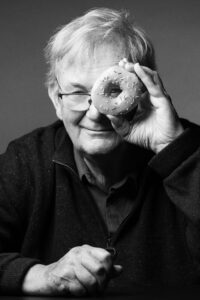
Martin Parr
Shared publisher: Dewi Lewis Publishing, Hoxton Mini Press
21 photobook(s) in the library
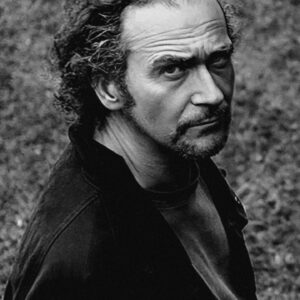
Chris Dorley-Brown
Shared publisher: Dewi Lewis Publishing, Hoxton Mini Press
6 photobook(s) in the library

Paul Hart
Shared publisher: Dewi Lewis Publishing, Hoxton Mini Press
6 photobook(s) in the library
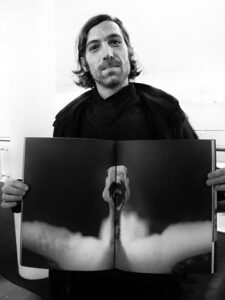
Giacomo Brunelli
Shared publisher: Dewi Lewis Publishing, Hoxton Mini Press
4 photobook(s) in the library
COMMUNITY DISCUSSION
Discuss this entry
Share interpretations, reading notes, and source-aware questions. For catalog corrections, use the feedback form below.
No discussion yet. Start the first focused conversation.
Sign in to join the discussion.
Optionally receive a digest when related photobooks are added to the catalog.
See something incorrect? Sign in to suggest a correction or report an issue.