Photographer
Richard Misrach
Richard Misrach (born 1949 in Los Angeles) is one of the most influential American photographers of the late twentieth and early twenty-first centuries, renowned for his large-format color photographs that explore the intersection of politics, ecology, and aesthetics. He began photographing while studying at UC Berkeley, documenting anti-war protests before completing a BA in Psychology.
Misrach’s early breakthrough, “Telegraph 3 AM” (1974), portrayed the homeless community of Berkeley’s Telegraph Avenue, but disillusionment with its limited social impact led him to the deserts of the American West. There, in 1979, he began “Desert Cantos,” a monumental, multi-decade study of the desert as a site of beauty, violence, mythology, and environmental crisis. The series examines fires, floods, nuclear test sites, petrochemical corridors, military bombing ranges, border barriers, and the traces of human occupation.
His later works expand this dialogue between humans and landscape: “Border Cantos” documents the U.S.–Mexico borderlands and the artifacts of migration; “On the Beach” presents monumental images of vulnerable human figures within vast coastal spaces; and “Destroy This Memory” captures post-Katrina New Orleans through survivor graffiti, presented without captions as a raw historical record.
Misrach has received major honors—including a Guggenheim Fellowship, multiple NEA Fellowships, and the ICP Infinity Award—and his work is held in leading museums such as MoMA, the Met, the National Gallery of Art, the Whitney, and the Centre Pompidou. Living and working in Berkeley, he remains a defining voice in environmental and political landscape photography, navigating what he calls the tension between the “aesthetic and the political.”
This Wikipedia biography provides a comprehensive overview of Richard Misrach’s life and work. Born in Los Angeles in 1949, Misrach initially studied psychology before turning to photography. He gained recognition for his large-scale color images of the American desert, particularly the series Desert Cantos, begun in 1979, which explores the impact of human activity on natural landscapes. The article notes his many publications, exhibitions at institutions such as the Museum of Modern Art and the San Francisco Museum of Modern Art, and honors like a Guggenheim Fellowship. It also contextualizes his contribution to contemporary landscape photography and his role in expanding the genre’s conceptual and aesthetic boundaries.

Richard Misrach: Cargo

Richard Misrach: Notations

Richard Misrach: Notations

Richard Misrach on Landscape and Meaning

The Mysterious Opacity of Other Beings

Richard Misrach: 11.21.11 5:40 PM

Petrochemical America

Destroy This Memory

On the Beach

Chronologies

Golden Gate

Pictures of Paintings

The Sky Book

Richard Misrach: Violent Legacies (Three Cantos)

Richard Misrach: Photographs, 1975-1987

Desert Cantos

Richard Misrach

One Picture Book #82: iPhone Studies: Reverse Scrubs
Selected Works & Key Projects
A source-backed introduction to individual photographs and significant bodies of work.
Key projects

Project · 2002–2004
On the Beach
On the Beach (2002–2004) is a major color series in which Misrach photographs bathers at a distance from high vantage points, rendering them as tiny figures in vast expanses of sea and sand. The project extends his long-standing interest in the human presence within overwhelming natural or altered landscapes, fusing the traditions of New Topographics with a deeply personal, almost meditative attention to the body in space. The work was published as a book by Aperture in 2012 and exhibited widely, and is significant because it marks a shift from his politically charged desert imagery toward an elegiac contemplation of humanity's fragile scale against elemental forces.
View source ↗
Project · 1979–2008
Desert Cantos
Desert Cantos is Misrach's most celebrated ongoing project, begun in 1979 and spanning three decades of large-format color photographs of the American Southwest deserts. Organized into distinct sub-series or cantos, it addresses nuclear testing, flooding, fires, and human intervention in the landscape, often pairing sublime beauty with catastrophic subject matter. The work established Misrach as a leading voice in contemporary landscape photography and was published by Aperture in multiple editions. Its significance lies in how it redefined environmental photography — refusing documentary neutrality in favor of a complex aesthetic that makes ecological violence visible through stunning pictorial beauty.
View source ↗
Project · 2012–2016
Golden Gate
Golden Gate is a collaborative project with novelist Orville Schell in which Misrach turned his camera on the San Francisco Bay Area, documenting the region through large-format color photographs that span its urban, industrial, and natural landscapes. The project moves between intimate observation and broad environmental survey, capturing the tension between the region's technological boom and its ecological fragility. Published by Aperture in 2017, Golden Gate represents Misrach's most sustained engagement with a metropolitan landscape and is significant for evolving his desert-era questions about human impact into the context of one of America's most contested environmental territories.
View source ↗Selected photographs
1984 · Richmond, California, United States
Submerged Oil Refinery, Refinery No. 1, Standard Oil of California
Submerged Oil Refinery (1984), part of the Flooded Refinery sub-series within Desert Cantos, depicts a Standard Oil refinery partially submerged in floodwater, its industrial structures mirrored in the still surface. The photograph transforms catastrophic environmental damage into a hauntingly beautiful composition, with the refinery appearing almost ghostly against the flooded plain. The image is significant because it exemplifies Misrach's signature strategy of aestheticizing disaster — the controlled pictorial harmony stands in deliberate tension with the environmental violence being documented, forcing viewers to confront the inadequacy of conventional documentary response.
Work source ↗1983 · Los Angeles, California, United States
Playboy Mansion, Playboy 25th Anniversary Issue, Los Angeles
This 1983 photograph, from the desert series, shows a lone figure swimming in the Playboy Mansion pool in the Mojave Desert — an image of surreal dislocation where Hollywood leisure culture appears stranded in the desert. The photograph is celebrated for its deadpan humor and cultural commentary, transposing the iconography of American hedonism into the harsh desert environment. Its significance lies in how it extends the Desert Cantos' concern with incongruous human structures into the realm of popular culture, creating one of the most recognizable and frequently reproduced images within the entire series.
Work source ↗
1984 · Pintwater Range, Nevada, United States
Submerged Truck, Pintwater Range, Nevada
Submerged Truck (1984), from the same Flooded Refinery canto, depicts a semi-truck nearly consumed by floodwaters in the Nevada desert, only its cab emerging above the surface. The image achieves a paradoxical stillness — the vehicle, an emblem of American mobility and commerce, is rendered utterly inert, half-swallowed by an elemental force. The photograph matters because it condenses the central paradox of Misrach's desert work: the collision between the technological ambitions of the American West and the indifferent scale of its natural environment, captured with an unsettling pictorial composure.
Work source ↗2001 · Fort Lauderdale, Florida, United States
Untitled (Statue of Liberty)
Untitled (Statue of Liberty), made in Fort Lauderdale between 2001 and 2002 during the On the Beach series, depicts a beachgoer wearing a Statue of Liberty crown, photographed from such a distance that the figure dissolves into the vast horizontality of the beach and ocean. The photograph layers American symbolism onto the body in a way that reads as both absurd and strangely poignant. Its significance lies in how it dramatizes the series' central concern — individual identity becomes nearly illegible against elemental scale, while cultural symbols float free of their usual monumental contexts.
Work source ↗2016 · San Francisco, California, United States
Concrete Pier #14, San Francisco
Concrete Pier #14 (2016), from the Golden Gate project, photographs the aged concrete and weathered wooden pilings of San Francisco's pier infrastructure with Misrach's characteristically large-format precision. The image turns neglected industrial infrastructure into a subject of luminous formal attention, revealing the beauty latent in decay and the slow violence of environmental erosion. Significant within the Golden Gate book, this photograph demonstrates Misrach's expansion from untamed desert to the built waterfront — showing that his central formal question, how landscape bears the record of human presence, translates powerfully to urban edges and maritime infrastructure.
Work source ↗-
1967
Education
Entered the University of California, Berkeley
Misrach entered the University of California, Berkeley in 1967 as a mathematics major. In a later Smithsonian oral-history interview, he recalled that photographing the antiwar unrest around campus became part of his formative encounter with photography.
Source: Archives of American Art, Smithsonian Institution Verified Sep 5, 2026
-
1973
Award
National Endowment for the Arts Fellowship
Misrach received a National Endowment for the Arts Fellowship in 1973. The Smithsonian American Art Museum records this as the first of three NEA fellowships he received, followed by fellowships in 1977 and 1984.
Source: Smithsonian American Art Museum Verified Sep 5, 2026
-
1979
Award
John Simon Guggenheim Memorial Fellowship
Misrach received a John Simon Guggenheim Memorial Fellowship in 1979. The award is documented by the Smithsonian American Art Museum alongside his NEA fellowships.
Source: Smithsonian American Art Museum Verified Sep 5, 2026
-
Since 1979
Series
Began Desert Cantos
Misrach began Desert Cantos around 1979. He described the ongoing project as a set of distinct yet related photographic “cantos,” whose combination forms a larger whole; it examines the American West’s deserts and the relationship between human activity and that landscape.
Source: International Center of Photography Verified Sep 5, 2026
-
1987
Photobook
Desert Cantos published
University of New Mexico Press published Misrach’s book Desert Cantos in 1987. The volume brought material from his ongoing desert project into book form and became the publication recognized by the International Center of Photography the following year.
Source: Smithsonian American Art Museum Verified Sep 5, 2026
-
March 12, 1988
Award
Infinity Award for Publication
The International Center of Photography named Misrach the recipient of its 1988 Infinity Award for Publication for Desert Cantos. ICP identifies the book as the result of an ongoing project made with an 8 × 10 camera since 1979.
Source: International Center of Photography Verified Sep 5, 2026
-
September 15, 2007–August 16, 2009
Exhibition
Richard Misrach: On the Beach touring exhibition
The Art Institute of Chicago organized Richard Misrach: On the Beach, opening there in 2007 and subsequently traveling to Honolulu, Washington, Seattle, and Atlanta. The National Gallery of Art presented nineteen monumental color photographs from the series in 2008, including works as large as six by ten feet.
Source: National Gallery of Art Verified Sep 5, 2026
-
2010
Photobook
Destroy This Memory published by Aperture
Aperture lists Destroy This Memory among Misrach’s subsequent titles and dates its publication to 2010. SFMOMA identifies the related body of work as photographs made after Hurricane Katrina, including graffiti messages encountered in abandoned towns.
Source: Aperture Verified Sep 5, 2026
-
2012
Photobook
Petrochemical America published with Kate Orff
Aperture lists Petrochemical America, made with landscape architect Kate Orff, among Misrach’s titles published in 2012. Fraenkel Gallery describes the associated book and exhibition as addressing health and environmental issues connected to dependence on oil.
Source: Aperture Verified Sep 5, 2026
Collection
Museum of Modern Art (MoMA)
MoMA holds Richard Misrach's photographs in its permanent collection, including works from his acclaimed Desert series. The museum's acquisition of his large-scale color landscapes reflects recognition of his contributions to contemporary American photography and the evolution of environmental representation.
Verified 2026-09-05MoMA artist page
Collection
San Francisco Museum of Modern Art (SFMOMA)
SFMOMA collects and exhibits Richard Misrach's work, highlighting his significance as a Bay Area photographer. The museum has presented his major surveys and holds prints that chronicle his innovative use of color and large-format view camera in documenting the American landscape.
Verified 2026-09-05SFMOMA artist page
Representation
Fraenkel Gallery
Fraenkel Gallery represents Richard Misrach and has exhibited his work for decades. The gallery's long-term partnership underscores Misrach's standing in the art market and provides a platform for new series and retrospectives, solidifying his place among leading contemporary photographers.
Verified 2026-09-05Fraenkel Gallery artist page
Richard Misrach and Kate Orff Discuss Petrochemical America (opens a new site)
Melissa Harris’s conversation with Misrach and landscape architect Kate Orff examines the development of Petrochemical America. Misrach recounts photographing Louisiana’s Mississippi River industrial corridor in 1998 and returning to the area after 2009; the discussion also addresses the project’s effort to combine photographs with research and speculative design. It is a focused source on the project’s environmental subject and interdisciplinary method.
Richard Misrach: In Conversation with Jeffrey Fraenkel (opens a new site)
A 2025 Fraenkel Gallery conversation in which Misrach speaks with Jeffrey Fraenkel about his long relationship with the gallery, beginning to photograph at night, the poetic form of Desert Cantos, and photographs made after Hurricane Katrina. It brings together several major strands of his practice in one artist-centered discussion, making it a useful overview for viewers seeking connections among his early methods, serial structure, and later subjects.
Richard Misrach: Never the Same | Art21 “Extended Play” (opens a new site)
In this Art21 Extended Play episode, Misrach reflects on his long career while working in the San Francisco Bay Area. He discusses returning to his archive during the early COVID-19 lockdowns after receiving a commission for UCSF’s Pritzker Psychiatric Clinic, and describes making new work from earlier photographs and negatives with digital tools. The film offers a concise artist-led account of archival revision, beauty, and conceptual foundations in his practice.
Another West: Curated by Richard Misrach (opens a new site)
In this Fraenkel Gallery video, Misrach discusses Another West, a group exhibition he curated in response to the gallery’s concurrent Carleton Watkins exhibition. He considers the varying ways the participating photographers address the West’s history and meaning. The resource is useful for understanding Misrach not only as a maker of western landscape photographs but also as a curator framing photographic responses to that region.
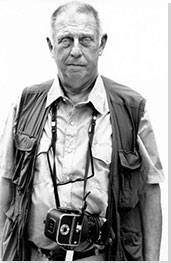
Lee Friedlander
Shared publisher: Aperture, Fraenkel Gallery
13 photobook(s) in the library
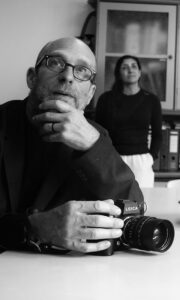
Todd Hido
Shared publisher: Aperture, Nazraeli Press
21 photobook(s) in the library
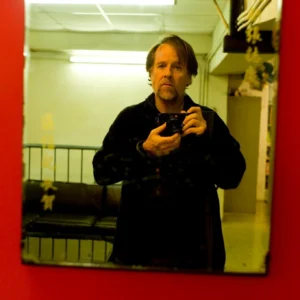
Alex Webb
Shared publisher: Aperture, Radius Books
15 photobook(s) in the library
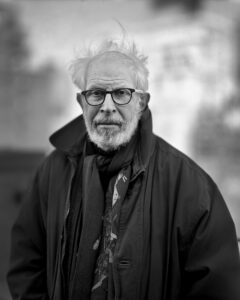
Stephen Shore
Shared publisher: Aperture, Nazraeli Press
14 photobook(s) in the library
COMMUNITY DISCUSSION
Discuss this entry
Share interpretations, reading notes, and source-aware questions. For catalog corrections, use the feedback form below.
No discussion yet. Start the first focused conversation.
Sign in to join the discussion.
Optionally receive a digest when related photobooks are added to the catalog.
See something incorrect? Sign in to suggest a correction or report an issue.