Photographer
Thomas Demand
Thomas Demand is a German artist whose work sits between sculpture and photography, born in Munich in 1964. He trained at the art academies of Munich and Düsseldorf before earning an MFA at Goldsmiths, University of London. Today he splits his time between Berlin and Los Angeles, where he also teaches, maintaining a transatlantic presence that shapes his engagement with both European memory and American media culture. Demand is often described as a photographer, but his images are never taken directly from the world; instead, they begin as monumental paper-and-cardboard constructions that reproduce existing scenes, often sourced from news photographs or historical records. After painstakingly building each life-size or scaled model, he photographs it and then destroys the model, leaving only the photographic trace.
This process defines his distinctive visual language. The photographs appear hyper-real at first glance—clean, shadowless, and eerily empty—yet upon closer inspection reveal the texture of paper, visible seams, and a dreamlike flattening. By removing human figures and stripping spaces of their original context, Demand questions the reliability of photographic evidence and how images construct our understanding of history and current events. His method differs sharply from documentary photographers or those who stage elaborate fictions; he operates in a conceptual space where sculpture, architecture, and photography collapse into a single mediated artifact. The sense of absence is palpable, turning each image into a meditation on memory, loss, and the afterlife of media representations.
Demand’s major bodies of work often emerge from iconic or ordinary places that have carried political or cultural weight—offices, kitchens, libraries, and even entire facades. While specific titles of individual series are not listed in the available sources, he has consistently investigated spaces tied to real events, such as the interiors of government buildings or scenes from widely circulated news imagery. His retrospective exhibition “The Stutter of History,” shown at The Metropolitan Museum of Art, offered a survey of his practice and underscored his significance in contemporary art. This show, alongside years of gallery exhibitions at leading venues like Sprüth Magers and Esther Schipper, has solidified his reputation as one of the foremost contemporary German artists.
Demand’s historical importance lies in his ability to update conceptual art for the age of mass media, bridging the legacy of German post-war photography with international currents in sculpture and installation. He emerged in the 1990s, gaining recognition for work that paralleled debates about the ‘post-photographic’ condition—where images circulate widely and lose their indexical link to reality. Critics have praised his precision and intellectual rigor, but some note that his cool aesthetic can seem remote or overly detached. Nevertheless, his influence extends to younger artists who explore materiality and media skepticism.
For photobook collectors, Demand’s publications are noteworthy because his photographs acquire another layer when reproduced in books. The sequencing and design often mirror the exhibition experience, allowing viewers to trace the transition from model to picture. Publishing collaborations have produced catalogues such as those accompanying major museum surveys, offering a valuable entry point into his oeuvre. A monograph or exhibition catalogue with detailed reproductions is the most direct way to appreciate the subtle paper textures that are lost in digital viewing, making his printed works essential objects for serious collectors of contemporary photography.
〔PBL-BIO/2〕
Thomas Demand (born 1964) is a German photographer and artist known for large-scale photographs of meticulously constructed paper models of real spaces, often derived from mass media imagery. He studied at the Academy of Fine Arts Munich and the Kunstakademie Düsseldorf. His process involves building life-size cardboard and paper replicas of environments such as offices, kitchens, or political scenes, photographing them, and then destroying the models. Demand’s work interrogates memory, representation, and the boundary between documentary and constructed image. He has gained international recognition through exhibitions at major museums, including the Museum of Modern Art and Tate, and his pieces are held in prominent global collections.


Selected Works & Key Projects
A source-backed introduction to individual photographs and significant bodies of work.
Key projects

Project · 2008
Presidency
Presidency is a five-print chromogenic work dated 2008 in the National Gallery of Art collection. Its scale is explicitly serial rather than singular: the NGA records five prints with an overall width of more than ten metres. It merits selection as a substantial late-2000s example of Demand’s photographic practice because it brings his constructed-image method to a politically coded setting while retaining the medium’s polished, apparently evidentiary surface. The work is also documented in the NGA’s permanent collection and in a 2008 New York Times Magazine feature, establishing a clear institutional and editorial record for the project.
View source ↗Project · 2008–2023
Dailies
Dailies is a long-running body of work dated 2008–2023 on Thomas Demand Studio’s selected-works site. The project is significant for its sustained duration and for its repeated public presentation: the studio documents installations at Sprüth Magers, Matthew Marks Gallery, London’s National Gallery, the High Line in New York, Centro Botín, Garage, UCCA Edge, and Jeu de Paume. These records make Dailies a useful project-level selection rather than a single-image substitute: it shows Demand pursuing a serial format over fifteen years and circulating it across gallery, museum, public-art, and international exhibition contexts.
View source ↗
Project · 2012
Pacific Sun
Pacific Sun is a 120-second stereo video made in 2012. LACMA states that Demand made it in Los Angeles while a Scholar in Residence at the Getty Research Institute, beginning with online-circulated security-camera footage of a cruise ship in a South Pacific storm. He built and animated a life-size paper model without people; its later-added soundtrack evokes rolling water and falling objects. The project matters because it extends his paper reconstruction into projected motion and sound, making media-derived experience physically immersive while keeping its fabrication visible as a conceptual condition.
View source ↗Selected photographs
1996
Room (Zimmer)
Room (Zimmer), a 1996 chromogenic print in MoMA’s collection, reconstructs in paper the hotel room in which L. Ron Hubbard lived and worked in 1972–73, using an earlier photograph as its source. MoMA identifies the deliberately even lighting, sharply creased pillow, numberless clock, and keyless typewriter as cues that expose the room as a model. The photograph merits selection because it directly demonstrates Demand’s central challenge to photography’s authority: an image can resemble a documentary record while openly withholding the physical detail on which viewers normally base trust.
Work source ↗1997
Studio
Studio is a 1997 chromogenic print in MoMA’s Department of Photography collection. MoMA records it as a large-format work measuring approximately 183.5 by 349.5 centimetres, acquired by gift and purchase. It was later included in MoMA’s 2005 Thomas Demand exhibition and in the museum’s 2009 photography rotation. Its selection is warranted by that sustained museum visibility and by its position early in the period when Demand had shifted from using photography to document paper constructions to making constructions specifically for photography. It therefore anchors the formative photographic logic of his mature practice.
Work source ↗2001 · Florida
Poll
Poll is a 2001 chromogenic print in MoMA’s collection, based on the Florida site where disputed paper ballots from the 2000 United States presidential election were assembled for examination. MoMA explains that Demand omitted people and rebuilt the scene as a crisp, life-size paper-and-cardboard construction before photographing it. The picture is significant because it turns an already media-saturated political flashpoint into an image that is simultaneously clearer and less explanatory than its source. It makes the instability of visual memory—not factual recovery—the subject of a photograph tied to a major public event.
Work source ↗2006 · Majorca
Grotte / Grotto
Grotte / Grotto is a 2006 photograph listed by Thomas Demand Studio and documented in installations at the Serpentine Gallery, Fondazione Prada, K21, and the Israel Museum. A text published on the studio site describes its source as a postcard view of a Majorcan grotto and records an exceptionally elaborate reconstruction: 30 tons of grey cardboard and 900,000 computer-measured components. Unlike works tied to a news event, this image begins with an ordinary scenic motif. It merits selection for showing how Demand’s reconstruction method can address perception itself, transforming a familiar natural spectacle into a deliberately fabricated photographic environment.
Work source ↗2011 · Fukushima, Japan
Kontrollraum / Controlroom
Kontrollraum / Controlroom is a 2011 work documented by Thomas Demand Studio and shown in later exhibitions at Jeu de Paume, UCCA Edge, Centro Botín, and Garage. In a 2012 Artforum text hosted on the studio site, Demand identifies its source as photographs of the damaged Fukushima nuclear-plant control room. He notes that images distributed by the plant operator could suppress visible disorder, while his reconstruction took such representational slippage as its point of departure. The photograph merits selection because it connects Demand’s fabricated spaces to disaster imagery, institutional image management, and the difficulty of separating an event from its circulation as pictures.
Work source ↗-
1987–1989
Education
Studies at Academy of Fine Arts, Munich
Thomas Demand studied sculpture at the Academy of Fine Arts, Munich, under Fritz Schwegler. This foundational training shifted his focus toward three-dimensional construction, which later became integral to his photographic practice.
Source: Wikipedia Verified Sep 5, 2026
-
1991–1992
Education
Studies at Kunstakademie Düsseldorf
Demand continued his studies at the Kunstakademie Düsseldorf, where he engaged with the school's legacy of conceptual and media-based art. This period solidified his later approach to producing paper models as subjects for large-scale photographs.
Source: Wikipedia Verified Sep 5, 2026
-
2005
Exhibition
Solo exhibition at Museum of Modern Art, New York
The Museum of Modern Art presented a major survey of Demand's work, bringing international attention to his photographic reconstructions of architectural and political spaces. The exhibition demonstrated how his paper models, devoid of human presence, provoke critical questions about memory and media representation.
Source: Wikipedia Verified Sep 5, 2026
-
2007
Award
Deutsche Börse Photography Prize shortlist
Demand was shortlisted for the Deutsche Börse Photography Prize in 2007, one of the most prestigious awards in the field. His nomination acknowledged the critical impact of his paper-model photographs on contemporary debates about representation and documentary truth.
Source: Wikipedia Verified Sep 5, 2026
-
2010
Exhibition
Retrospective at Los Angeles County Museum of Art (LACMA)
LACMA organized a comprehensive retrospective, later touring to other museums. The exhibition highlighted Demand's consistent method of constructing life-size paper replicas of scenes from news photographs and political events, then photographing them to examine how images shape remembered reality.
Source: Wikipedia Verified Sep 5, 2026
Other institution
Kunstakademie Düsseldorf
Thomas Demand studied at the Kunstakademie Düsseldorf from 1987 to 1992, where he was a master student of Fritz Schwegler. This prominent German art academy provided his formal training and fostered his conceptual foundations, particularly his later focus on photography as a medium for exploring memory and reproduction.
Verified 2026-09-05Wikipedia
Representation
Sprüth Magers
Sprüth Magers, a leading contemporary art gallery with locations in Berlin, London, and Los Angeles, represents Thomas Demand. The gallery has showcased his work since the 1990s, playing a significant role in establishing his international reputation and facilitating the exhibition and sale of his large-scale architectural photographs.
Verified 2026-09-05Wikipedia
Representation
Matthew Marks Gallery
Matthew Marks Gallery in New York represents Thomas Demand, providing him a major venue in the American art market. The gallery has hosted solo exhibitions of his paper-model photography, introducing his meticulous reconstructions of significant interiors to a broad audience and affirming his place within contemporary photographic practice.
Verified 2026-09-05Wikipedia
Collection
Museum of Modern Art (MoMA)
The Museum of Modern Art (MoMA) in New York holds several of Thomas Demand's works in its permanent collection. MoMA's acquisition of his photographs, such as those depicting reconstructed political and historical interiors, underscores his critical recognition and places him among key artists exploring the constructed nature of photographic representation.
Verified 2026-09-05Wikipedia
Collection
Tate
Tate, the United Kingdom's major art institution, collects and exhibits works by Thomas Demand. Discussions of his practice frequently cite Tate's holding as evidence of his acceptance within institutional contexts, and Tate has also presented his work in curated surveys, further validating his impact on conceptual photography.
Verified 2026-09-05Wikipedia
Collection
Centre Pompidou
The Centre Pompidou in Paris includes Thanos Demand's photography in its collections, reflecting his significance within European contemporary art. By acquiring his large-scale imagery, the institution acknowledges his innovative methods of constructing and photographing paper models, contributing to the broader discourse on reproduction and memory in modern photography.
Verified 2026-09-05Wikipedia
Thomas Demand. Mirror Without Memory (opens a new site)
Garage Museum of Contemporary Art’s exhibition resource documents Mirror Without Memory, presented from 10 September 2021 to 30 January 2022. It outlines Demand’s use of life-size paper and cardboard reconstructions derived from press and other images, then photographed after the models are destroyed. The presentation brought together works from 1991–2021 and examined models, perception, memory, and the relation between events and images.
On Paper: An Interview with Thomas Demand (opens a new site)
Olivia Kan-Sperling interviews Demand in connection with images from The Dailies and MACK’s expanded edition of the project. The conversation addresses paper as a material in his work, its associations with information and model-making, literary reference points for The Dailies, and the relation between his home and workspace.
Photographic memory – an interview with Thomas Demand (opens a new site)
Will Wiles’s interview considers Demand’s long-running use of sculpture and photography. It describes his procedure of constructing cardboard models of real environments, photographing them, and destroying the models; it also discusses how seemingly ordinary interiors in the photographs can carry connections to historically charged events.
“My pictures give you an image of your future memory”: Thomas Demand in conversation with It’s Nice That (opens a new site)
Ruby Boddington’s conversation with Demand surveys the shift in 1993 when he began making sculptures specifically to be photographed rather than documenting sculpture. It addresses his scale reconstructions of images from current affairs, the later destruction of the models, and his interest in photography, subjective memory, and unstable claims to objective reality.
Director’s Series: Thomas Demand (opens a new site)
LACMA’s Director’s Series conversation addresses Demand’s film installation Pacific Sun, acquired jointly by LACMA and the Israel Museum, Jerusalem. The video identifies the work as 2,400 frames based on his reconstruction of YouTube footage of a cruise ship in a violent storm, and places it alongside discussion of his early work and his practice across sculpture, architecture, photography, and film.
The solitude of the picture: Jeff Wall and Thomas Demand (opens a new site)
The National Gallery of Victoria records Fenella Kernebone in conversation with Jeff Wall and Thomas Demand. The program invites the two photographers to reflect on their respective practices and on assembling a photography exhibition, making it a focused resource for comparing two distinct approaches to constructed photographic images and exhibition-making.
Thomas Demand: Constructing the Authentic (opens a new site)
In this Louisiana Channel interview, Demand discusses his method of starting from an existing image, building a three-dimensional cardboard model, photographing it, and destroying the model. The program frames the process as a transformation of reality and considers his ideas about memory, selection, omission, and the relation of photography to conceptual art.
Michael Schmidt
Shared publisher: Architectural Association, MACK
3 photobook(s) in the library
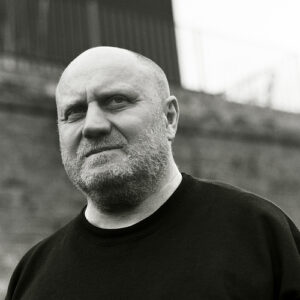
Nick Waplington
Shared publisher: MACK
18 photobook(s) in the library
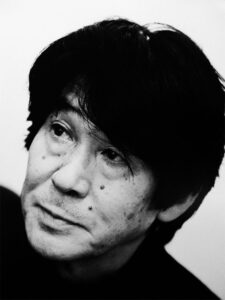
Daido Moriyama
Shared publisher: MACK
15 photobook(s) in the library
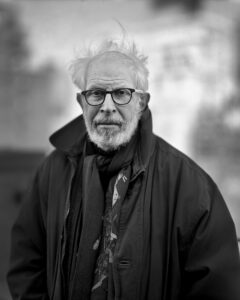
Stephen Shore
Shared publisher: MACK
14 photobook(s) in the library
COMMUNITY DISCUSSION
Discuss this entry
Share interpretations, reading notes, and source-aware questions. For catalog corrections, use the feedback form below.
No discussion yet. Start the first focused conversation.
Sign in to join the discussion.
Optionally receive a digest when related photobooks are added to the catalog.
See something incorrect? Sign in to suggest a correction or report an issue.