Photographer
Marina Vitaglione
Marina Vitaglione is a French photographer, visual artist, photo editor, and writer based in London. Her practice is rooted in environmental concerns, and she works across documentary photography, editorial image-making, and writing. In parallel with her own projects, she has worked as a photo editor, including as an international photo editor at The Wall Street Journal. That dual position—selecting and shaping other photographers’ images while producing her own—informs a practice that is attentive to narrative, context, and the ethical representation of places under pressure.
Her visual language tends to be quiet, poetic, and place-specific rather than spectacular. She is drawn to landscapes and communities affected by climate change, pollution, subsidence, and other slow forms of environmental damage. This differs from much news-driven climate photography: instead of isolated catastrophe, her images often suggest duration, memory, and attachment to a changing home. Her writing and research interests reinforce that approach, giving her projects a documentary grounding while leaving room for ambiguity and atmosphere.
Her best-known photobook is Solastalgia, published in 2017 by the independent publisher Overlapse. The title refers to a form of homesickness experienced while still at home, when the surrounding environment has become altered or degraded. In the book, that idea is explored through Venice, a city whose delicate foundations are affected by tides, subsidence, and pollution. The project matters because it translates an abstract environmental concept into a specific urban and human situation. Through sequencing and book design, Solastalgia asks readers to consider loss not only as an event but as an ongoing condition.
Vitaglione’s work has also received wider attention in contemporary photography. According to her website, a project of hers was nominated for the 2023 Prix Pictet Award for Sustainability and Photography and shortlisted for a 2025 Wellcome award. These recognitions place her within current conversations about climate, health, and visual culture. Her French background and London base connect European and British photographic contexts, while her editorial experience gives her an informed view of how environmental stories are commissioned, edited, and circulated.
For photobook readers and collectors, Solastalgia remains a useful entry point. It is an example of how an independent publisher can give an environmental project a considered physical form, with sequencing and design carrying as much meaning as individual photographs. Readers interested in climate-focused photobooks, poetic documentary, or the relationship between text and image will find it a rewarding study. Her later and ongoing work is worth following because it continues to test how photography can register environmental change without reducing it to spectacle.
Blind Magazine describes Marina Vitaglione as a French visual artist, photo editor, and writer based in London. In its author biography, the publication identifies her as a photo editor in The Wall Street Journal’s London bureau, collaborating with photographers and photojournalists on international assignments, and as a regular writer on photography. It characterizes her personal photographic practice as addressing environmental crises through poetic and documentary approaches intended to make otherwise invisible realities of the Anthropocene perceptible.
Overlapse describes Marina Vitaglione as a French photo researcher, photographer, and journalist in the author information for her book Solastalgia. The publisher states that she was a fellow at Fabrica communication research centre in Treviso, Italy, from 2016 to 2017, and that she earned an MA in Documentary Photography and Photojournalism with Distinction from London College of Communication. The same page describes her then-current work as commissioning editor with Panos Pictures.
The Photographers’ Gallery identifies Marina Vitaglione as assignments and social-media editor at Panos Pictures. Its 19 November 2019 article states that she began her photography career with a year-long residency as an editorial photo researcher at Fabrica research centre in Treviso, Italy. It further records that she worked at Magnum Photos’ Paris office, assisting its cultural and exhibitions team, before joining Panos in 2018.

How to make the invisible, visible? AIR by Marina Vitaglione (opens a new site)
This interview addresses AIR, Vitaglione’s photographic series about fine-particle pollution in London. Vitaglione describes working with Imperial College London’s Environmental Research Group and the London Air Quality Network, using monitoring samples enlarged through microscopy or Raman spectroscopy before producing cyanotypes. It records her account of the project’s material choices, scientific collaboration and aim to make pollution perceptible through photography.
Solastalgia: Print Edition (opens a new site)
Publisher Overlapse presents Vitaglione’s Solastalgia as a photo-text work about climate change, rising tides and Venice’s 118-island archipelago. The page explains that the photographs derive from film negatives left for weeks in Adriatic seawater, where mould altered their emulsions. It also documents the book’s 84 pages, 41 colour photographs, English text with Italian translation, and the associated limited print edition.
Yorgos Lanthimos: From Set Photographer to Still-Maker (opens a new site)
This Blind Magazine article is by Marina Vitaglione and considers Yorgos Lanthimos’s VISCIN photobook and photographic practice. Vitaglione describes the 27-image accordion format, its relation to cinema, and the work’s movement away from direct film documentation toward a more autonomous mode of still photography. It is a useful example of her published writing on contemporary photographic books and image-making.
Technicolour lakes and butterfly brains: Wellcome Photography Prize 2025 – in pictures (opens a new site)
The Guardian includes Vitaglione’s 2021 image Brixton Road, Lambeth, South London among the Wellcome Photography Prize 2025 scientific and medical finalists. Its caption identifies the subject as magnified pollution particles from Brixton Road and states that the work was made in collaboration with Imperial College scientists. The feature provides an editorial context for a single AIR-series image as a visualisation of fine-particle pollution.
Working Locally: Daragh Soden & Marina Vitaglione (opens a new site)
Published by The Photographers’ Gallery, this professional-practice article records Vitaglione’s advice on photographing locally and on commissioned assignments. Her contribution focuses on researching a story and location, clarifying a brief and audience, coordinating with a reporting team, and identifying the photographer’s particular value to a story. The page also identifies her then role at Panos Pictures and outlines earlier work at Fabrica and Magnum Photos’ Paris office.
London's iconic black cab under threat (opens a new site)
This Vimeo video is credited on its page to Marina Vitaglione. Its description concerns the possible replacement of the traditional Hackney Carriage by greener alternatives and the consequences for workers at Manganese Bronze. The page frames the subject as both a question of London’s familiar black-cab design and of British manufacturing heritage.
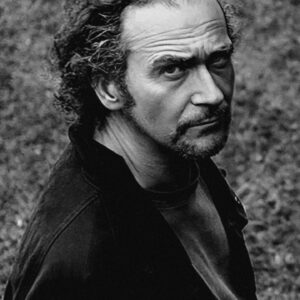
Chris Dorley-Brown
Shared publisher: Overlapse Books
6 photobook(s) in the library
Mandy Barker
Shared publisher: Overlapse Books
3 photobook(s) in the library
Lara Shipley
Shared publisher: Overlapse Books
2 photobook(s) in the library
Amani Willett
Shared publisher: Overlapse Books
2 photobook(s) in the library
COMMUNITY DISCUSSION
Discuss this entry
Share interpretations, reading notes, and source-aware questions. For catalog corrections, use the feedback form below.
No discussion yet. Start the first focused conversation.
Sign in to join the discussion.
Optionally receive a digest when related photobooks are added to the catalog.
See something incorrect? Sign in to suggest a correction or report an issue.