Photographer
David Goldblatt
David Goldblatt (29 November 1930 – 25 June 2018) was a South African documentary photographer whose career was shaped by a sustained attempt to describe his country through photographs rather than through slogans. Working from the middle of the twentieth century until his death, he photographed South African people within the political landscape of the apartheid era; after apartheid ended, he concentrated increasingly on the country’s landscapes. He was named an Honorary Fellow of the Royal Photographic Society, and he also wrote journal articles and books on aesthetics, architecture and structural analysis — writing that runs parallel to, rather than apart from, his photographic thinking.
His visual language was deliberately cool. Where much protest photography of the period aimed at the decisive, shocking instant, Goldblatt described ordinary conditions — work, dwelling, distance, the built environment — that made apartheid imaginable and gave it its everyday persistence. He described his “dispassion” as an attitude in which he tried to avoid easy judgments, and he recognised that this produced photographs which could appear disengaged and apolitical while being, in his own account, the opposite. The restraint is not neutrality; it is a method for making a viewer stay with an image long enough to notice what is actually there.
That method distanced him from many contemporaries in anti-apartheid art and photojournalism. Instead of focusing on the violent events that came to define the international image of South Africa, he photographed the arrangements, habits and structures that preceded and produced them. His protest is therefore oblique: it operates through social description rather than testimony, and it gathers force through accumulation across sequences of pictures rather than through any single dramatic frame. This is why his work can seem quiet on first encounter and difficult to shake afterwards.
After the formal end of apartheid he continued to work, turning his attention toward landscape and the traces that history leaves on terrain and settlement. The shift was not an abandonment of politics but a change of vantage point: the same question of how power becomes visible in ordinary space continued to organise the work. His writing on architecture and structure is best read alongside the photographs, as a second register of the same inquiry into how societies build and occupy the places they live in.
For readers and collectors, Goldblatt’s significance is closely tied to the book form. His arguments are made through editing, sequencing and the pairing of images, so his publications — including his books on aesthetics and architecture — matter as much as individual prints. A useful entry point is to read his written work together with his photographs and to look at how his sequences are constructed rather than at isolated pictures. Because search evidence for this record is limited to a single encyclopaedic source, specific editions, publishers and exhibition histories should be verified independently before being treated as settled fact.
〔PBL-BIO/2〕


Selected Works & Key Projects
A source-backed introduction to individual photographs and significant bodies of work.
Key projects

Project · 1963–1975
Some Afrikaners Photographed
Begun in 1963 and first published in 1975, Some Afrikaners Photographed considers Afrikaners during the consolidation of National Party rule. Goldblatt concentrated on ordinary settings and people instead of headline events, bringing private demeanor, work, and rural life into contact with the political power exercised in their name. The project neither reduces its sitters to symbols nor separates everyday life from the racial order around it. It merits selection for making sustained, ethically uneasy portraiture a means of studying the constituency and social texture of apartheid.
View source ↗
Project · 1965–1973
On the Mines
On the Mines grew from Goldblatt’s photographs of the mining districts that shaped his hometown of Randfontein as their fortunes declined in the mid-1960s. First published in 1973 with an essay by Nadine Gordimer, it addresses mining as a human, economic, and built system rather than merely a workplace. Its sequence moves among tailings, shaft sinking, and mining men, making physical infrastructure register as social history. It merits selection because this sustained essay established the mine as a central lens through which Goldblatt examined apartheid-era South Africa’s unequal foundations.
View source ↗Project · 1983–2014
Structures of Dominion and Democracy
Structures of Dominion and Democracy is Goldblatt’s expansive, long-running study of South African places charged with history: monuments, churches, homes, secular buildings, and memorials. Begun as the Structures project in 1983, it follows how architecture and landscape preserve choices about authority, belonging, and remembrance across apartheid and democracy. The significance lies in its cumulative method: modest sites become evidence of large political systems without being reduced to illustration. It merits selection as the project that most fully joins Goldblatt’s attention to description, place, captioning, and the social meanings embedded in constructed environments.
View source ↗Selected photographs

1965 · Luipaardsvlei Gold Mine, Krugersdorp, South Africa
Barber's Chair of Mining Timbers, Luipaardsvlei Gold Mine, Krugersdorp, South Africa
This 1965 photograph isolates a barber’s chair made from mining timbers at Luipaardsvlei Gold Mine. Its precisely descriptive title and concentrated view turn an improvised object into evidence of labor’s surrounding material culture. Rather than stage a dramatic underground scene, Goldblatt attends to what work leaves available for use, adaptation, and looking. The image merits individual selection because it condenses a principal strength of his mining photographs: industrial materials, human need, and social conditions are connected through a quiet, exact observation. MoMA’s collection record secures its title, date, and location.
Work source ↗
1971 · Rustenburg Platinum Mine, Rustenburg, South Africa
Gang on surface work, Rustenburg Platinum Mine, Rustenburg
Goldblatt made this photograph of a surface-work gang at Rustenburg Platinum Mine in 1971. It deserves individual selection because people and industrial organization meet directly in one sharply titled, materially specific scene. A MoMA gallery label situates Goldblatt’s mining photographs within his attention to the people and structures of mines, and to the built environment of apartheid. The photograph therefore does more than document a job: it identifies labor as inseparable from the systems and sites that arrange it. Its inclusion also gives the catalog a human-scale counterpoint to Goldblatt’s architectural and landscape studies.
Work source ↗
1972 · Soweto, South Africa
Undertaker, Soweto, South Africa
Undertaker, Soweto, South Africa records a man standing before a row of coffin compartments in 1972. Goldblatt’s frontal composition gives the encounter the gravity of a portrait while retaining the cramped working interior and its practical details. The photograph merits selection because it resists reducing Soweto to spectacle: a specific occupation, business setting, and individual presence carry the picture. Its inclusion in MoMA’s collection helps document its standing within Goldblatt’s sustained photographs of South African life, while its formal restraint shows how he made ordinary spaces bear historical weight without sensationalizing them.
Work source ↗
1972 · Soweto, South Africa
Couple in their House, Soweto, South Africa
In this 1972 interior, a formally dressed man and his seated wife occupy a compact Soweto home. Goldblatt later explained that the couple chose how to present themselves before he photographed them, an account that makes the picture a collaboration in self-representation rather than an unguarded social specimen. The raised bed, furnishing, clothing, and doorway make domestic space central to the composition. It merits selection because it realizes Goldblatt’s stated wish to show ordinary life in Soweto, while making dignity, constraint, and photographic encounter visible together.
Work source ↗
1972 · Soweto, South Africa
Young Man with a Pass, Soweto, South Africa
Young Man with a Pass, Soweto, South Africa centers on a young man holding the compulsory pass document used to regulate Black South Africans’ movement under apartheid. Goldblatt recalled that the man produced it while sitting with others near a coal yard, reading the gesture as both display and defiance. The close grouping preserves the social ease of the gathering, while the document introduces state control into that ordinary moment. This is a key individual image because it makes a legal instrument visible through a voluntary encounter, rather than through an image of arrest or confrontation.
Work source ↗-
1963
Career milestone
Full-time commitment to photography
After his father's death, Goldblatt sold the family business and began working as a photographer full time, marking the start of his professional career.
Source: Hasselblad Foundation Verified Sep 12, 2026
-
1975
Photobook
Publication of Some Afrikaners Photographed
Goldblatt's second book, Some Afrikaners Photographed, gathered his photographs of Afrikaner small farmers made after the introduction of apartheid.
Source: Centre Pompidou Verified Sep 12, 2026
-
1989
Career milestone
Founding of the Market Photo Workshop
Goldblatt founded the Market Photo Workshop in Johannesburg to teach visual literacy and photographic skills, with emphasis on those disadvantaged under apartheid.
Source: Market Photo Workshop Verified Sep 12, 2026
-
1998
Photobook
David Goldblatt: Photographs from South Africa
South Africa: The Structure of Things Then was newly published in 1998 and supplied the photographs for the MoMA presentation, consolidating decades of Goldblatt’s work on the built environment and apartheid’s ideological structures. MoMA’s exhibition documentation directly identifies the book and its relationship to the show.
Source: Museum of Modern Art Verified Sep 12, 2026
-
1998
Exhibition
David Goldblatt: Photographs from South Africa
MoMA presented David Goldblatt: Photographs from South Africa from July 16 to October 6, 1998—his first solo New York museum exhibition and, as later MoMA scholarship notes, the first solo museum exhibition outside South Africa. The museum’s exhibition page is a primary institutional record.
Source: Museum of Modern Art Verified Sep 12, 2026
-
2001
Exhibition
Retrospective David Goldblatt: Fifty-One Years opens in Barcelona
The retrospective Fifty-One Years opened in Barcelona in 2001 and later travelled to venues in New York, Rotterdam, Lisbon, Oxford, Brussels, Munich and Johannesburg.
Source: International Center of Photography Verified Sep 12, 2026
-
2006
Award
Hasselblad Award
Goldblatt received the 2006 Hasselblad Award, accompanied by a first solo exhibition in Scandinavia at the Hasselblad Center.
Source: Hasselblad Foundation Verified Sep 12, 2026
-
2009
Award
Henri Cartier-Bresson Award
Goldblatt received the 2009 Henri Cartier-Bresson Award for his project TJ, on Johannesburg; the fellowship supported continued work on the city.
Source: Fondation Henri Cartier-Bresson Verified Sep 12, 2026
-
12 January – 17 April 2011
Exhibition
Exhibition TJ, 1948–2010
The Fondation Henri Cartier-Bresson presented TJ, 1948–2010, drawn from the HCB Award project and showing Goldblatt's Johannesburg work from the apartheid era and after.
Source: Fondation Henri Cartier-Bresson Verified Sep 12, 2026
-
2013
Award
ICP Infinity Award: Cornell Capa Lifetime Achievement
The International Center of Photography named Goldblatt the recipient of the 2013 Cornell Capa Lifetime Achievement Award.
Source: International Center of Photography Verified Sep 12, 2026
-
2018
Archive
Fall 2024 Yale University Art Gallery Magazine
In early 2018 Goldblatt entrusted his personal archive—370 boxes documenting photographic projects, commercial work, research, prints, negatives, and correspondence—to Yale’s Beinecke Rare Book and Manuscript Library. This is a consequential preservation milestone for research into his practice; Yale University Art Gallery’s publication is an institutional account by the archive’s and collection’s custodians.
Source: Yale University Art Gallery Verified Sep 12, 2026
-
21 February – 13 May 2018
Exhibition
Retrospective at Centre Pompidou
The Centre Pompidou held its first Goldblatt retrospective, surveying more than fifty years of work through major series such as On the Mines and Particulars alongside less-known material.
Source: Centre Pompidou Verified Sep 12, 2026
David Goldblatt — Art21 artist page and video programs (opens a new site)
Art21's artist page for David Goldblatt gathers several video programs, including a Season 9 Art in the Twenty-First Century segment on Johannesburg and a shorter Extended Play film. The material surveys his decades of photographing South African people, landscapes, and architecture as a form of social criticism.
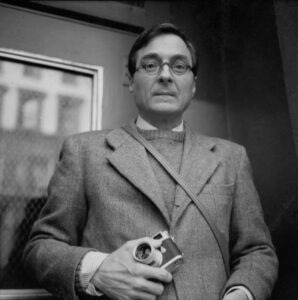
William Eggleston
Shared publisher: Steidl, Yale University Press
26 photobook(s) in the library
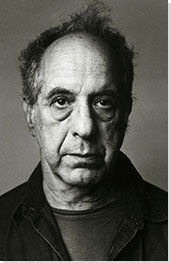
Robert Frank
Shared publisher: Steidl, Yale University Press
19 photobook(s) in the library
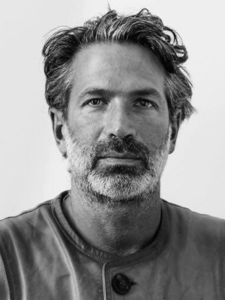
Adam Broomberg
Shared publisher: MACK, Steidl
14 photobook(s) in the library
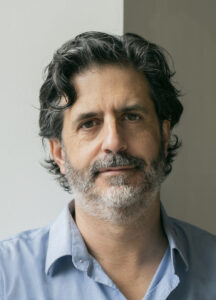
Alec Soth
Shared publisher: MACK, Steidl
13 photobook(s) in the library
COMMUNITY DISCUSSION
Discuss this entry
Share interpretations, reading notes, and source-aware questions. For catalog corrections, use the feedback form below.
No discussion yet. Start the first focused conversation.
Sign in to join the discussion.
Optionally receive a digest when related photobooks are added to the catalog.
See something incorrect? Sign in to suggest a correction or report an issue.