Photographer
David Pace; Stephen Wirtz
David Pace (1951–2020) was an American photographer based in the San Francisco Bay Area. Born in San Jose to Italian and Portuguese heritage, he became fascinated by photography at the age of eight, when he received a Kodak Brownie Hawkeye camera. He later taught photography at colleges and universities for more than two decades, influencing many emerging artists while sustaining a substantial personal practice. His career was defined by a close engagement with place and a persistent questioning of photographic truth.
Pace’s visual language joined the discipline of large-format photography to an intimate, contemplative attention to the California landscape and to ordinary environments. His work did not depend on spectacle or overt drama. Instead, he looked for visual structure in locations that might otherwise pass unnoticed, allowing light, surfaces, distance, and duration to become active elements in the image. In series such as “At Work,” begun in 2008, industrial and domestic settings become sites for careful observation and quiet formal discovery.
Unlike contemporaries who pursued a more urgent documentary vocabulary, Pace favored a slower and more formalist method. He often returned to the same site over many years, registering subtle changes in light, atmosphere, use, and time. This sustained attention gave his photographs a sense of both stillness and accumulation. Teaching remained central to his life, but it was not separate from his artistic inquiry: his generosity as a mentor and his own patient investigations developed alongside one another.
Working with gallerist Stephen Wirtz, Pace co-authored the landmark photobook “Images in Transition: Wirephotos 1938–1945,” published by Schilt Publishing in 2019. The book examines vintage wire-transmission photographs and the tactile traces produced by retouching and transmission. Those marks complicate any simple belief in photojournalistic authenticity. Through the project, Pace and Wirtz invited viewers to consider how media images have been altered throughout history, contributing a pointed case study to wider discussions of photographic veracity. Their collaboration also extended into curatorial and archival work.
Pace exhibited in gallery and institutional contexts, although his practice remained grounded in teaching and personal exploration. The collection he built with his wife, Diane Jonte-Pace, later became the subject of institutional acquisitions and exhibitions. After his death in October 2020, memorial exhibitions and essays emphasized his generosity, mentorship, and quiet persistence. For photobook collectors, “Images in Transition” is an especially compelling entry point: its subject is provocative, while its sequencing, design, and printing foreground the materiality of the wirephoto and encourage close reading. It is therefore a meaningful book for collections concerned with visual-media history and the ethics of representation.
〔PBL-BIO/2〕

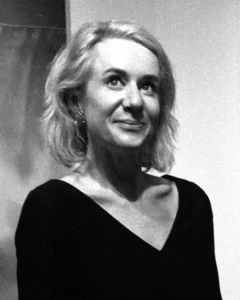
Cig Harvey
Shared publisher: Schilt Publishing
6 photobook(s) in the library
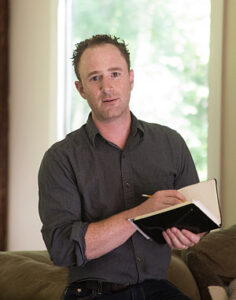
Joshua Lutz
Shared publisher: Schilt Publishing
4 photobook(s) in the library
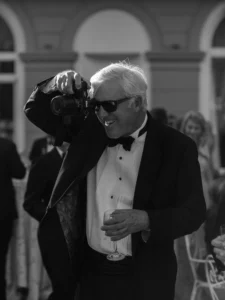
Will Vogt
Shared publisher: Schilt Publishing
2 photobook(s) in the library
Geert Broertjes
Shared publisher: Schilt Publishing
1 photobook(s) in the library
COMMUNITY DISCUSSION
Discuss this entry
Share interpretations, reading notes, and source-aware questions. For catalog corrections, use the feedback form below.
No discussion yet. Start the first focused conversation.
Sign in to join the discussion.
Optionally receive a digest when related photobooks are added to the catalog.
See something incorrect? Sign in to suggest a correction or report an issue.