Photographer
Willy Ronis
Willy Ronis (1910–2009) was a French photographer known for his warm, humanist images of everyday life in Paris and its working-class suburbs. Born in Paris to a family of Jewish immigrants—his father was a studio photographer who had fled Odessa—Ronis initially trained as a violinist before turning to photography in the mid-1930s, first assisting his father and then working as a commercial photographer. His early career was shaped by the political upheavals of the Popular Front era, when he joined the Communist-affiliated photographers’ collective and documented workers’ strikes and social movements, feeding a lifelong commitment to social justice.
Ronis developed a distinctive visual language that combined candid observation with a deep empathy for his subjects. Unlike Henri Cartier-Bresson’s decisive-moment formalism or Robert Doisneau’s whimsical storytelling, Ronis favored a quieter, more intimate approach. He often photographed his immediate surroundings—his wife Marie-Anne, neighborhood children, street vendors, bathers on the Seine—using available light and a handheld 35mm camera. His images convey a sense of spontaneity and tenderness, yet they are carefully composed, revealing a strong sense of graphic structure. Ronis believed photography should be ‘on the side of the people,’ and his work consistently reflects this conviction, whether capturing the dignity of a laundress or the joy of a summer afternoon.
Among his major bodies of work, his photographs of the Parisian suburb of Saint-Denis during the 1950s and his series on the city’s traditional trades stand out. He published several influential photobooks, including ‘Sur le fil du hasard’ (1955), a survey of his street photography, and ‘Paris, des cent mille clochers’ (1978), a lyrical ode to the capital. Later retrospectives such as ‘Willy Ronis: A Life in Photography’ (1985) helped consolidate his reputation. His work was exhibited regularly in France and abroad, including at the Bibliothèque nationale de France and the Centre Pompidou, and he received major prizes such as the Grand Prix national de la photographie in 1979.
Ronis’s significance lies in his role as a key figure in French humanist photography, a movement that flourished from the 1930s to the 1960s, alongside Doisneau, Izis, and others. After the war, he worked as a freelancer for major magazines and joined the Rapho agency. In later life he became a beloved elder statesman of French photography, teaching and advocating for the medium’s democratic potential. His archive is now held by the Bibliothèque nationale de France, ensuring his legacy. For photobook collectors, Ronis’s principal publications are essential; many were designed with careful sequencing and fine duotone printing, reflecting his collaboration with editors and printers. A useful entry point is the 2005 retrospective monograph ‘Willy Ronis: A Humanist Photographer,’ which assembles a wide range of his most iconic images with scholarly essays, offering both an accessible overview and a model of thoughtful book design.
〔PBL-BIO/2〕



Sebastiao Salgado
Shared publisher: Prestel, Taschen
21 photobook(s) in the library

Steve McCurry
Shared publisher: Prestel, Taschen
18 photobook(s) in the library
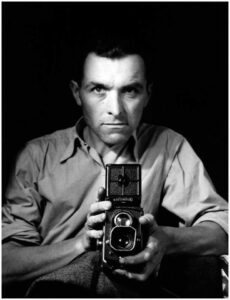
Robert Doisneau
Shared publisher: Flammarion, Taschen
6 photobook(s) in the library

Brassaï
Shared publisher: Flammarion, Taschen
5 photobook(s) in the library
COMMUNITY DISCUSSION
Discuss this entry
Share interpretations, reading notes, and source-aware questions. For catalog corrections, use the feedback form below.
No discussion yet. Start the first focused conversation.
Sign in to join the discussion.
Optionally receive a digest when related photobooks are added to the catalog.
See something incorrect? Sign in to suggest a correction or report an issue.