Photographer
Pierre Verger
Pierre Edouard Leopold Verger (1902–1996) was a French-born photographer and self-taught ethnographer who spent much of his life in Brazil. He is best known for his extensive photographic documentation of African diasporic cultures in the Americas and West Africa, particularly the Afro-Brazilian religious traditions of Bahia and the Yoruba heritage of Nigeria and Benin. His work blurred the boundaries between photojournalism, anthropology, and spiritual practice, earning him a unique position in the history of photography.
Verger began his photographic career relatively late, after a privileged but restless youth. In the 1930s he became a professional photojournalist, contributing to magazines such as Paris-Soir and Life. However, a deep curiosity about the survival of African religions in the Americas led him to shift his focus away from conventional news imagery toward the visual recording of rituals, quotidian life, and the cultural geography of the African diaspora. Unlike many ethnographic photographers of his time, he embedded himself within the communities he documented, often living among his subjects for months or years.
His most significant bodies of work emerged from repeated journeys between Bahia, Brazil, and the West African coast. Verger’s photographs capture the intimate textures of ceremonies, market scenes, portraits, and everyday gestures, with a direct yet empathetic eye. He did not sensationalize religious practices but instead treated them as legitimate, living systems. This perspective was informed by his own initiation as a babalawo—a priest of Ifà—in Nigeria, where he received the name Fatumbi, meaning “reborn by Ifá.” This insider status gave him an unusual access and authority.
Verger published several landmark photobooks, including “Notes sur le culte des Orisa et Vodun” (1957) and “Dieux d’Afrique” (1954), which combined his photographs with ethnological commentary. These works were pioneering in presenting African-influenced religious traditions in the Americas as a coherent and valuable field of study. He also maintained extensive archives of negatives and contact sheets, now housed in the Pierre Verger Foundation in Salvador, Brazil, which continues to promote his legacy.
For photobook collectors, Verger’s work is significant for its fusion of documentary precision and spiritual depth. His publications often feature thoughtful sequencing that juxtaposes Brazilian and African rituals, revealing visual continuities that words alone could not convey. The printing quality, especially in earlier projects overseen by major French publishers, preserves the tonal richness of his gelatin silver prints. A useful entry point is “Orixás” (1980), a large-format survey of the principal Yoruba deities as embodied in Bahian ceremonies, which demonstrates his comparative method and his respect for the subject matter.
Verger’s career also intersected with broader intellectual currents, including the Negritude movement and postcolonial anthropology. His photographs influenced scholars and artists who sought to understand the African presence in the Americas. While he never held an academic post, his archive and publications remain vital primary sources. Collectors should note that many of his books are now out of print, making earlier editions important cultural artifacts. His visual language stands apart from contemporaries in its quiet, patient observation, proving that photography can serve both scientific investigation and personal devotion.
〔PBL-BIO/2〕


Richard Misrach
Shared publisher: PowerHouse Books
18 photobook(s) in the library
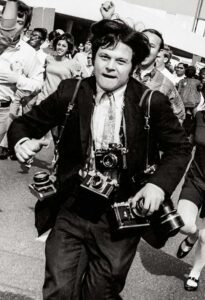
Steve Schapiro
Shared publisher: PowerHouse Books
8 photobook(s) in the library
Brian Finke
Shared publisher: PowerHouse Books
7 photobook(s) in the library

Aaron Siskind
Shared publisher: PowerHouse Books
5 photobook(s) in the library
COMMUNITY DISCUSSION
Discuss this entry
Share interpretations, reading notes, and source-aware questions. For catalog corrections, use the feedback form below.
No discussion yet. Start the first focused conversation.
Sign in to join the discussion.
Optionally receive a digest when related photobooks are added to the catalog.
See something incorrect? Sign in to suggest a correction or report an issue.