Photographer
Ruth Bernhard
Ruth Bernhard (1905–2006) was a German-born American photographer whose career spanned nearly eight decades. Born in Berlin to a German father and an American mother, she moved to New York in 1927, where she began working in commercial photography while developing her personal artistic vision. She later settled in California in the 1950s, becoming part of the vibrant West Coast photographic community that included figures like Edward Weston and Ansel Adams. Deeply influenced by modernist principles and her own search for transcendental beauty, Bernhard carved out a distinct niche in the world of fine art photography.
Bernhard’s visual language is characterized by a rigorous attention to light, shadow, and form, often concentrating on the human body as a sculptural subject. She worked predominantly in black and white, employing controlled studio lighting that rendered skin as a luminous, almost abstract surface. Unlike many of her male contemporaries who photographed nudes in natural landscapes, Bernhard isolated her subjects in intimate, indoor settings, creating a sense of monumental stillness. Her photographs celebrate the female form not merely as a physical entity but as an embodiment of spiritual and emotional depth, a perspective informed by her interest in philosophy and mysticism.
Among her most significant bodies of work is the photobook “The Eternal Body” (1986), a collection of nudes that remains a landmark in photographic publishing. Earlier, in the 1940s, she produced the celebrated “In the Twinkling of an Eye” (1942), a marine still-life composition that demonstrates her ability to transform ordinary found objects into poetic abstractions. Her collaborations with writer and curator Joseph Armstrong also produced notable projects, including a series examining the interplay between the human figure and natural textures, though these were less formally anthologized than her nude studies.
Bernhard’s historical significance lies in her bridge between the European avant-garde traditions of her youth and the American modernist movement. She exhibited widely, including at the Museum of Modern Art in New York and the San Francisco Museum of Modern Art, and she taught at the University of California, Berkeley, and other institutions. Her work gained increased critical attention in the feminist art discourse of the late 20th century for its empathetic representation of women, though she always resisted didactic labels. Over her long life, she mentored younger photographers and became a revered figure in the Bay Area art scene.
For photobook collectors, Bernhard’s publications offer exceptional production values, particularly the limited editions and fine-print compilations released by prestigious presses such as the New York Graphic Society and the Getty Museum. “Ruth Bernhard: Between Art and Life” (1986), a retrospective monograph, presents a comprehensive overview of her range, from commercial assignments to intimate nudes. Because her editions were often small and frequently signed, they are prized for their tactile quality and authentic representation of her darkroom mastery. Newcomers to her work are advised to begin with “The Eternal Body” to appreciate her mature style, while advanced collectors may seek out rare earlier prints from the 1940s, though scarcity should not be assumed without research.
〔PBL-BIO/2〕

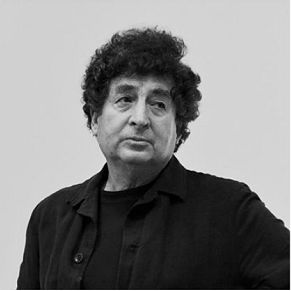
Joel Sternfeld
Shared publisher: Chronicle Books
16 photobook(s) in the library
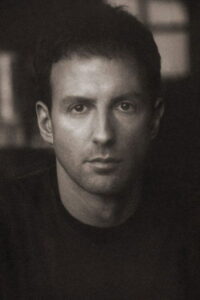
Nick Brandt
Shared publisher: Chronicle Books
9 photobook(s) in the library

Dorothea Lange
Shared publisher: Chronicle Books
8 photobook(s) in the library
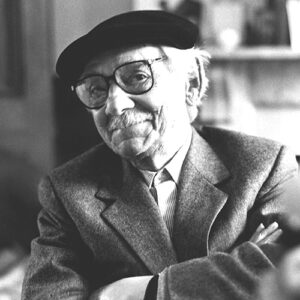
Manuel Álvarez Bravo
Shared publisher: Chronicle Books
4 photobook(s) in the library
COMMUNITY DISCUSSION
Discuss this entry
Share interpretations, reading notes, and source-aware questions. For catalog corrections, use the feedback form below.
No discussion yet. Start the first focused conversation.
Sign in to join the discussion.
Optionally receive a digest when related photobooks are added to the catalog.
See something incorrect? Sign in to suggest a correction or report an issue.