Photographer
O. Winston Link
O. Winston Link (1914–2001) was an American photographer born in Brooklyn, New York. Trained as a civil engineer, he devoted more than four decades to commercial photography in New York, producing advertising and industrial imagery. Around 1955–1960 he set aside his studio routine to document the final years of steam locomotion on the Norfolk and Western Railway, a company whose lines ran through Virginia and neighboring states. The project became his enduring legacy, though it was largely unknown to the public until rediscovered decades later.
Link’s visual language combined technical rigor with theatrical staging. Working mostly at night, he used massive banks of synchronized flash to illuminate entire rail yards, roads, drive‑in theaters, and small towns. Moving locomotives would pass through scenes that included families at picnic tables, couples in cars, or a dog crossing the track. He deliberately arranged many of these vignettes, recruiting local residents as actors. His pictures therefore hover between documentary and tableau, a tension shared by other mid‑century American photographers but rarely applied to so monolithic a subject as a dying steam railroad.
His major bodies of work include night scenes made over the Norfolk and Western system, with ‘Hotshot Eastbound’ (1956) among the most reproduced. Link simultaneously recorded trackside sounds, leaving an audio archive that complements his images. In 1995 Aperture published ‘The Last Steam Railroad in America’, the principal monograph, which made his achievement broadly accessible. The O. Winston Link Museum in Roanoke, Virginia, housed in the former Norfolk and Western passenger station, preserves his negatives, prints, and equipment, and mounts rotating exhibitions from the collection.
Link’s historical significance rests on his single-minded, technically virtuosic record of an industry in its last moments, captured with both affection and artifice. Later gallery shows and museum attention repositioned him from a curious specialist to an important figure in American photographic history. For photobook collectors, the 1995 Aperture volume remains the essential entry point, offering generous plates and a coherent sequence. Yet the work also invites critical reflection: Link’s constructed scenes complicate the idea of objective railroad documentation, showing how memory of industrial eras is often shaped as much by spectacle as by fact.
〔PBL-BIO/2〕


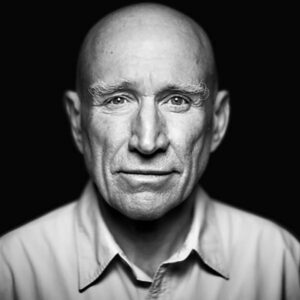
Sebastiao Salgado
Shared publisher: Harry N. Abrams
21 photobook(s) in the library
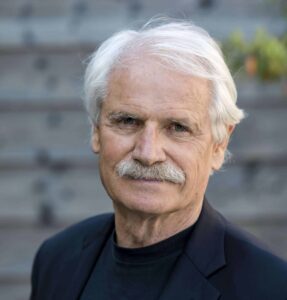
Yann Arthus-Bertrand
Shared publisher: Harry N. Abrams
10 photobook(s) in the library
Nick Brandt
Shared publisher: Harry N. Abrams
9 photobook(s) in the library
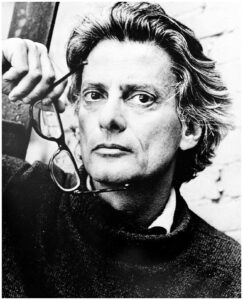
Richard Avedon
Shared publisher: Harry N. Abrams
8 photobook(s) in the library
COMMUNITY DISCUSSION
Discuss this entry
Share interpretations, reading notes, and source-aware questions. For catalog corrections, use the feedback form below.
No discussion yet. Start the first focused conversation.
Sign in to join the discussion.
Optionally receive a digest when related photobooks are added to the catalog.
See something incorrect? Sign in to suggest a correction or report an issue.