Photographer
Arthur Rothstein
Arthur Rothstein (1915–1985) was an American photographer and a central figure in documentary photography. Born in New York City, he studied at Columbia University and in 1935 became the first photographer hired by the Resettlement Administration, later the Farm Security Administration (FSA), under Roy Stryker. His work helped establish the visual record of the Great Depression and the Dust Bowl, translating economic hardship and environmental disaster into images that remain widely recognized.
Rothstein combined factual reporting with a compositional eye shaped by art history. He favored direct, legible photographs that situated people within their social and geographical environments, using available light, precise framing, and carefully observed detail. His pictures often balance documentary evidence with symbolic force. “Fleeing a Dust Storm” (1936) and “The Skull” (1936), a steer’s skull on cracked South Dakota earth, became icons. “The Skull” also provoked controversy when critics accused him of staging the scene. Rothstein said he moved the skull only a few feet to show drought conditions, an episode that revealed period debates about objectivity and manipulation in documentary practice.
During his FSA years, from 1935 to 1940, Rothstein documented rural poverty, migrant labor, and environmental crisis across the American South and Midwest. He photographed the 1937 Ohio River flood as well as the lives of sharecroppers, making images that joined individual experience to broader social conditions. During World War II he worked for the Office of War Information and served in the U.S. Army Signal Corps in the China-Burma-India theater. After the war he became a staff photographer and director of photography at Look, and later director of photography at Parade, helping shape visual journalism for mass audiences.
Rothstein belonged to a generation that included Dorothea Lange, Walker Evans, and Ben Shahn, yet his career also bridged government documentary, military photojournalism, and mass-market magazines. A founding member of the American Society of Magazine Photographers, he taught photojournalism at Columbia University. His books, including Photojournalism (1956) and The Depression Years (1978), became standard references. His photographs are held by the Library of Congress, the Museum of Modern Art, and other major collections, confirming the lasting institutional importance of his work.
For collectors, Rothstein’s photobooks matter both for their sequencing and for their historical documentation. The Depression Years pairs FSA photographs with his commentary, while Photojournalism presents his systematic, didactic approach to the medium. First editions and signed copies are worth noting, although FSA images were widely reproduced and must be considered in relation to their many publication contexts. The Depression Years offers a useful entry point, as does the Library of Congress online archive of FSA and OWI negatives. Rothstein remains a touchstone for understanding how photography can communicate social conditions with clarity and symbolic power.
〔PBL-BIO/2〕
Wikipedia’s biographical entry covers Rothstein’s life and career: born in New York City in 1915, educated at Columbia University, and hired in 1935 as the Resettlement Administration’s first staff photographer under Roy Stryker. It traces his Farm Security Administration fieldwork, his World War II work for the Office of War Information and the U.S. Army Signal Corps, and his postwar positions as photographer and director of photography at Look and later Parade, alongside his teaching and his authorship of books on photojournalism and the Depression era.
This reference biography summarizes Rothstein’s career as a documentary photographer and picture editor, from his 1935 hiring by the Resettlement Administration through his later magazine work at Look and Parade. It records his role in building the Farm Security Administration photographic file, his wartime service, his teaching, and his publications, presenting him as a figure who linked government-sponsored documentary photography with mainstream American photojournalism.
The International Center of Photography’s constituent record identifies Arthur Rothstein as an American photographer (1915–1985) and indexes him within the institution’s archive of photographers. Such records establish basic biographical data—name, nationality, and life dates—and indicate the artist’s presence in a major photography museum’s reference holdings, which is useful for verifying identity and for locating his work within the wider history of the medium.
This Library of Congress collection account describes the government negative archive that preserves Rothstein’s best-known documentary work. It explains how Roy Stryker’s photographic unit, operating first under the Resettlement Administration and then the Farm Security Administration and Office of War Information, recorded American rural and urban life between roughly 1935 and 1944. The archive is the primary repository for these negatives and the basis for the wide reproduction and study of Depression-era documentary photographs.


Selected Works & Key Projects
A source-backed introduction to individual photographs and significant bodies of work.
Key projects

Project · 1936
Pennington County, South Dakota
This May 1936 Resettlement Administration group comprises twenty-one photographic prints by Arthur Rothstein. The Library of Congress describes its subjects as sheep grazing, overgrazed and submarginal land, homesteads and sod houses, cattle skulls on sun-baked ground, drought country, a modern covered wagon, Mexican sugar-beet workers, and a ghost town. It merits selection as a project because the group records these interconnected rural subjects together rather than isolating drought as a single motif. The series also contains the cattle-skull imagery for which Rothstein’s 1936 South Dakota work is especially well known.
View source ↗Project · 1937
Tenant Farmers
Rothstein photographed Gee’s Bend in February and April 1937 for a Resettlement Administration file later identified by the Library of Congress as “Tenant Farmers.” Roy Stryker asked for representative families and a series covering houses, people, children, farms, buildings, and fences. The Library of Congress characterizes the resulting photographs as emphasizing domestic activity and deliberately balanced compositions that give the people pictured dignity. This is a significant project-level selection because it was made amid congressional attention to farm-tenancy legislation and because it provides a sustained, multi-subject account of a tenant community rather than a single emblematic image.
View source ↗Project · 1940
FSA Migratory Labor Camp
Made at the Visalia, California, camp in March 1940, this Farm Security Administration project added nearly two hundred images to the file. The Library of Congress reports that Rothstein photographed family cabins and gardens, laundry and ironing facilities, child-welfare activity, recreation, and close-up portraits. Stryker had specifically sought detailed images showing how residents conducted themselves in and around the camp, amid political opposition to migrant-labor camps. The project merits selection for its methodical breadth: its photographs function both as a detailed visual record of facilities and daily life and as part of the agency’s effort to present the camps positively.
View source ↗Selected photographs

1936 · Cimarron County, Oklahoma, United States
Farmer and sons walking in the face of a dust storm, Cimarron County, Oklahoma
Rothstein made this photograph in April 1936 while working for the U.S. Resettlement Administration. Its Library of Congress record identifies the subject as the Dust Bowl area and notes that the image was reproduced so often that prints could eventually no longer be made from the original negative; Rothstein supplied a copy negative from his own print. In a Smithsonian oral-history interview, Rothstein called it the famous “Dust Storm” photograph and said it had probably been reproduced more than any other picture in the files. It merits selection because its extensive circulation made this particular family-and-environment image central to Rothstein’s public reception.
Work source ↗1936 · Badlands, South Dakota, United States
Skull, Badlands, South Dakota
This gelatin silver print is dated May 1936 by the Museum of Modern Art. The University of Michigan Museum of Art identifies its subject as a steer’s skull seen from above amid dry, cracked ground. That museum states that the photograph became one of the Farm Security Administration’s most widely recognized images, while also becoming controversial after Rothstein adjusted the skull’s position and experimented with lighting. The Museum of Fine Arts, Houston further records that an Associated Press editor separated the image from its experimental group and supplied a caption not written by Rothstein. It merits selection because the photograph’s later circulation and controversy made it a durable case study in documentary-photography ethics.
Work source ↗1936 · Cimarron County, Oklahoma, United States
Dust bowl farmer raising fence to keep it from being buried under drifting sand, Cimarron County, Oklahoma
The Library of Congress dates this Rothstein photograph to April 1936 and identifies Cimarron County, Oklahoma, and dust storms in Oklahoma as its geographic and subject headings. Its title records a farmer raising a fence so that drifting sand will not bury it. The work merits selection from Rothstein’s Dust Bowl photographs because it specifies an adaptive task rather than presenting environmental damage alone: the human action named in the caption is inseparable from the moving sand. As an individually cataloged nitrate negative in the FSA/OWI collection, it also retains the administrative documentary context in which Rothstein made the image.
Work source ↗Archive
Library of Congress, Prints and Photographs Division
The Library of Congress preserves the Farm Security Administration and Office of War Information negatives, the negative files that contain Rothstein's 1935–1940 field photographs and his later wartime assignments. The Prints and Photographs Division safeguards and digitizes this material, making the single largest body of his early documentary work available to researchers, curators and publishers.
Verified 2026-09-16Library of Congress
Other institution
Farm Security Administration (and predecessor Resettlement Administration)
Rothstein was hired in 1935 by Roy Stryker for the Resettlement Administration, the agency later reorganized as the Farm Security Administration, becoming its first photographer. This government post defined his early career and placed him inside the documentary project that produced the era's most widely circulated photographs of rural American life.
Verified 2026-09-16Wikipedia
Publishing relationship
Look magazine
After the Second World War Rothstein worked at Look, serving as a staff photographer and eventually as director of photography. The position extended his practice from government documentary into mass-circulation picture journalism, where he helped determine how photographic stories were assigned, edited and presented to a national readership.
Verified 2026-09-16Wikipedia
Publishing relationship
Parade magazine
Rothstein later became director of photography at Parade, the widely distributed Sunday newspaper supplement. His editorial role there continued the arc of his career from FSA field photographer to picture editor shaping visual journalism for very large general audiences.
Verified 2026-09-16Wikipedia
Other institution
American Society of Magazine Photographers
Rothstein was a founding member of the American Society of Magazine Photographers, the professional body organized to represent the interests of magazine photographers. The affiliation documents his standing within the magazine industry as well as his involvement in shaping professional standards and advocacy for the field.
Verified 2026-09-16Wikipedia
Other institution
Columbia University
Rothstein studied at Columbia University and later taught photojournalism there. The teaching appointment connects his documentary and editorial practice to the formal training of later photographers, and it is a documented part of how his approach to picture reporting was transmitted to students.
Verified 2026-09-16Wikipedia

Collaboration
Dorothea Lange
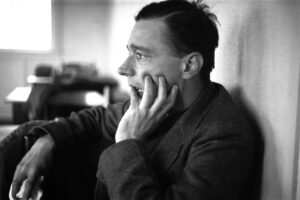
Dorothea Lange worked alongside Rothstein in the same Farm Security Administration photographic unit directed by Roy Stryker during the later 1930s. Their documented association lies in that shared government project rather than in joint authorship, and together their files form the core of the FSA's Depression-era record.
Verified 2026-09-16Wikipedia
Collaboration
Walker Evans
Walker Evans photographed for the same Farm Security Administration project as Rothstein in the later 1930s, under Roy Stryker's direction. The two men belonged to the same documentary unit, and their FSA files, made in different regions and in markedly different styles, are now read together as the project's central achievement.
Verified 2026-09-16Wikipedia
Arthur Rothstein (opens a new site)
A PBS SoCal clip from The Dust Bowl focused on Rothstein’s early federal documentary work. The accompanying page states that he was 21 when he traveled to No Man’s Land to make photographs for the federal Resettlement Administration. As a short contextual resource, it places his photography within a documentary treatment of the Dust Bowl and introduces the circumstances of one of the defining phases of his career without substituting later commentary for the historical record.
COMMUNITY DISCUSSION
Discuss this entry
Share interpretations, reading notes, and source-aware questions. For catalog corrections, use the feedback form below.
No discussion yet. Start the first focused conversation.
Sign in to join the discussion.
Optionally receive a digest when related photobooks are added to the catalog.
See something incorrect? Sign in to suggest a correction or report an issue.