Photographer
Barbara Crane
Barbara Crane (1928–2019) was an American artist photographer born in Chicago, Illinois. She is best known for pushing photography toward abstraction while keeping the medium rooted in stringent observation. Crane studied art history at New York University and later earned a graduate degree from the Institute of Design at the Illinois Institute of Technology, a school shaped by Bauhaus ideas and experimental approaches to photography. Her career unfolded mostly in Chicago, where she taught at the School of the Art Institute of Chicago for decades, influencing generations of students.
Crane’s visual language was distinctive: she used multiple exposures, solarization, contact printing of playful cut-outs, and extreme close-ups to transform ordinary subjects—human bodies, city streets, balloons, toy cars—into pulsating formal patterns. Unlike many of her peers who saw photography as documentary evidence, Crane approached the camera as a tool for reimagining reality. Her work often oscillates between figuration and pure form, creating tension between recognition and unreliability. This placed her within a lineage of experimental American photographers who treated the medium as a plastic, generative material rather than a transparent window.
She produced several major bodies of work. In the 1960s and 1970s, she made large-format series such as “Human Forms” and “Body and Soul,” printing gelatin silver images that fragment and repeat the human figure until it becomes sculptural. Her “Chicago Loop” series from the 1980s captured street scenes at festivals, but Cropped and layered them so densely that the eye struggles to parse individual faces. Another landmark project, “Rightside Left / Leftside Right,” involved playful manipulation of cut-up photographs and negatives. In 2009, the Amon Carter Museum interviewed her about these explorations, and the Centre Pompidou later celebrated her as the “eye of the city” for her urban studies.
Crane’s historical significance lies in her long tenure as a bridge between mid-century American experimentalism and the later boom of contemporary art photography. She was part of a Chicago school that valued direct observation merged with formal invention, and she exhibited at major institutions including the Art Institute of Chicago and Centre Pompidou. Her teaching at SAIC helped shape a generation of artists who came to understand photography as conceptually flexible. Museums and archives now preserve her collections, attesting to her growing legacy.
For photobook collectors, Crane offers a rewarding but modest published record. Her books and catalogues, often produced in conjunction with museum exhibitions, usually follow rigorous sequences that echo her grid-like, repetitive compositions. A useful entry point is her portfolio “Barbara Crane Collection,” which assembles series spanning nearly six decades in carefully ordered plates. Print quality in these volumes tends to be faithful to the subtle tonalities and high-contrast experimentation of her prints. Collectors who prize visual wit and material invention—those already drawn to Frederick Sommer or Ray K. Metzker—will find Crane’s printed work an under-recognized treasure.
〔PBL-BIO/2〕


Dorothea Lange
Shared publisher: Aperture, University of Chicago Press
8 photobook(s) in the library
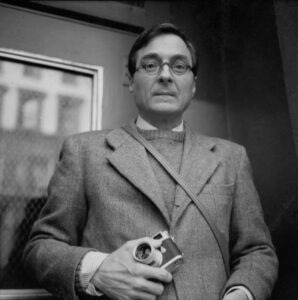
William Eggleston
Shared publisher: Aperture
26 photobook(s) in the library
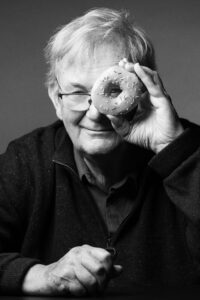
Martin Parr
Shared publisher: Aperture
21 photobook(s) in the library
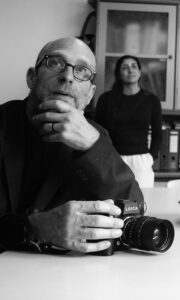
Todd Hido
Shared publisher: Aperture
21 photobook(s) in the library
COMMUNITY DISCUSSION
Discuss this entry
Share interpretations, reading notes, and source-aware questions. For catalog corrections, use the feedback form below.
No discussion yet. Start the first focused conversation.
Sign in to join the discussion.
Optionally receive a digest when related photobooks are added to the catalog.
See something incorrect? Sign in to suggest a correction or report an issue.