Photographer
Alfred Eisenstaedt
Alfred Eisenstaedt (December 6, 1898 – August 23, 1995) was a German-born American photojournalist whose career spanned over seven decades. He is widely recognized as one of the pioneers of modern photojournalism, known for his candid, spontaneous imagery that captured both historical events and intimate human moments. Eisenstaedt began his career in Germany during the Weimar Republic, contributing to illustrated magazines such as the Berliner Tageblatt and the Associated Press. His early work documented the social and political upheavals of the era, including the rise of fascism, which he later fled after immigrating to the United States in 1935.
His visual language was defined by an unobtrusive, almost invisible presence. He preferred natural light and avoided staging, believing that the camera should record life as it unfolds. Eisenstaedt’s method involved patience and anticipation, often waiting for the decisive moment when gesture and emotion converged. Unlike peers who favored dramatic compositions or heavy intervention, his images retained a documentary purity, blending technical precision with a warm, humanistic curiosity. This approach set him apart from contemporaries who often worked with larger formats or in studio settings.
Among his landmark bodies of work, the most iconic is the photograph of a sailor kissing a nurse in Times Square on V-J Day (August 14, 1945), published in Life magazine. This image became a symbol of the end of World War II and remains one of the most reproduced photographs in history. Eisenstaedt also produced significant portraits of cultural figures, including Marlene Dietrich, Ernest Hemingway, and Marilyn Monroe, often capturing them in unguarded moments. His coverage of state ceremonies, political conventions, and everyday American life for Life magazine—where he was one of the original staff photographers—helped define the magazine’s visual identity from 1936 to 1972.
Eisenstaedt’s historical significance lies in his role as a bridge between European illustrated press traditions and American magazine journalism. He was a master of the 35mm Leica, a compact camera that allowed him to move quickly and unobtrusively, enabling his candid style. His work influenced generations of photographers who saw the potential of small-format cameras for storytelling. Exhibitions of his work have been held at institutions such as the International Center of Photography in New York, and his estate is represented by galleries like Jackson Fine Art in Atlanta.
For photobook collectors, Eisenstaedt’s publications offer insight into the golden age of photojournalism. Key titles include “Eisenstaedt’s Album” (1988), a retrospective that showcases his range, and “The Eye of Eisenstaedt” (1969), which features his personal selection of images with accompanying commentary. These books, often produced in collaboration with major publishers like Viking Press and Time-Life Books, are notable for their careful sequencing and reproduction quality, reflecting Eisenstaedt’s involvement in layout and print. A collector seeking an entry point might start with “Eisenstaedt’s Album,” which provides a comprehensive overview of his career, or acquire a signed vintage print from a reputable gallery. His work remains accessible through museum collections and estate-approved archives, offering a tangible connection to a bygone era of magazine photography.
〔PBL-BIO/2〕



Joel Sternfeld
Shared publisher: Bulfinch Press
16 photobook(s) in the library
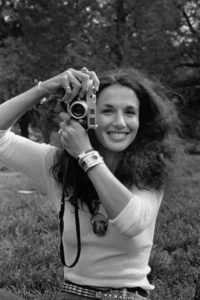
Mary Ellen Mark
Shared publisher: Bulfinch Press
10 photobook(s) in the library
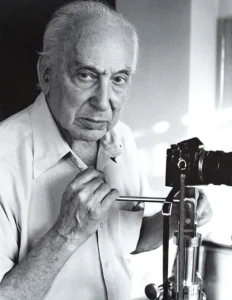
André Kertész
Shared publisher: Bulfinch Press
8 photobook(s) in the library
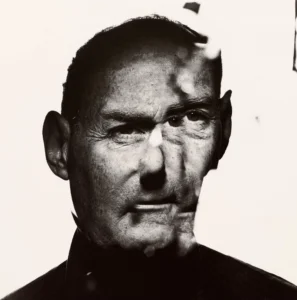
Irving Penn
Shared publisher: Penguin
7 photobook(s) in the library
COMMUNITY DISCUSSION
Discuss this entry
Share interpretations, reading notes, and source-aware questions. For catalog corrections, use the feedback form below.
No discussion yet. Start the first focused conversation.
Sign in to join the discussion.
Optionally receive a digest when related photobooks are added to the catalog.
See something incorrect? Sign in to suggest a correction or report an issue.