Photographer
Norman Seeff
Norman Seeff is a South African-born photographer, filmmaker, and designer whose career became closely associated with American music and celebrity culture. Born in Johannesburg in 1939, he qualified as a medical doctor in 1965 and worked in emergency medicine before leaving South Africa for the United States at the end of the 1960s. That unusual transition—from clinical practice to image-making—provides useful context for his sustained interest in human behavior, performance, and the conditions under which people reveal themselves before a camera.
Seeff is best known for portraits and album-cover photographs made during the 1970s and 1980s. Rather than treating a sitting solely as a controlled search for a polished pose, he approached it as an unfolding exchange. His work as both photographer and filmmaker allowed him to observe not only the selected still image but also the conversation, hesitation, play, and concentration surrounding its creation. The resulting portraits often feel performative without appearing rigidly staged. This emphasis on interaction distinguishes his practice from celebrity photography organized primarily around glamour, composure, or fixed public personas.
His album-cover work forms one major body of practice, linking photographic portraiture to the graphic and commercial environment through which popular music reached its audience. A second key work is the book “Sessions!,” which brings together more than 500 photographs of cultural figures, including Jodie Foster, Jane Fonda, the Judds, Al Jarreau, and Ray Charles. Its scale makes the book valuable not merely as a collection of famous faces but as a record of repeated experiments in rapport and self-presentation. The archive has also been framed through “Norman Seeff: The Lost Archive,” a Christie’s presentation emphasizing his contribution to album imagery, while “Triumph of a Dream,” associated with the Jet Propulsion Laboratory, indicates that his interest in creativity extended beyond entertainers to scientific and institutional settings.
Historically, Seeff’s work occupies a productive intersection of editorial portraiture, record design, filmmaking, and process-based inquiry. His career developed as album packaging was a major arena for photographic circulation, allowing images to function simultaneously as portraits, commercial designs, and components of musical identity. Later gallery presentations and renewed attention to his archive have encouraged the photographs to be viewed apart from their original mass-media uses. A balanced assessment should nevertheless retain both contexts: these are autonomous portraits, but many were also created through collaboration and for publication.
For photobook collectors, “Sessions!” is the clearest supported entry point. Its breadth permits comparison across subjects and makes sequencing central to how Seeff’s conversational method becomes visible over time. Collectors may also consider the relationship between reproduced photographs, album-cover applications, filmed sessions, and later fine-art prints; each format reveals a different aspect of the same encounters. Available evidence does not establish particular editions, publishers, printing processes, or scarcity, so attention is better directed toward image selection, reproduction quality, and how a publication translates a large working archive into a coherent narrative.
〔PBL-BIO/2〕


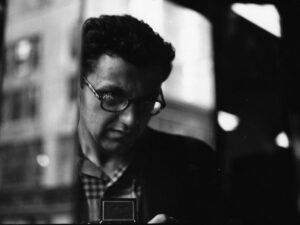
Saul Leiter
Shared publisher: Kehrer Verlag
9 photobook(s) in the library
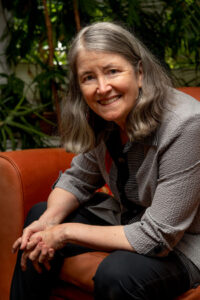
Sage Sohier
Shared publisher: Kehrer Verlag
9 photobook(s) in the library
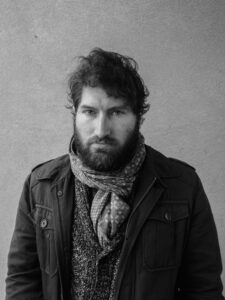
Peter van Agtmael
Shared publisher: Kehrer Verlag
7 photobook(s) in the library
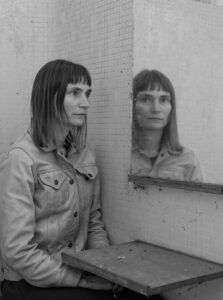
Elina Brotherus
Shared publisher: Kehrer Verlag
6 photobook(s) in the library
COMMUNITY DISCUSSION
Discuss this entry
Share interpretations, reading notes, and source-aware questions. For catalog corrections, use the feedback form below.
No discussion yet. Start the first focused conversation.
Sign in to join the discussion.
Optionally receive a digest when related photobooks are added to the catalog.
See something incorrect? Sign in to suggest a correction or report an issue.