Photographer
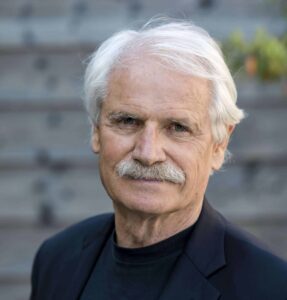
Christopher Payne
Christopher Payne, born in 1968, is an American photographer known for architectural and industrial subjects. Trained as an architect, he has concentrated on the large-format documentation of historic buildings, industrial landscapes, factories, and the systems that make modern life possible. His career belongs to a long American tradition of photographing infrastructure and labor, but it also responds to the accelerated disappearance or transformation of domestic manufacturing.
Payne’s architectural training is evident in his command of spatial order. He often treats machinery, production lines, and factory interiors as intricate environments rather than neutral backdrops. Large-format photography provides the descriptive clarity needed to register pipes, tools, surfaces, and repeated forms, while carefully controlled framing gives these complex spaces visual coherence. Workers appear within this architecture as skilled participants whose gestures explain how a process functions. Unlike photographers concerned primarily with industrial decline or picturesque ruins, Payne directs sustained attention toward places where things are still being made. The resulting pictures balance wonder at mechanical complexity with an awareness that such knowledge and infrastructure are vulnerable to rapid change.
His broad documentation of America’s industrial heritage established the foundation for later work on contemporary manufacturing. “Making Steinway,” centered on the making of Steinway pianos, offers a focused example of his interest in the relationship between specialized labor, raw materials, machinery, and finished objects. The larger project and exhibition “Made in America: The Industrial Photography of Christopher Payne” expands that inquiry across American factories. According to the Smithsonian, the exhibition brings together more than seventy large-format photographs produced during a decade-long journey. Its scale matters because it turns individual factories into parts of a wider portrait of American production and the people sustaining it.
Presented through Cooper Hewitt, Smithsonian Design Museum and the Smithsonian exhibition network, “Made in America” marks an important stage in Payne’s development from recording historic architecture toward examining active systems of manufacture. The work sits between architectural photography, industrial documentation, and social observation. Its polished compositions can aestheticize factories, yet the accumulation of details and processes also supplies concrete information about how production operates. Payne’s significance lies in making manufacturing legible without reducing it either to nostalgia or to an abstract economic argument.
For photobook collectors, Payne’s work is especially relevant for the way serial images can reconstruct a process that no single photograph can explain. “Making Steinway” provides a focused entry point, while “Made in America” demonstrates the broader scope of his industrial survey. Viewers should attend to transitions between building, machine, material, worker, and product: sequencing can convert highly detailed photographs into an account of transformation over time. Large reproduction and careful printing are particularly important to work whose meaning depends on spatial depth, color, and minute industrial detail.
〔PBL-BIO/2〕




COMMUNITY DISCUSSION
Discuss this entry
Share interpretations, reading notes, and source-aware questions. For catalog corrections, use the feedback form below.
No discussion yet. Start the first focused conversation.
Sign in to join the discussion.
Optionally receive a digest when related photobooks are added to the catalog.
See something incorrect? Sign in to suggest a correction or report an issue.