Photographer
Byung-Hun Min
Byung-Hun Min is a South Korean photographer born in Seoul in 1955. Before committing himself to photography, he worked as a musician and vocalist and studied electronic engineering. He subsequently became a self-taught photographer, an unconventional progression that helps place his practice outside a strictly academic lineage. Over more than three decades, he has developed a sustained black-and-white oeuvre concerned less with description than with the unstable threshold between seeing, remembering, and imagining.
Min remains committed to analog photography and gelatin-silver printing. His images are distinguished by restrained contrast, pale tonal transitions, softened contours, and an unusually expansive vocabulary of gray. Rather than using monochrome for graphic force, he allows forms to approach disappearance: atmosphere can obscure a landscape, while light and surface dissolve ordinary subjects into uncertain fields. Institutional accounts also connect his practice to the “decisive moment,” but his timing differs from the dramatic, event-centered model associated with street photography. The event in a Min photograph is often perceptual—a brief alignment of haze, reflection, distance, or illumination that makes the familiar momentarily elusive. His earlier musical experience offers a useful interpretive analogy: repetition, pause, and modulation matter as much as any single motif.
Available artist records emphasize a unified, evolving practice rather than supplying a dependable list of separately titled projects. Two documented frameworks are nevertheless important for understanding its reception. The Korean Artist Project presented Min as an artist devoted to analog black-and-white printing and a poetic grayscale, locating him within an institutional effort to introduce contemporary Korean artists internationally. Atelier EXB, meanwhile, maintains an author page for him and describes an oeuvre shaped over more than thirty years by reserve and the tension of perception. Together, these contexts show how his work has moved between exhibition-oriented presentation and the publishing culture surrounding carefully reproduced photographic sequences. Gallery profiles from Peter Fetterman Gallery and Miyako Yoshinaga have further extended its visibility beyond South Korea.
Min’s historical significance lies in sustaining a materially exacting analog language during a period dominated increasingly by digital capture and high-definition clarity. Yet his work should not be reduced to technical traditionalism. The handmade print is integral because minute tonal differences carry the image’s emotional and spatial ambiguity. For photobook collectors, the most useful entry point is therefore a publication or sequence that reproduces those grays with restraint rather than forcing heavy blacks or excessive contrast. His photographs reward slow pagination: adjacent images can function like measured intervals, with changes in density and atmosphere gradually accumulating meaning. The Atelier EXB author listing is a practical starting point for investigating his publishing context, while gallery presentations help clarify how the scale and surface of the gelatin-silver prints relate to their appearance on the page.
〔PBL-BIO/2〕

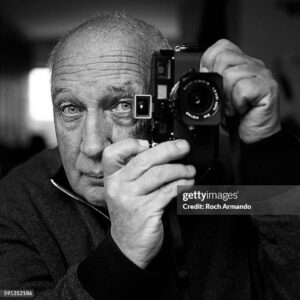
Raymond Depardon
Shared publisher: Éditions Xavier Barral
16 photobook(s) in the library
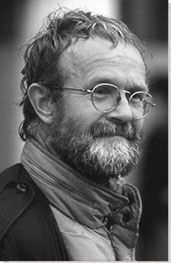
Josef Koudelka
Shared publisher: Éditions Xavier Barral
13 photobook(s) in the library

Masahisa Fukase
Shared publisher: Éditions Xavier Barral
7 photobook(s) in the library

Philippe Chancel
Shared publisher: Éditions Xavier Barral
6 photobook(s) in the library
COMMUNITY DISCUSSION
Discuss this entry
Share interpretations, reading notes, and source-aware questions. For catalog corrections, use the feedback form below.
No discussion yet. Start the first focused conversation.
Sign in to join the discussion.
Optionally receive a digest when related photobooks are added to the catalog.
See something incorrect? Sign in to suggest a correction or report an issue.