Photographer
Flip Schulke
Flip Schulke (born Graeme Phelps Schulke, June 24, 1930 – May 15, 2008) was an American photojournalist whose career spanned more than five decades. He grew up in New Ulm, Minnesota, and graduated from Macalester College, where he developed an early interest in photography. Schulke rose to prominence covering the civil rights movement and documented pivotal figures, including Martin Luther King Jr., alongside the everyday lives of ordinary people confronting social change.
Schulke’s visual style combined the immediacy of news photography with a careful, humanistic eye. He was equally comfortable photographing high-stakes political rallies and quiet moments of daily life, often finding the universal in the specific. His work shows a consistent attention to composition and light, even in rapidly changing scenes, which set him apart from many of his contemporaries who treated photojournalism as purely transactional.
Among his major bodies of work is his contribution to the Environmental Protection Agency’s DOCUMERICA project in the 1970s. For DOCUMERICA, he photographed the lives of retirees and the changing American landscape in New Ulm, Minnesota, and the Florida Keys. These photographs, now held by the U.S. National Archives, reveal his interest in social conditions and community, and they offer a rare glimpse into his non-civil-rights output. His civil rights photographs, especially those of King and the movement’s grassroots organizers, remain a lasting visual chronicle of that era.
Schulke’s archive is preserved at the Dolph Briscoe Center for American History at the University of Texas at Austin, as documented in Texas Archival Resources Online. His work has been exhibited and sold through galleries such as Holden Luntz and Sotheby’s, reflecting its crossover from documentary to fine art. His career also took him abroad; a 1965 portrait of Hong Kong physician Dr. Li Shu-fan testifies to his international reportage and broad range.
For collectors and photobook enthusiasts, Schulke’s prints offer a bridge between photojournalism and art. The DOCUMERICA photographs, accessible via the National Archives, are an inexpensive and historically significant entry point, while his civil rights and international work provide deeper layers of subject matter. Because his archive is systematically preserved and his photographs have been widely reproduced—through Getty Images and other agencies—his legacy is both historically secure and visually compelling, making his work a meaningful addition to any collection focused on twentieth-century American history and photojournalism.
〔PBL-BIO/2〕



Henry Horenstein
Shared publisher: W. W. Norton & Company
5 photobook(s) in the library

Brandon Stanton
Shared publisher: St. Martin's Press
3 photobook(s) in the library
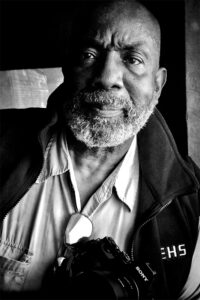
Eli Reed
Shared publisher: W. W. Norton & Company
3 photobook(s) in the library
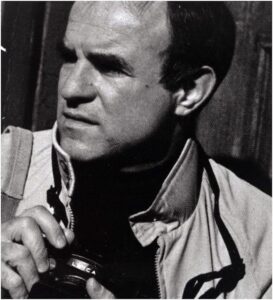
Constantine Manos
Shared publisher: W. W. Norton & Company
3 photobook(s) in the library
COMMUNITY DISCUSSION
Discuss this entry
Share interpretations, reading notes, and source-aware questions. For catalog corrections, use the feedback form below.
No discussion yet. Start the first focused conversation.
Sign in to join the discussion.
Optionally receive a digest when related photobooks are added to the catalog.
See something incorrect? Sign in to suggest a correction or report an issue.