Photographer
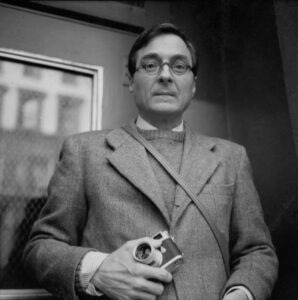
Massimo Vitali
Massimo Vitali is an Italian photographer born in Como in 1944. He studied photography at the London College of Printing in the mid-1960s, a formative period during which he absorbed the documentary and editorial traditions of British photography. After returning to Italy, he worked for many years as a photo reporter and later as a director of photography in the film industry, experiences that sharpened his acute eye for staging, light, and crowd dynamics. These professional foundations would later inform the large-scale, meticulously observed panoramas of leisure for which he is internationally recognized.
Vitali’s visual language is defined by wide-angle, elevated viewpoints that capture human multitudes in shared spaces—most famously beaches, but also ski slopes, public pools, piazzas, and social events. Working with large-format cameras and printing at monumental scale, he composes his frames to reveal both the individuality of bathers and the anonymous, almost abstract patterns formed by crowds. Unlike the celebratory poolside glamour of a figure like Slim Aarons or the dystopian surveillance aesthetics of some contemporary photographers, Vitali treats leisure as a sociological spectacle: his pictures are simultaneously seductive in their saturated color and light, and quietly critical about contemporary patterns of consumption, tourism, and communal relaxation. He positions his camera at a distance, letting the viewer become a detached observer, a stance that has been linked to Italian Neorealist cinema and to the tradition of topographical landscape photography.
A landmark body of work is the ongoing series of Italian beach scenes produced since the 1990s, often titled after the location and date, such as Rosignano Solvay or Castiglione della Pescaia. These images—exemplified by his celebrated beach panoramas—turn familiar summer scenes into complex social tableaux, populated by hundreds of figures whose postures, shadows, and interactions reward slow scrutiny. Another significant project, Natural Habitats, extended the earlier approach to other settings, while his books—published by major houses including Steidl, Hatje Cantz, and Damiani—have presented these compositions in well-sequenced monographs that emphasize the sculptural quality of the human mass. Vitali has exhibited extensively in Europe and the United States, with dedicated shows at venues such as the Palazzo delle Esposizioni in Rome, the Kunsthaus Graz, and the Centre Pompidou’s programming, and his works are held by prominent public and private collections. Galleries including Jackson Fine Art, Edwynn Houk, and Mazzoleni have represented him, and he was honored as an ALPA Grand Master of photography, a recognition of his enduring technical and artistic influence.
For collectors of photobooks, Vitali presents a compelling intersection of photographic virtuosity and sociological commentary. His publications are notable for faithful large-format reproductions that capture the granular detail and chromatic saturation of the prints, often featuring sophisticated image sequencing that builds rhythm from one panoramic view to the next. A useful entry point is the monograph Massimo Vitali (Steidl, 2013), which surveys his landmark beach scenes and later interior work, or the multi-year catalogue published to accompany his retrospective exhibitions. The artist’s official website archives his projects, and his active Instagram account offers a direct window into his most recent series, studio practice, and exhibition news. As contemporary art photography continues to probe the relationship between the individual and the environment, Vitali’s expansive, compassionate yet critical vision of leisure remains both historically significant and highly collectible.
〔PBL-BIO/2〕





COMMUNITY DISCUSSION
Discuss this entry
Share interpretations, reading notes, and source-aware questions. For catalog corrections, use the feedback form below.
No discussion yet. Start the first focused conversation.
Sign in to join the discussion.
Optionally receive a digest when related photobooks are added to the catalog.
See something incorrect? Sign in to suggest a correction or report an issue.