Photographer
Rafal Milach
Rafał Milach (born 1978) is a Polish visual artist, photographer, and educator. He grew up during the collapse of the Soviet bloc, an experience that continues to shape his attentive yet critical understanding of political transition. He studied graphic design at the Academy of Fine Arts in Katowice before turning to documentary photography and eventually establishing his base in Warsaw. His practice moves between art and photojournalism, with a sustained focus on the tension between society and power structures, particularly across the former Eastern Bloc. This historical perspective gives his work a distinctive sensitivity to the ways political systems enter everyday life.
Milach’s visual language is deliberate and conceptual, but remains grounded in close observation of people, places, and social behavior. Rather than pursuing breaking news, he develops long-term investigations into social memory, grassroots movements, and the rhetoric of authority. He often brings together landscapes, portraits, documents, and archival materials, constructing layered narratives that question official histories and expose the distance between public language and lived experience. His images may be carefully arranged and sometimes theatrical, yet their control is not detached from reality. Instead, it allows him to examine how reality is framed, circulated, and remembered.
One of his prominent projects is “Archive of Public Protest,” which documents civil movements in Poland through a nuanced combination of photographs, documents, and interviews. Partly shot on a Fujifilm GFX100S, the project considers how protest reshapes public space and collective identity. It also reflects Milach’s broader interest in the visual forms of dissent and in the relationship between political events and the images through which they become history. Alongside such investigations, he has produced several photobooks, treating the book as a visual essay in which sequencing, typography, materials, and design can carry as much meaning as an individual photograph.
Throughout his career, Milach has collaborated with institutions such as Magnum Photos, where he became an associate member, and he participated in residencies including Light Work in 2019. His work has been presented in galleries and festivals across Europe and the United States. He has also taught at academic institutions, sharing his working methods with emerging photographers. Through these activities, and through a practice attentive to daily forms of power and quiet resistance, he has helped broaden the vocabulary of post-communist documentary photography without reducing the region to a single historical narrative.
For collectors, Milach’s photobooks are notable for their meticulous production and editorial rigor. He works with independent publishers and often experiments with format, allowing typography, paper, and physical structure to reinforce the thematic content. His books are not merely containers for photographs: they are sustained acts of interpretation, offering entry points into an often-overlooked geography of social change. Their considered pacing invites readers to reflect on how authority operates, how collective memory is made, and how ordinary people resist. The combination of artistic ambition, political urgency, and book-centered thinking makes his editions compelling objects for anyone interested in contemporary Eastern European photography.
〔PBL-BIO/2〕


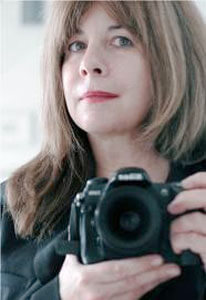
Karen Knorr
Shared publisher: GOST Books, Kehrer Verlag
5 photobook(s) in the library
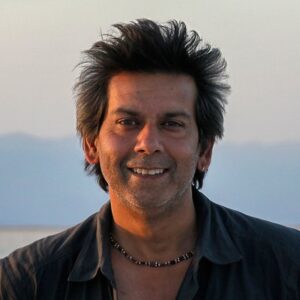
Tariq Zaidi
Shared publisher: GOST Books, Kehrer Verlag
3 photobook(s) in the library
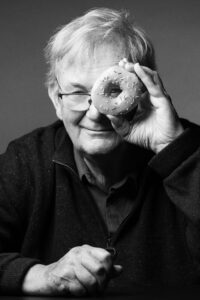
Martin Parr
Shared publisher: GOST Books
21 photobook(s) in the library
Saul Leiter
Shared publisher: Kehrer Verlag
9 photobook(s) in the library
COMMUNITY DISCUSSION
Discuss this entry
Share interpretations, reading notes, and source-aware questions. For catalog corrections, use the feedback form below.
No discussion yet. Start the first focused conversation.
Sign in to join the discussion.
Optionally receive a digest when related photobooks are added to the catalog.
See something incorrect? Sign in to suggest a correction or report an issue.