Photographer
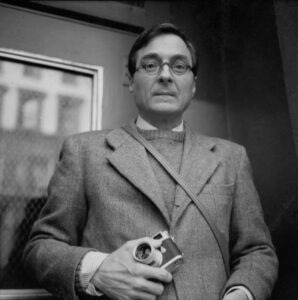
Hiroji Kubota
Hiroji Kubota (born 2 August 1939 in Tokyo) is a Japanese photographer and a long-standing member of Magnum Photos. He is notable for being one of the few Japanese photographers to achieve full membership in the prestigious cooperative, and his career spans more than five decades of extensive documentary work across Asia, the Americas, and other regions. Trained initially in the early 1960s while assisting Magnum photographers René Burri, Burt Glinn, and Elliott Erwitt during their assignments in Japan, Kubota later became a freelance photographer in 1965, establishing his independent practice. His work often engages with social change, cultural identity, and the human condition, frequently capturing life in countries undergoing rapid transformation.
Kubota’s visual language is characterized by an attentive, empathetic eye rooted in the traditions of humanist documentary photography. He works predominantly in color, using a direct and accessible style that prioritizes storytelling over formal experimentation. His images frequently convey a sense of intimacy with his subjects, yet they also reflect a broader social awareness, balancing personal narrative with wider geopolitical contexts. Unlike many of his Western contemporaries, Kubota’s deep familiarity with Asian cultures enabled him to approach complex subject matter—such as China, Korea, and Japan—with nuances that outsiders often miss, making his photographs valuable documents of transitional eras.
Among his most significant projects are his extensive documentation of China in the late 1970s and 1980s. Kubota made more than thirty visits to mainland China between 1978 and 1984, capturing a society emerging from the Cultural Revolution. This work, published in the photobook ‘China’ (1985), became a landmark for Western audiences and profoundly influenced Chinese photographers. Another major body of work is ‘Out of the East’ (1984), which surveys Asia from the Pacific coast to the Himalayas, establishing his reputation for large-scale, continental surveys. In 2015 he released a major retrospective, simply titled ‘Hiroji Kubota Photographer,’ which condenses his fifty-year career and highlights his travels across more than 120 countries.
Kubota’s historical significance lies in his ability to span cultural boundaries and document Asia at a pivotal moment when it was becoming increasingly integrated into global economic and political networks. His photographs of the fall of Saigon in 1975, of North Korea in the 1980s, and of everyday life in the United States reflect his commitment to capturing histories beyond headlines. He has exhibited internationally, including a major retrospective at the CAFA Art Museum in Beijing, underscoring his enduring relevance to Chinese and Asian audiences. His influence on younger generations of photographers, particularly in Asia, is noteworthy; he is often cited for his rigorous work ethic and his dedication to long-term, self-initiated projects.
For photobook collectors, Kubota’s work is compelling for its documentary depth and visual coherence. His books, especially ‘China’ and the retrospective volume, are carefully sequenced to reflect his long-term observations and are praised for their high-quality printing and editorial design. The retrospective, published by Steidl, offers a well-organized entry point into his oeuvre, encompassing diverse themes and regions. Collectors interested in post-war documentary photography and cross-cultural perspectives will find Kubota’s publications valuable for their content, historical resonance, and thoughtful craftsmanship.
〔PBL-BIO/2〕



COMMUNITY DISCUSSION
Discuss this entry
Share interpretations, reading notes, and source-aware questions. For catalog corrections, use the feedback form below.
No discussion yet. Start the first focused conversation.
Sign in to join the discussion.
Optionally receive a digest when related photobooks are added to the catalog.
See something incorrect? Sign in to suggest a correction or report an issue.