Photographer
Lola Álvarez Bravo
Lola Álvarez Bravo (born April 3, 1903, in Lagos de Moreno, Jalisco, Mexico; died July 31, 1993, in Mexico City) was a monumental pillar of twentieth-century photography, a pioneering avant-garde visual artist, and a central figure in the post-revolutionary cultural explosion known as the Mexican Renaissance. Born Dolores Martínez de Anda, she married fellow master photographer Manuel Álvarez Bravo in 1925, completely immersing herself in darkroom chemistry and compositional theory. Following their separation, she asserted her financial and artistic independence under her married name, carving out a legendary career spanning five decades. Rather than treating her camera as a tool for passive commercial recording, she viewed the medium as an empirical, ideological instrument to document the raw, unfiltered realities of Mexican daily life, street sociology, and indigenous heritage.
Álvarez Bravo achieved immortal critical and institutional acclaim through her radical visual versatility, pioneering long-form social documentary photography alongside cutting-edge experiments in photomontage. As the director of photography for the National Institute of Fine Arts, she spent decades traveling across rural Mexico, capturing unvarnished, deeply compassionate portraits of factory workers, indigenous families, and local rituals. Her sharp, high-contrast black-and-white visual style bypassed binary exotic stereotypes, utilizing strong geometric shadows and complex environmental framing to grant her subjects absolute narrative agency. She was simultaneously a trusted visual archivist for the nation’s elite intellectual and cultural titans, producing definitive, psychology-steeped portraits of her close friends Frida Kahlo, Diego Rivera, David Alfaro Siqueiros, and Rufino Tamayo.
Beyond her monumental documentary outputs, Álvarez Bravo shattered structural barriers as an influential educator and gallery director, opening the Galería de Arte Contemporáneo in 1951, where she notably organized Frida Kahlo’s only solo exhibition in Mexico during Kahlo’s lifetime. Her immense visual and historical legacy has been preserved and promoted across generations, heavily supported by the Center for Creative Photography (CCP) in Tucson, which acquired her archive of over ten thousand vintage prints and negatives. Her definitive vintage prints are permanently curated in the core collections of the world’s premier repositories, including the Museum of Modern Art (MoMA) in New York, the J. Paul Getty Museum in Los Angeles, the San Francisco Museum of Modern Art (SFMOMA), and the Museo de Arte Moderno in Mexico City, establishing her placement as one of the ultimate visual chroniclers of modern Mexican history.


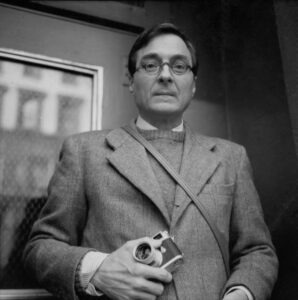
William Eggleston
Shared publisher: Aperture, Yale University Press
26 photobook(s) in the library
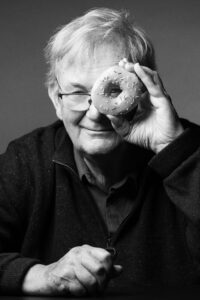
Martin Parr
Shared publisher: Aperture, Rm
21 photobook(s) in the library
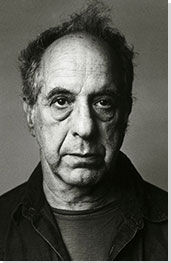
Robert Frank
Shared publisher: Aperture, Yale University Press
19 photobook(s) in the library
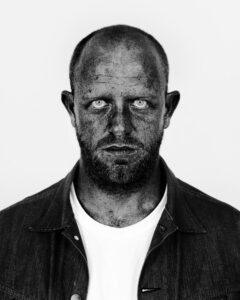
Pieter Hugo
Shared publisher: Aperture, Rm
9 photobook(s) in the library
COMMUNITY DISCUSSION
Discuss this entry
Share interpretations, reading notes, and source-aware questions. For catalog corrections, use the feedback form below.
No discussion yet. Start the first focused conversation.
Sign in to join the discussion.
Optionally receive a digest when related photobooks are added to the catalog.
See something incorrect? Sign in to suggest a correction or report an issue.