Photographer
Clayton Anderson
Clayton Anderson (born 1988) is an acclaimed contemporary American fine-art documentary photographer, visual archivist, and independent researcher whose multidisciplinary practice explores the quiet architecture of everyday spaces, structural mutations, and the deep, shared histories of human communities across the globe. Sourcing inspiration from classical street humanism and environmental sociology, Anderson treats his extensive field travels not as sports or record-driven expeditions, but as profound psychological mapping projects. Over a career spanning more than fifteen years, he has established a highly versatile, empathetic photographic practice that bridges high-profile commercial corporate assignments, sensitive fine-art architectural layout studies, and long-form socio-cultural visual archiving.
Anderson’s photographic methodology relies heavily on an ultra-precise rendering of texture, geometric composition, and ambient lighting matrices. Rejecting modern digital editing manipulation or post-production shortcuts, he utilizes standard medium-format and large-format digital camera networks to slow down his creative process and capture unvarnished portraits that highlight the structural pride and extreme vulnerability of ordinary lives. His landmark long-term visual project tracking the post-industrial landscape and architectural decay of urban centers across North America has earned him profound regional critical and institutional recognition, bypassing binary mass-media clichés to document everyday domestic rhythms and spiritual realities before modern real estate inflation and gentrification alter town topographies.
Operating fluidly across fine-art portraiture, independent book design, and material visual sociology, Anderson has consistently brought overlooked human narratives to the forefront of contemporary art discourse. His active practice extended fluidly into the mid-2020s through high-profile public art initiatives, extensive community-based visual literacy workshops, and curated site-specific exhibitions across North America and Europe, including solo presentations at the Center for Photographic Art and collaborative portfolios documenting vulnerable communal terrains. His master archival pigment prints and limited-edition visual monographs are highly sought after by global private collectors, corporate fine-art registries, and permanent institutional archives focusing on the social topography, physical erosion, and changing identities of vulnerable municipal landscapes.

-
1988
Career milestone
Joined the traveling fair and carnival circuit
Anderson began traveling with his family's cinnamon roll concession on the fair, carnival, and circus circuit in 1988 and bought a Pentax K1000 camera to document the experience, initiating the body of work later published as Kicking Sawdust.
Source: Daylight Books Verified Sep 13, 2026
-
1988–1992
Series
Kicking Sawdust photographic series
The photographs that make up Kicking Sawdust were taken between 1988 and 1992 while Anderson traveled with circuses, carnivals, and sideshows, documenting the people he encountered on the road.
Source: Daylight Books Verified Sep 13, 2026
-
2019
Photobook
Before the Fade placed in the Metropolitan Museum of Art library
Anderson's self-published photobook Before the Fade was placed by the Metropolitan Museum of Art photography department into its research library in 2019.
Source: Clayton Anderson, official website Verified Sep 13, 2026
-
2019
Collection acquisition
Before the Fade placed in the Museum of Modern Art research library
The photography department of the Museum of Modern Art placed Anderson's self-published photobook Before the Fade in its research library in 2019.
Source: Clayton Anderson, official website Verified Sep 13, 2026
-
2020
Exhibition
Circus photographs shown at the Florida Museum of Photographic Arts
A September 2020 publisher feature on Anderson states that his circus photographs were shown that year at the Florida Museum of Photographic Arts in Tampa, Florida.
Source: Daylight Books Verified Sep 13, 2026
-
October 2020
Photobook
Kicking Sawdust: Running Away with the Circus and Carnival
Daylight Books published Anderson's first monograph in October 2020; the 128-page volume contains 75 black-and-white photographs and a foreword by Jack Pierson.
Source: Daylight Books Verified Sep 13, 2026
-
May 2022
Exhibition
ICP Photobook Fest
Anderson took part in a Daylight Books book signing at the International Center of Photography's Photobook Fest in New York on May 22, 2022, an event held May 21–22, 2022.
Source: International Center of Photography Verified Sep 13, 2026
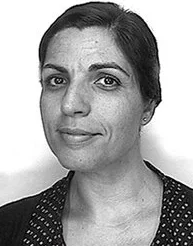
Inbal Abergil
Shared publisher: Daylight Books
2 photobook(s) in the library
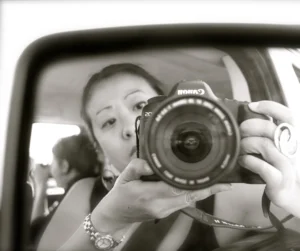
Betty Yu
Shared publisher: Daylight Books
2 photobook(s) in the library
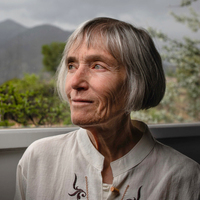
Susan Ressler
Shared publisher: Daylight Books
2 photobook(s) in the library
Jenny Sampson
Shared publisher: Daylight Books
2 photobook(s) in the library
COMMUNITY DISCUSSION
Discuss this entry
Share interpretations, reading notes, and source-aware questions. For catalog corrections, use the feedback form below.
No discussion yet. Start the first focused conversation.
Sign in to join the discussion.
Optionally receive a digest when related photobooks are added to the catalog.
See something incorrect? Sign in to suggest a correction or report an issue.