Photographer
Wynn Bullock
Wynn Bullock (born April 18, 1902, in Chicago, Illinois; died November 16, 1975, in Monterey, California) was a monumental figure in mid-twentieth-century American photography, a visionary visual philosopher, and a close contemporary of Edward Weston and Ansel Adams who deeply transformed the metaphysical boundaries of lens-based art. Raised in South Pasadena, Bullock originally pursued a career in music, performing as a professional concert tenor in New York and Paris during the 1920s. While in Europe, he encountered the visionary paintings of the Impressionists and Surrealists, alongside the avant-garde photography of Laszlo Moholy-Nagy, sparking a profound creative awakening. He shifted full-time to visual art, studying photography at the Art Center School in Los Angeles from 1938 to 1940. This academic training, coupled with his deep readings in theoretical physics, semantics, and philosophy, transformed his relationship with light, space, and time, leading him to view the camera not as a tool for passive recording, but as an empirical instrument to manifest the underlying, invisible forces of nature.
Bullock achieved immortal critical and institutional acclaim during the 1950s when his masterworks were chosen by Edward Steichen for the landmark “The Family of Man” exhibition at the Museum of Modern Art (MoMA) in 1955. His iconic image, “Let There Be Light”, depicting a sunlit, primitive forest, was selected as the striking introductory print for the global exhibition, while his poignant portrait “Child in Forest” became one of the most widely published frames of the century. Armed with heavy large-format view cameras and an unyielding tripod, his photographic methodology rejected transient commercial photojournalism. Instead, he pioneered advanced, custom optical manipulations, including extensive experimentation with solarization, line-backs, and long-exposure time segments. His signature style fused nudes and deep wilderness landscapes to explore “space-time” relativity, treating light as a physical, co-authoring agent that turned prints into complex indices of existential transience and ecological interconnectedness.
His immense visual and material legacy has been preserved and promoted across generations by the Wynn Bullock Estate and the Center for Creative Photography (CCP) in Tucson, which houses his archive of over twenty-five thousand master prints and negatives. Directing his focus toward intense abstraction in his later years, his subsequent series, Color Light Abstractions and Wave-Forms, treated physical light refractions as primal visual poetry. Bullock was a celebrated founding member of the Friends of Photography. His definitive vintage prints, silver-gelatin contact sheets, and extensive field journals are permanently curated in the core collections of the world’s premier museums, including the Museum of Modern Art (MoMA) in New York, the Metropolitan Museum of Art, the J. Paul Getty Museum in Los Angeles, the San Francisco Museum of Modern Art (SFMOMA), and the Art Institute of Chicago, establishing his placement as one of the ultimate visual chroniclers of modern visual culture.


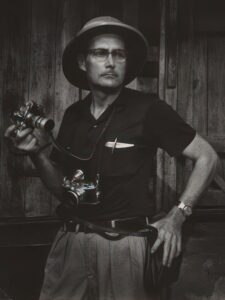
W. Eugene Smith
Shared publisher: Aperture, University of Texas Press
4 photobook(s) in the library
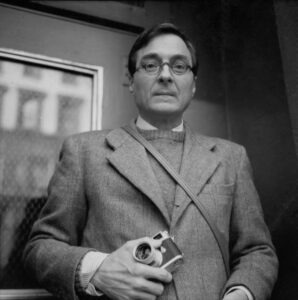
William Eggleston
Shared publisher: Aperture
26 photobook(s) in the library
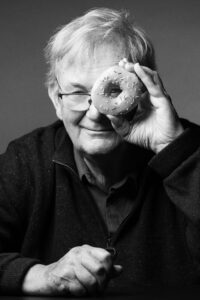
Martin Parr
Shared publisher: Aperture
21 photobook(s) in the library
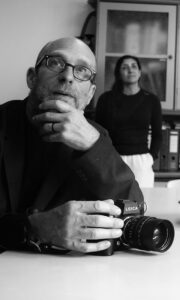
Todd Hido
Shared publisher: Aperture
21 photobook(s) in the library
COMMUNITY DISCUSSION
Discuss this entry
Share interpretations, reading notes, and source-aware questions. For catalog corrections, use the feedback form below.
No discussion yet. Start the first focused conversation.
Sign in to join the discussion.
Optionally receive a digest when related photobooks are added to the catalog.
See something incorrect? Sign in to suggest a correction or report an issue.