Photographer
Lu Nan
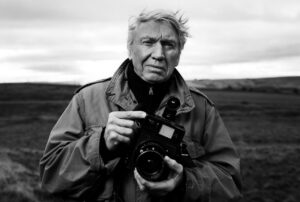
Lu Nan (born 1962 in Beijing) is one of China’s most respected documentary photographers, known for long‑term, deeply humanistic projects that examine vulnerable communities and the spiritual dimensions of everyday life. His practice is marked by patience, discipline, and an insistence on direct, empathetic observation. Working solely with black‑and‑white film, Lu Nan has developed a signature visual language that balances formal rigor with emotional immediacy.
From 1989 to 1990, Lu Nan created the groundbreaking series “The Forgotten People,” a rare photographic investigation of mental‑health patients and psychiatric institutions in China. The work remains one of the earliest and most unflinching visual records of the subject in the country. Between 1992 and 1996, he traveled through poor rural regions to complete “On the Road,” documenting the lives of Chinese Catholics whose devotion persisted despite poverty and social marginalization. His images reveal an intimate faith culture rarely seen by the public.
From 1996 to 2004, Lu Nan immersed himself in Tibetan communities across the plateau, producing “Four Seasons,” an expansive visual meditation on Tibetan daily life, labor, ritual, and cosmology. The series reflects his belief that photography should reveal the dignity and spiritual luminosity of ordinary people. Lu Nan rarely grants interviews and avoids the commercial art world, maintaining a quiet, austere working philosophy that prioritizes integrity, endurance, and authenticity. His triptych of projects—mental‑health patients, Chinese Catholics, and Tibetan life—is now considered a cornerstone of contemporary Chinese documentary photography.
His work has been exhibited internationally, published widely, and is regarded as one of the most important contributions to Chinese photographic history for its ethical depth, formal discipline, and unwavering commitment to the lives of those often unseen.
The Chinese Wikipedia biography provides similar biographical details but places Lu Nan within the context of China’s 1990s ‘new documentary’ movement. It discusses his independent spatial practice, his long-term commitments, and his contributions to Chinese photobooks. The entry also notes that works from his trilogy have been internationally collected and published, emphasizing how his slow and patient approach contrasts with faster journalistic styles. His series are recognized for their humanistic complexity, focusing on vulnerable populations without exoticizing them.
Lu Nan was born in 1962 in Tianjin, China. The English Wikipedia entry traces his transition from a photojournalist to a documentarian who spent years living within his subjects’ communities. His trilogy is widely noted: The Forgotten People (1989–1990) records leprosy patients in remote colonies; The Road to Heaven (1992–1996) depicts a rural Catholic community; and Four Seasons (1996–2004) follows individuals with psychiatric disabilities. The article highlights his rigorous field methods, use of black-and-white, and his importance in socially engaged Chinese photography, with exhibitions across Asia and Europe.


Selected Works & Key Projects
A source-backed introduction to individual photographs and significant bodies of work.
Key projects
Project · 1989–1990
The Forgotten People
The Forgotten People is the first part of Lu Nan's landmark trilogy, created between 1989 and 1990. It presents intimate black-and-white photographs of patients inside psychiatric institutions across China. The work matters because it gave marginalized individuals rare visibility and dignity during a time when mental illness was heavily stigmatized. Lu Nan immersed himself in these hospitals for years, developing his signature empathetic and collaborative approach. Widely reproduced in photography history texts, the series is a foundational document of compassionate Chinese documentary photography, showcasing Lu Nan's commitment to revealing overlooked human lives with profound depth.
View source ↗-
1980–1985
Education
Studied oil painting at the Central Academy of Fine Arts
Lu Nan received formal training in oil painting at the Central Academy of Fine Arts in Beijing, a background that strengthened his sensitivity to composition and light before he turned to documentary photography.
Source: Wikipedia (Lu Nan) Verified Sep 4, 2026
-
1985
Career milestone
Begins career as independent photographer
After graduating, Lu Nan chose to work as a freelance photographer, a decision that allowed him to pursue self-directed long-form documentary projects outside the state press system, marking a turning point in his artistic path.
Source: LensCulture Verified Sep 4, 2026
-
1989–1990
Series
The Forgotten People
Lu Nan's first major project documented the daily lives of psychiatric patients in asylums across China. The black-and-white portraits and interior scenes reveal humane attention to those rendered invisible by society. The series is considered a landmark of Chinese documentary photography for its quiet dignity and moral clarity.
Source: The Metropolitan Museum of Art Verified Sep 4, 2026
-
1992–2004
Series
The Way of Life
This project examines a Catholic community in rural northern China, capturing both religious rituals and mundane daily existence over twelve years. Lu Nan portrays faith as a sustaining force within a rigid social environment. The series stands out for its sensitive depiction of spirituality amid rapid societal transformation.
Source: World Press Photo (Archive) Verified Sep 4, 2026
-
2007–2012
Series
The Land of Light
Turning to the Tibetan plateau, Lu Nan photographed landscapes, architecture, and people in a reflective idiom. The series contemplates the relationship between a vast terrain and those who live within it, showing an altered visual style with longer exposures and a more contemplative method. It completed his trilogy on the human spirit.
Source: Time Magazine – LightBox Verified Sep 4, 2026
-
2015
Exhibition
Lu Nan: The Trilogy exhibition at the International Center of Photography
The International Center of Photography in New York mounted a major survey of Lu Nan's three complete series. The exhibition brought his long-term commitment to Chinese documentary photography to an international audience and solidified his reputation as one of the genre's most dedicated chroniclers.
Source: International Center of Photography (ICP) Verified Sep 4, 2026
Lu Nan (Chinese Wikipedia) (opens a new site)
The Chinese Wikipedia article on Lu Nan provides a verified biographical overview, covering his birth in 1962, his career as a documentary photographer, and his major series such as 'The Forgotten People', 'On the Way', and 'Four Seasons'. It cites sources on his exposure to photography and his prolonged fieldwork in rural and marginalized communities, situating him as a central figure in contemporary Chinese photography.


COMMUNITY DISCUSSION
Discuss this entry
Share interpretations, reading notes, and source-aware questions. For catalog corrections, use the feedback form below.
No discussion yet. Start the first focused conversation.
Sign in to join the discussion.
Optionally receive a digest when related photobooks are added to the catalog.
See something incorrect? Sign in to suggest a correction or report an issue.