Photographer
Lieko Shiga
Lieko Shiga (b. 1980, Japan) is a Japanese photographer known for her highly expressive, surreal, and emotionally charged imagery. Her work often blurs the boundaries between documentary, fiction, and performance, creating immersive visual narratives rooted in memory, trauma, and collective experience.
Shiga gained international recognition for her long-term project Rasen Kaigan (Spiral Coast), created in collaboration with a coastal community in northern Japan. The work combines staged scenes, personal stories, and local mythology, resulting in a complex and layered body of images that reflects both individual and communal histories.
Her photobooks, particularly Rasen Kaigan, are regarded as significant contributions to contemporary Japanese photography, noted for their ambitious scale, sequencing, and narrative depth. For collectors, Shiga’s work stands out for its intensity, originality, and its expansion of the photobook as a site of storytelling and collective memory.
Lieko Shiga (born 1980, Aichi, Japan) is a contemporary photographer who graduated from Nihon University’s College of Art in 2004. Her practice fuses documentary observation with staged, surreal compositions, often depicting uncanny landscapes and human figures. She gained critical acclaim in 2008 with her series “CANARY,” which received the 33rd Kimura Ihei Award, a major recognition for emerging Japanese photographers. After the 2011 Tōhoku earthquake, she relocated to Miyagi Prefecture, producing works such as “Lilly” and “Human Spring” that engage with collective memory and disaster. Her photographs are held in international collections, including the Museum of Modern Art, New York.


Selected Works & Key Projects
A source-backed introduction to individual photographs and significant bodies of work.
Key projects

Project · 2006–2007
CANARY
CANARY is a compilation of photographs made in 2006–07 and published in 2007. SFMOMA identifies it as Shiga’s engagement with society and the external world, contrasting it with the more inward-looking Lilly. The project is important because it marks an early, award-recognized articulation of the location-based and highly constructed photographic practice for which Shiga later became known. Its standing is also evidenced by its 2013 solo presentation at Foam in Amsterdam and by institutional collection of individual works, including Out of Eden, at SFMOMA.
View source ↗
Project · 2008–2012
RASEN KAIGAN (Spiral Shore)
RASEN KAIGAN brings together photographs of Kitakama and its residents made before and after the March 11, 2011 tsunami. Shiga had moved to Miyagi in 2008, becoming Kitakama’s town photographer and building an unofficial archive through photographs and oral histories; after the disaster she exhibited and published the project in 2013. Its significance lies in this sustained, collaborative relation to a specific community rather than in disaster reportage alone. SFMOMA notes that it has been read as an elegy to a displaced community, while Shiga resists reducing it to the catastrophe. MoMA holds eleven works from the series online.
View source ↗
Project · 2019
Human Spring
Human Spring is Shiga’s 2019 project on Miyagi’s landscape, the Heisei era, and cycles of life and death. Tokyo Photographic Art Museum presented it as a solo exhibition of photographs produced with participants of varied ages and occupations from around Japan; the works were enlarged beyond life size and installed spatially. The project merits selection because it extends Shiga’s fieldwork-based photography into an installation scale while joining questions of individual consciousness, nature, and society. It was her 2019 solo exhibition at Tokyo Photographic Art Museum, and its documented works—including The Food Chain—entered the museum collection.
View source ↗Selected photographs

2009
Portrait of Cultivation, from the series Rasen Kaigan
This 2009 chromogenic print is a museum-collected individual work from RASEN KAIGAN. SFMOMA acquired it in 2014 as a gift of the Kurenboh Collection. It merits selection as an early named photograph within a project that records Kitakama and its residents across the period surrounding the 2011 tsunami. The work makes the project’s historical scope tangible at the level of one photograph: it predates the disaster, yet belongs to the later 2013 publication and exhibition that brought pre- and post-tsunami images into one sustained account of community, memory, and place.
Work source ↗
2011
Rasen Kaigan 46, from the series Rasen Kaigan
Rasen Kaigan 46 is a 2011 chromogenic print in SFMOMA’s collection, acquired in 2015 through the Accessions Committee Fund. It is selected as a clearly identified work made in the year of the March 11 tsunami and as one of the institutional holdings through which RASEN KAIGAN is encountered outside Japan. Its importance is project-specific: the photograph belongs to Shiga’s broader, collaborative account of Kitakama, combining images made before and after the disaster. SFMOMA’s presentation situates that project as more than catastrophe imagery, preserving its attention to a dislocated community and its history.
Work source ↗
2007
Out of Eden, from the series Canary
Out of Eden is a 2007 chromogenic print from CANARY, acquired by SFMOMA in 2015 through a partial purchase supported by a gift of Irene Poon and the Accessions Committee Fund. It is selected as a collection-backed example of the project that SFMOMA describes as Shiga’s complicated engagement with society and the external world. As an individual work, it gives the early project a durable museum presence; as part of CANARY, it belongs to the publication that, together with Lilly, received the Kimura Ihei Award and helped establish Shiga’s subsequent public profile.
Work source ↗2005
King
King is a 2005 chromogenic print from Lilly in the Tokyo Photographic Art Museum collection. It merits selection as a securely catalogued example of Shiga’s early London-period project, whose photographs SFMOMA describes as scenes involving people in her immediate circle and as references to nineteenth-century spirit photography. SFMOMA identifies Lilly as an attempt to recreate the atmosphere of Shiga’s adolescence, and records that Lilly and CANARY received the Kimura Ihei Award. The individual photograph therefore represents a formative project through a work preserved by a major Japanese photography museum.
Work source ↗
2019
The Food Chain
The Food Chain is a 2019 chromogenic print from Human Spring in the Tokyo Photographic Art Museum collection. The museum’s 2019 exhibition materials identify it as part of the project’s presentation, while the collection record provides its title, date, medium, and accession number. It merits selection because it is a named, publicly documented work from Shiga’s museum-scale Human Spring installation, rather than an undifferentiated exhibition view. At the project level, Human Spring linked Miyagi’s landscape with the Heisei era and cycles of life and death; this photograph is one of its institutionally preserved components.
Work source ↗-
1999–2000
Education
Studied at Tokyo College of Photography
Shiga moved to Tokyo and enrolled at the Tokyo College of Photography, where she studied until 2000. Her education there introduced her to large-format techniques and conceptual approaches to staged imagery, setting a foundation for her later surreal and collaborative photographic practice.
Source: Wikipedia Verified Sep 4, 2026
-
2004
Photobook
Publication of first photobook 'Lilith'
Shiga's debut photobook, published by Nazraeli Press, features a series of staged self-portraits and landscapes that blend fantasy with autobiography. The work established her international reputation for creating images that disrupt conventional perception and invite multiple readings of identity and place.
Source: Wikipedia Verified Sep 4, 2026
-
2011–ongoing
Series
Initiated 'Canary' project in Tohoku
Following the 2011 Tohoku earthquake and tsunami, Shiga moved to the disaster-affected Kitakami, Iwate Prefecture. She spent years photographing residents and altered landscapes, creating a body of work that merges documentary evidence with dreamlike visions. The series critically examines collective memory and trauma, and remains an ongoing endeavor.
Source: Wikipedia Verified Sep 4, 2026
-
2012
Award
Received the Kimura Ihei Award
Shiga was honored with the 37th Kimura Ihei Award, a leading Japanese prize for emerging photographers, for her series 'Canary' and 'Human Spring.' The jury recognized her innovative blending of real and fabricated scenarios, and her ability to express profound personal and communal responses to disaster through a distinct visual language.
Source: Wikipedia Verified Sep 4, 2026
-
2017
Exhibition
Solo exhibition at the Museum of Fine Arts, Boston
Shiga's first major solo exhibition in the United States was held at the Museum of Fine Arts, Boston. The show presented works from 'Canary' and earlier series, offering American audiences a comprehensive view of her practice. Reviews highlighted the psychological depth and immersive installation style that characterize her photographs.
Source: Wikipedia Verified Sep 4, 2026
Collection
San Francisco Museum of Modern Art
The museum holds several photographs by Lieko Shiga in its permanent collection, reflecting institutional recognition of her work in contemporary Japanese photography.
Verified 2026-09-04SFMOMA Artist Page
Representation
Priska Pasquer Gallery
The Cologne-based gallery represents Lieko Shiga, providing a European venue for showcasing her photographic projects and facilitating sales to collectors and museums.
Verified 2026-09-04Priska Pasquer – Lieko Shiga
Representation
G/P Gallery
A Tokyo gallery that represents Lieko Shiga, active in familiarizing the Japanese photography and art community with her evolving body of work since the early 2010s.
Verified 2026-09-04G/P Gallery – Artists
Publishing relationship
Seigensha
Japanese publisher of several of Lieko Shiga’s photobooks, including the critically acclaimed monograph 'CANARY', which serves as a crucial primary documentation of her artistic vision.
Verified 2026-09-04Seigensha Publication Catalogue
RASEN KAIGAN | album (opens a new site)
AKAAKA Art Publishing documents this 280-page, hardcover 2013 photobook of Rasen Kaigan. Its account identifies Shiga’s move to Kitakama in 2009 and her work there as a resident photographer recording local events and oral histories. The publisher distinguishes the series from a straightforward record of the 2011 tsunami: it was made over more than four years with local residents and raises questions about photography, embodiment, land, and lived experience.
CANARY (opens a new site)
AKAAKA Art Publishing’s page documents Shiga’s 2007 hardcover photobook CANARY. It identifies the book as photographs by Lieko Shiga, gives its ISBN, and describes constructed images shaped by magical realism, primal and animistic force, and an uncertainty about how the pictures were made. The publisher also explains that the later companion volume CANARY-MON revisited every image through Shiga’s writings and photographs of the photographs.
Lieko Shiga (opens a new site)
SFMOMA’s artist profile situates Shiga’s photography in location-specific fieldwork and human experience. It describes her use of elaborate staging, lighting, participating subjects, and colored filters rather than digital manipulation to create phantasmagoric images. The page also notes that Human Spring considers Miyagi’s landscape in relation to the Heisei era and cycles of life and death, and identifies her as a significant contributor to contemporary Japanese photography.
Lieko Shiga: Nanumokanumo (opens a new site)
Aomori Museum of Art’s exhibition page presents Nanumokanumo as Shiga’s largest solo exhibition to date, scheduled for October 31, 2026–March 14, 2027. It brings together photographs, video, text, and installations arising from her encounters with places, histories, voices, and landscapes across northeastern Japan. The museum identifies Rasen Kaigan as a series made with help from Kitakama residents after the disaster and as a work that drew major response as a representative example of photographic expression since the 2000s.
Dreamscapes: The Fantastical Photographs of Lieko Shiga (opens a new site)
Time’s feature examines Canary in connection with its presentation at Foam in Amsterdam. It characterizes the pictures as difficult to immediately identify or interpret, yet charged with meaning, and describes the series’ surreal imagery. The article also records that the work was first published as a 2007 book and had become a sought-after photobook among collectors, providing useful evidence of the project’s international editorial reception.
SHIGA Lieko Interview (opens a new site)
This Tokyo Contemporary Art Award interview accompanies Shiga’s selection as a 2021–2023 award winner. The associated award page describes her photographic practice as an exploration of universal human activity and explains that, after moving to Miyagi in 2008, she developed work concerning society and nature, memory, death, and life. In the interview context, Shiga discusses Human Spring as an attempt to bring before the camera forces such as anxiety, fear, and impulse that cannot be controlled.
Lieko Shiga on Kitakama Village and the 2011 Tsunami (opens a new site)
This SFMOMA-linked video has Shiga explain why she began photographing Kitakama, a small Japanese coastal town destroyed by the tsunami of March 11, 2011. It introduces Rasen Kaigan (Spiral Shore), made between 2008 and 2012, through her account of the community’s history and spirit. It is a focused primary resource for understanding how place, community, and the disaster inform this major body of work.
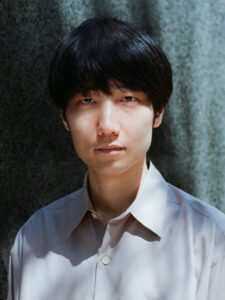
Yoshiyuki Okuyama
Shared publisher: AKAAKA, Seigensha
5 photobook(s) in the library

Antoine D'Agata
Shared publisher: La Fábrica
22 photobook(s) in the library
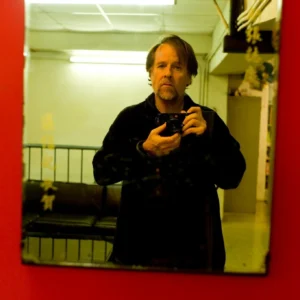
Alex Webb
Shared publisher: La Fábrica
15 photobook(s) in the library

Adam Broomberg
Shared publisher: Tate Publishing
14 photobook(s) in the library
COMMUNITY DISCUSSION
Discuss this entry
Share interpretations, reading notes, and source-aware questions. For catalog corrections, use the feedback form below.
No discussion yet. Start the first focused conversation.
Sign in to join the discussion.
Optionally receive a digest when related photobooks are added to the catalog.
See something incorrect? Sign in to suggest a correction or report an issue.