Photographer
Anthony Hernandez
Anthony Hernandez (born 1947 in Los Angeles) is a major figure in American photographic history whose work has redefined the visual language of urban documentary photography. Raised in East Los Angeles in a working‑class Mexican‑American family, Hernandez developed a keen sensitivity to the social, spatial, and economic structures that shape everyday life in the city. Since the early 1970s, he has produced a sustained and rigorous body of work exploring Los Angeles and other metropolitan environments, focusing on the overlooked, peripheral, and often brutal realities of contemporary urbanism.
His early black‑and‑white street photographs employed a fast, intuitive style—pre‑focusing the camera and capturing subjects as they passed through the frame. Even in these early works, Hernandez approached street photography differently from his East Coast contemporaries: instead of dense, crowded scenes, he photographed the sparse, waiting‑dominated spaces of car‑oriented Los Angeles. Beginning in the late 1970s and especially by the 1980s, Hernandez shifted to large‑format cameras, color photography, and more formally structured compositions. His landmark series include “Public Transit Areas,” “Rodeo Drive,” “Landscapes for the Homeless,” “Waiting for Los Angeles,” “Everything,” and “The Los Angeles River Basin,” each examining how social inequity, race, labor, and infrastructure shape the lived environment. Many later works omit people entirely, instead photographing remnants, debris, and built forms as evidence of presence and displacement.
Hernandez’s photography has been featured in major exhibitions worldwide, including the Pasadena Art Museum’s influential “The Crowded Vacancy” (1971), multiple museum retrospectives, and projects with institutions such as SFMOMA, the Whitney Museum of American Art, Tate, and the National Gallery of Art. His work is deeply influential for its unsentimental clarity, formal precision, and commitment to depicting the social impact of urban design. Hernandez continues to be recognized as one of the most important chroniclers of Los Angeles and one of the key voices in late‑20th‑ and early‑21st‑century documentary photography.


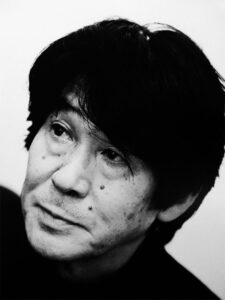
Daido Moriyama
Shared publisher: MACK, Nazraeli Press
15 photobook(s) in the library
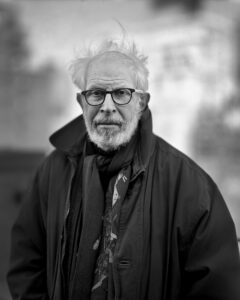
Stephen Shore
Shared publisher: MACK, Nazraeli Press
14 photobook(s) in the library
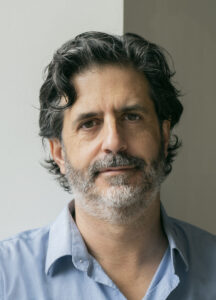
Alec Soth
Shared publisher: MACK, Nazraeli Press
13 photobook(s) in the library
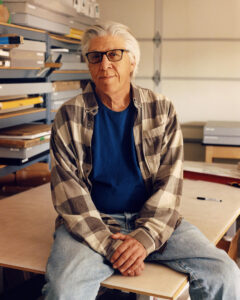
John Divola
Shared publisher: MACK, Nazraeli Press
11 photobook(s) in the library
COMMUNITY DISCUSSION
Discuss this entry
Share interpretations, reading notes, and source-aware questions. For catalog corrections, use the feedback form below.
No discussion yet. Start the first focused conversation.
Sign in to join the discussion.
Optionally receive a digest when related photobooks are added to the catalog.
See something incorrect? Sign in to suggest a correction or report an issue.