Photographer
Candida Höfer
Candida Höfer (born 4 February 1944, Eberswalde, Germany) is a German photographer whose large-format colour images of architectural interiors have made her a leading figure in contemporary photography. Raised in post-war Germany, Höfer studied at the Kunstakademie Düsseldorf from 1973 to 1982, where she first trained in film under the Danish director Ole John and later became a student of Bernd and Hilla Becher. The Bechers’ systematic, typological approach to photographing industrial structures profoundly shaped her generation of photographers, though Höfer ultimately developed a distinctive vocabulary centred on the social and cultural resonance of empty public spaces.
Höfer’s photographic language is defined by meticulous composition, natural or ambient lighting, and a documentary-like clarity that she renders with an almost painterly sensibility. She photographs interiors—libraries, opera houses, museums, palaces, and institutional halls—almost always without people present. This absence of human figures transforms her subjects from functional spaces into abstract studies of order, ornament, and history. Unlike the Bechers’ objective façades, Höfer’s images invite viewers into spaces that feel suspended between past and present, balancing empirical documentation with subjective experience. Her method typically involves a view camera, long exposures, and careful attention to symmetry and perspective, producing images that are both precise and atmospheric.
Several key bodies of work illustrate Höfer’s evolution. Her celebrated series on libraries—such as the photographs of the Trinity College Library in Dublin and the Herzogin Anna Amalia Bibliothek in Weimar—exemplify her fascination with the architecture of knowledge. Her images of opera houses and theatres across Europe and beyond, collected in publications like ‘Opera’ (2006) and ‘Libraries’ (2017), demonstrate her sustained engagement with spaces of performance and learning. She also photographed zoological gardens, galleries, and domestic interiors, expanding her typology beyond the monumental. These works collectively reveal how architecture encodes societal values, class hierarchies, and intellectual traditions.
Höfer’s career has been marked by significant institutional recognition. She participated in Documenta XI in Kassel in 2002, and her work has been exhibited widely, including at the Venice Biennale and in major museums such as the Museum of Modern Art in New York and the Tate Modern in London. As a member of the Düsseldorf School of Photography alongside peers like Thomas Struth, Andreas Gursky, and Thomas Ruff, she helped elevate photography to a central medium in contemporary art. Yet Höfer’s quieter, contemplative approach distinguishes her from the more overtly spectacular work of some contemporaries, often drawing critical attention to issues of cultural memory and preservation.
For photobook collectors, Höfer’s publications are essential for understanding the full scope of her practice. Books like ‘Library II’ (2014) and ‘In Architecture’ (2012) feature exquisite large-format reproductions and careful sequencing that echo the spatial experience of her interiors. Many of these volumes are produced in collaboration with prestigious publishers such as Schirmer/Mosel and Walther König, ensuring high production standards and editorial care. Collectors often appreciate the way Höfer’s monographs replicate the meditative rhythm of her photographs, making them not just documentation but extensions of the artist’s vision. Beginning with a major survey or a focused series like ‘Libraries’ provides an accessible entry point into her world, while her earlier black-and-white work from the 1970s offers a rare counterpoint to her later colour practice.
〔PBL-BIO/2〕


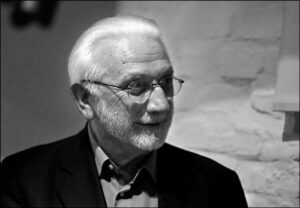
Lucien Clergue
Shared publisher: Hatje Cantz, Prestel
4 photobook(s) in the library
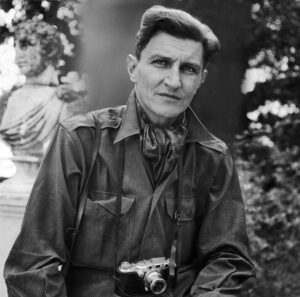
George Rodger
Shared publisher: Hatje Cantz, Prestel
4 photobook(s) in the library

Michael Kenna
Shared publisher: Prestel
22 photobook(s) in the library
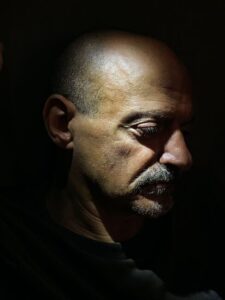
Antoine D'Agata
Shared publisher: Prestel
22 photobook(s) in the library
COMMUNITY DISCUSSION
Discuss this entry
Share interpretations, reading notes, and source-aware questions. For catalog corrections, use the feedback form below.
No discussion yet. Start the first focused conversation.
Sign in to join the discussion.
Optionally receive a digest when related photobooks are added to the catalog.
See something incorrect? Sign in to suggest a correction or report an issue.