Photographer
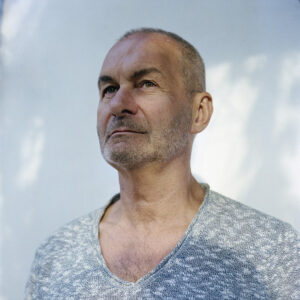
Arko Datto
Arko Datto (born 1986, India) is an Indian photographer and visual artist whose work investigates the role and meaning of images in the digital age. His practice blends documentary, conceptual, and experimental strategies to examine urgent contemporary issues, including forced migration, techno‑fascism, digital surveillance, ecological collapse, disappearing islands, nocturnal environments, and the psychological stress of captivity in animals. Datto approaches each project with a distinct visual language, creating bodies of work that—although diverse—form interconnected inquiries into the cultural and existential dilemmas of the present.
Before turning to photography, Datto trained as a scientist, studying theoretical physics and mathematics in France before abandoning a PhD path to pursue visual storytelling. He later studied photojournalism at the Danish School of Journalism. His long‑term projects and essays have been widely published in TIME, National Geographic, The New Yorker, The Atlantic, Newsweek, GEO, Courrier International, BBC, The Guardian, Al Jazeera, Financial Times Magazine, and many others. He has received major grants and fellowships, including support from the Prince Claus Fund, the Pulitzer Center for Crisis Reporting, and the IDFA Bertha Fund.
Datto is the author of several significant photobooks, including *PIK‑NIK* (2018), *Mannequin* (2018), and *Snakefire* (2021). His exhibitions have been shown internationally at Photo London, Unseen Amsterdam, Hamburger Bahnhof, Fotomuseum Den Haag, Imago Lisboa, Lagos Photo Festival, Chobimela, and Les Rencontres d’Arles. Known also for his curatorial work, he has collaborated with Kochi Biennale, Obscura Festival, and the Chennai Photo Biennale. Through his layered, multi‑chapter visual investigations—often organized as trilogies—Datto continues to expand the boundaries of contemporary photography in both still and moving image forms.
Arko Datto is an Indian photographer and photojournalist from Kolkata, born in 1986. He is known for his documentary work on climate change, environmental degradation, and the resilience of affected communities, particularly in the Sundarbans delta. His photographs have been published in international media and exhibited in galleries and museums, reflecting a deep engagement with social and ecological issues.


Selected Works & Key Projects
A source-backed introduction to individual photographs and significant bodies of work.
Key projects

Project
PIK-NIK
PIK-NIK is a long-term study of winter picnic sites in eastern India, made over five winter seasons. Datto follows gatherings of families and colleagues through food, amplified film music, drinking, dancing, departure, and the refuse left at riverbanks. Its significance lies in converting an apparently ordinary recreational ritual into an account of communal life, class and gender dynamics, and environmental neglect. The project merits selection because it was published as a photobook and was presented at Museum Angewandte Kunst, Frankfurt, placing this sustained social observation within a museum exhibition context.
View source ↗
Project · 2014
Will My Mannequin Be Home When I Return
Will My Mannequin Be Home When I Return is the India-focused first chapter of Datto’s planned trilogy on night, nightlife and night space. Begun in early 2014, it uses flash-lit nocturnal photographs of people and animals in urban settings to make an intentionally hallucinatory visual world. Datto describes the work as a mixed art project rather than straightforward documentary, including both unprompted street images and some constructed situations. It merits selection as the opening work of the trilogy and as a book-length project that frames nocturnal imagery as a means to address representation and political conditions.
View source ↗Project
What News of the Snake That Lost its Heart in the Fire
What News of the Snake That Lost its Heart in the Fire, also identified as Snakefire, is the second book in Datto’s night trilogy. Across four years, the project photographs people and animals at night in Malaysia and Indonesia through highly saturated, dreamlike color. Its stated subject is the changing relationship among nature, society and politics amid development, property speculation, and ecological loss. This project merits selection because it extends the trilogy beyond India while making color and nocturnal flash central to its photographic language; the work was published by L’Artiere.
View source ↗Selected photographs

2015 · Smithsonian's National Zoo
Smithsonian's National Zoo, June 19, 2015
This dated CAPTIVECAM image is one of the screenshots that TIME published from Datto’s use of live zoo surveillance feeds. Rather than photographing from a conventional visitor’s position, CAPTIVECAM freezes publicly accessible video streams and makes the act of watching part of the subject. The image merits selection as a specifically identified example from the series’ source material: it locates the project at Smithsonian’s National Zoo and demonstrates Datto’s use of networked surveillance imagery to consider animal captivity, distress, and unequal power between observer and observed.
Work source ↗-
2004–2008
Education
Bachelor's in Political Science at Delhi University
Arko Datto pursued undergraduate studies in political science at the University of Delhi, India. This academic background informs his critical approach to documentary photography, focusing on social and environmental issues. The degree provided a theoretical basis for his later long-form projects addressing migration, resource politics, and climate-induced displacement.
Source: Wikipedia Verified Sep 4, 2026
-
2015–2021
Series
A Fable for Tomorrow
A multi-year photographic series documenting the lives of communities in India's Sundarbans delta who face rising sea levels and increasingly frequent cyclones. Datto combines archival images, found objects, and staged scenes to create a lyrical yet urgent record of environmental collapse. The project redefines documentary practice by weaving personal memory with climate science, and it gained international recognition for its nuanced portrayal of a global crisis at a local scale.
Source: Prix Pictet Verified Sep 4, 2026
-
2021
Award
Winner of Prix Pictet
Arko Datto received the 2021 Prix Pictet, a global award in photography for sustainability, for his series 'A Fable for Tomorrow.' The judging panel praised the work's innovative blend of archival and staged imagery, which reveals the human cost of climate change while challenging conventional visual narrative. This award brought Datto's practice to a broad international audience and solidified his reputation as a leading voice in environmental photography.
Source: Prix Pictet Verified Sep 4, 2026
-
2023
Career milestone
Work Acquired by the Victoria and Albert Museum
Multiple prints from 'A Fable for Tomorrow' entered the permanent collection of the Victoria and Albert Museum, London. The museum's acquisition underscored the series' importance as a contemporary visual document addressing climate migration and environmental justice. Datto's inclusion in the V&A's collection places his work within a broader historical narrative of photography and social change, ensuring his perspective is preserved for future research and exhibition.
Source: V&A Collection Verified Sep 4, 2026
Power and fragility in the Leipzig Photobook Festival
COMMUNITY DISCUSSION
Discuss this entry
Share interpretations, reading notes, and source-aware questions. For catalog corrections, use the feedback form below.
No discussion yet. Start the first focused conversation.
Sign in to join the discussion.
Optionally receive a digest when related photobooks are added to the catalog.
See something incorrect? Sign in to suggest a correction or report an issue.