Photographer
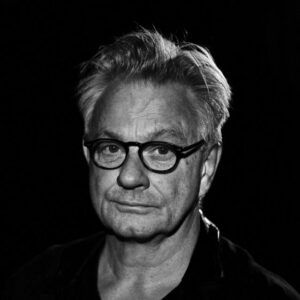
Erik Johansson
Erik Johansson (b. 1985) is a Swedish photographer and visual artist based in Prague, Czech Republic. He is widely known for creating surreal worlds through photographic composites that challenge the viewer’s perception of reality. His works often begin as sketches of an idea, which he then brings to life through careful planning, photography, and extensive digital retouching. Johansson describes himself as capturing ideas rather than moments, distinguishing his practice from traditional documentary or even most fine-art photography.
Johansson’s visual language rests on the seamless blending of multiple photographs to construct impossible scenes. Common motifs include landscapes with folded edges, roads that curl like paper, and human-scale manipulations of familiar objects. This method demands an unusually rigorous attention to perspective, lighting, and texture, and it has earned him recognition as one of the foremost practitioners of ‘impossible photography.’ The resulting images feel both plausible and uncanny, inviting the viewer to question what is real and what is constructed.
Among his most celebrated projects are pieces created for major commercial clients as well as personal series that have been shared widely online and presented at institutions. He has delivered a popular TED talk about his approach, which has accumulated millions of plays and helped popularize his technique. His work has also been exhibited at venues including the Nobel Peace Center in Oslo, Norway, where his surreal images were used to engage audiences with complex themes. Additionally, he has served as a brand ambassador for Hasselblad, reflecting his close engagement with professional camera equipment.
Johansson’s career reflects a broader shift in contemporary photography toward post-production and digital manipulation as central creative tools. Unlike earlier generations who used analog darkroom tricks, Johansson builds images from hundreds of digital layers, yet he retains a strong connection to the physical act of photographing. His studio practice emphasizes pre-visualization, and he frequently shares behind-the-scenes content that reveals the labor behind each composition. This has made him a reference point in discussions about creativity, technology, and authorship in the digital age.
For photobook collectors, Johansson’s work presents a curious challenge: it exists primarily in screen-based and commercial formats rather than traditional photobooks. However, his images are printed for exhibitions and have been featured in various publications and case studies, such as those by EIZO, which showcase the technical demands of color-accurate display and printing. Collectors interested in the intersection of photography and digital art may find his limited printed editions or exhibition catalogs valuable, though entering his work through his official website or social channels offers the most accessible overview of his evolving output.
〔PBL-BIO/2〕


COMMUNITY DISCUSSION
Discuss this entry
Share interpretations, reading notes, and source-aware questions. For catalog corrections, use the feedback form below.
No discussion yet. Start the first focused conversation.
Sign in to join the discussion.
Optionally receive a digest when related photobooks are added to the catalog.
See something incorrect? Sign in to suggest a correction or report an issue.