Photographer
Kenneth Josephson
Kenneth Josephson (b. 1932, Detroit) is an American photographer long associated with Chicago. He is recognized as a pioneer of conceptual photography, an approach that questioned the medium’s claim to objective truth. His career began at a moment when photography was seeking artistic legitimacy, and his generation looked to transform it from documentary craft into a conceptual and aesthetic practice.
Josephson’s distinctive method involved constructing visual puzzles and exploiting the space between photographs within photographs. He often made images that contain other images, creating layered references to the act of seeing and the nature of representation. These works, often witty and paradoxical, destabilize the viewer’s assumptions about what a photograph shows, probing the boundary between recorded reality and photographic illusion.
Educated in the first generation of photographers to receive a master’s degree from the Institute of Design in Chicago, Josephson was deeply embedded in a milieu that treated photography as an experimental art. Over decades, he produced a varied body of work, including innovative pictures of Chicago from the 1950s through the 21st century. His practice combined street-derived observation with staged interventions, making him a singular figure among his peers, who often leaned either toward documentary or formal abstraction.
Josephson’s importance has been underscored by major institutional exhibitions. The Museum of Contemporary Art Chicago curated ‘Picture Fiction: Kenneth Josephson and Contemporary Photography,’ which examined his influence on later artists. The Denver Art Museum, the Smithsonian American Art Museum, and the Art Institute of Chicago have all presented or collected his work. These platforms recognize his role in expanding the conceptual vocabulary of photography and his lasting impact on how artists think about the image.
For photobook and print collectors, Josephson offers a compelling entry into conceptual photography’s formative era. Though few monographs are widely circulated, his prints are held in significant museum collections and his exhibitions have been documented. His importance lies not in commercial scarcity but in the intellectual rigor of his vision, which continues to inform artists working with photographs today. Studying his images provides essential context for understanding the shift from photographic realism to photographic self-reflexivity in American art.
〔PBL-BIO/2〕


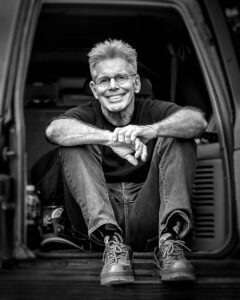
Keith Carter
Shared publisher: University of Texas Press
7 photobook(s) in the library

Aaron Siskind
Shared publisher: University of Texas Press
5 photobook(s) in the library
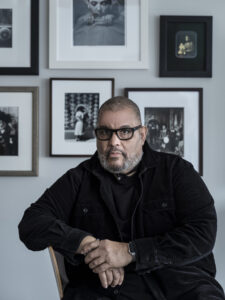
Dawoud Bey
Shared publisher: University of Texas Press
4 photobook(s) in the library

Arnold Newman
Shared publisher: University of Texas Press
4 photobook(s) in the library
COMMUNITY DISCUSSION
Discuss this entry
Share interpretations, reading notes, and source-aware questions. For catalog corrections, use the feedback form below.
No discussion yet. Start the first focused conversation.
Sign in to join the discussion.
Optionally receive a digest when related photobooks are added to the catalog.
See something incorrect? Sign in to suggest a correction or report an issue.