Photographer
André Kertész
André Kertész (1894–1985) was a Hungarian‑born American photographer whose quietly radical vision reshaped modern photography. An autodidact, he began photographing in Budapest before World War I, developing a sensitive, intuitive approach grounded in everyday life, personal emotion, and formal clarity. After moving to Paris in 1925, he became deeply connected to the avant‑garde artistic community, producing lyrical images marked by unexpected angles, geometric compositions, and a poetic sense of observation. His Paris years produced many of his most influential works and positioned him among the earliest masters of modern photographic seeing.
In 1928 he adopted the Leica camera, becoming one of its earliest champions, and used its mobility to explore chance, rhythm, and gesture in the streets of Montparnasse. His photographs from this period—still lifes, portraits, street scenes, and quietly surreal compositions—helped define the emerging language of 20th‑century documentary and artistic photography. In 1936 he emigrated to the United States, where he faced early challenges but continued to create a prolific body of personal work, producing images that examined solitude, urban form, and fleeting moments of beauty within the fabric of New York City.
Although Kertész often felt underrecognized in his lifetime, his influence is profound and enduring. His commitment to intuition, simplicity, and emotional authenticity inspired generations of photographers, including Henri Cartier‑Bresson and Brassaï. By combining spontaneous observation with classical clarity, Kertész forged a unique visual language that bridged documentary practice and poetic expression. Today he is celebrated as one of the foundational figures of modern photography, with a legacy that spans six decades and continues to shape the way we understand the photographic moment.


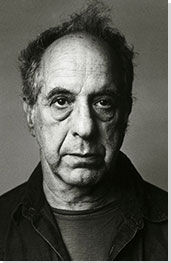
Robert Frank
Shared publisher: 5 Continents Editions, Yale University Press
19 photobook(s) in the library
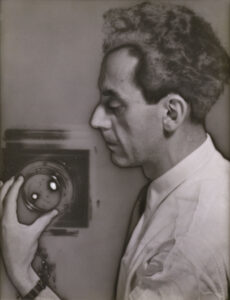
Man Ray
Shared publisher: 5 Continents Editions, Yale University Press
8 photobook(s) in the library
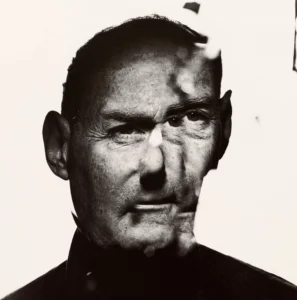
Irving Penn
Shared publisher: 5 Continents Editions, Yale University Press
7 photobook(s) in the library
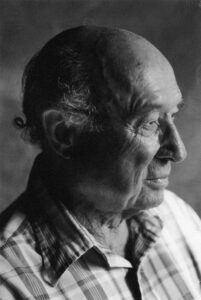
Harry Callahan
Shared publisher: 5 Continents Editions, Yale University Press
6 photobook(s) in the library
COMMUNITY DISCUSSION
Discuss this entry
Share interpretations, reading notes, and source-aware questions. For catalog corrections, use the feedback form below.
No discussion yet. Start the first focused conversation.
Sign in to join the discussion.
Optionally receive a digest when related photobooks are added to the catalog.
See something incorrect? Sign in to suggest a correction or report an issue.