Photographer
Stanley Kubrick
Stanley Kubrick (1928–1999) was an American filmmaker and photographer whose early work behind the camera shaped the visual discipline of his later films. Born in Manhattan, New York City, he was first drawn to photography as a teenager, and by 1945 he had begun selling images to Look magazine, eventually becoming a staff photographer there. His tenure at Look—roughly from 1945 to 1950—coincided with a decisive moment for American photojournalism, when picture magazines still dominated mass media and young photographers could learn narrative storytelling through a single-frame image.
As a photographer, Kubrick developed a distinctive eye for the ordinary and the theatrical. He moved easily between boxing rings, subway cars, and bookstore interiors, often framing his subjects with strong geometry and a sense of withheld emotion. Unlike many of his contemporaries, who emphasized spontaneous realism, Kubrick’s photographs reveal an early obsession with symmetrical compositions, chiaroscuro lighting, and the drama of everyday life. These traits would later become signatures of his cinema, but they are already present in the hundreds of images he made for Look—from portraits of celebrities to candid shots of New Yorkers navigating the city’s transit system.
While he left Look in the early 1950s to make films, Kubrick never fully abandoned photography. The visual language he acquired while learning to condense a story into a single frame informed his meticulous approach to framing and continuity. His photographic archive, now preserved and studied, offers a unique insight into the pre-cinematic mind of one of the twentieth century’s most exacting directors. In later decades, exhibitions and books dedicated to his Look-era pictures have underscored how much of his artistic DNA originated in photo editing, composition, and the labor of picture captions.
The significance of Kubrick’s photography lies not in any single “masterwork” but in the aggregate of his reportage and his transformation of magazine assignments into studies of American life at mid-century. Collections such as the ones held by the Kubrick estate have been periodically exhibited, and essays by film historians have examined the relationship between his photographs and the narrative economy of films like Killer’s Kiss or The Killing. For photobook collectors, the most useful entry point is often the work published in collaboration with institutions like the Museum of the City of New York or the Stanley Kubrick Archive at the University of the Arts London, which holds a large number of his Look negatives and prints.
Yet a balanced view must also acknowledge that Kubrick was primarily a filmmaker; his photographic career was brief and vocational, undertaken before he found his mature artistic voice. But that very apprenticeship makes the images valuable—they show a young artist testing visual ideas that would later crystallize into his legendary films. The best way for a collector to engage with this material is not through speculative market appreciation but through the book and exhibition catalogues that reproduce the Look work in its historical context. These editions allow readers to see Kubrick not merely as a director but as a photographer who used the camera to explore framing, pacing, and the emotional beat of a scene—long before he ever said “action.”
〔PBL-BIO/2〕



Sebastiao Salgado
Shared publisher: Phaidon, Taschen
21 photobook(s) in the library

Steve McCurry
Shared publisher: Phaidon, Taschen
18 photobook(s) in the library

Annie Leibovitz
Shared publisher: Phaidon, Taschen
8 photobook(s) in the library
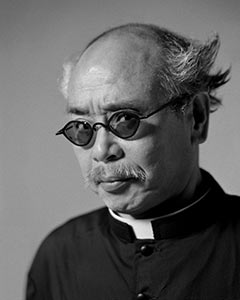
Nobuyoshi Araki
Shared publisher: Taschen
14 photobook(s) in the library
COMMUNITY DISCUSSION
Discuss this entry
Share interpretations, reading notes, and source-aware questions. For catalog corrections, use the feedback form below.
No discussion yet. Start the first focused conversation.
Sign in to join the discussion.
Optionally receive a digest when related photobooks are added to the catalog.
See something incorrect? Sign in to suggest a correction or report an issue.