Photographer
Dorothea Lange
Dorothea Lange (1895–1965) was an American documentary photographer and photojournalist whose career became closely associated with the social crises of the Great Depression and World War II. Her best-known work emerged from assignments for the Farm Security Administration, but her significance extends beyond any single government program or famous image. She helped establish documentary photography as a means of describing national events through the experiences of individual people.
Lange’s visual language joined direct observation with carefully organized human relationships. Faces, hands, clothing, temporary shelters, and surrounding landscapes carry social information in her photographs, while her close attention to gesture gives her subjects psychological presence. Rather than treating hardship as an abstract condition, she often concentrated on how economic and political forces registered on bodies and families. This combination of factual description and emotional compression distinguishes her work from documentary pictures that emphasize either impersonal evidence or dramatic spectacle alone.
Her Depression-era FSA work, made periodically between 1935 and 1939 while traveling chiefly through California, the Southwest, and the South, documented the hardships of displaced and impoverished Americans. Within this larger body, Migrant Mother became one of the twentieth century’s most widely recognized photographs. Its concentrated arrangement of a mother and children transformed agricultural displacement into an intimate image of uncertainty and endurance. Lange’s photographs of Japanese American incarceration during World War II form another essential body of work. They record a different kind of displacement—one produced by government policy—and complicate any reading of her practice as concerned only with poverty.
Historically, Lange belongs to the development of American social documentary and photojournalism, yet her pictures also circulate prominently within art museums, including the Museum of Modern Art. That movement between public record, journalism, education, and art is central to her legacy. Her photographs demonstrate how documentary images can shape collective memory, while also raising questions about authorship, context, and the unequal relationship between photographer and subject. The extraordinary fame of Migrant Mother can obscure the geographic breadth and political range of her archive.
Photobook collectors should therefore look beyond compilations built around a handful of icons. Institutionally researched surveys of the FSA years and World War II work offer a stronger entry point because they restore sequences, locations, and historical captions around individual pictures. Lange’s achievement becomes clearest when images are read in relation to one another: portraits alternate with landscapes and material details, allowing private distress to accumulate into a social argument. Reproduction quality matters especially in her work, where facial expression, worn surfaces, and tonal separation carry much of the meaning.
〔PBL-BIO/2〕


Collaboration
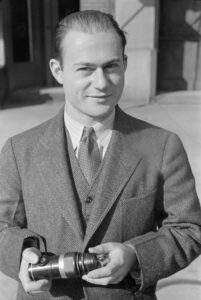
Arthur Rothstein
Dorothea Lange worked alongside Rothstein in the same Farm Security Administration photographic unit directed by Roy Stryker during the later 1930s. Their documented association lies in that shared government project rather than in joint authorship, and together their files form the core of the FSA's Depression-era record.
Verified 2026-09-16Wikipedia
COMMUNITY DISCUSSION
Discuss this entry
Share interpretations, reading notes, and source-aware questions. For catalog corrections, use the feedback form below.
No discussion yet. Start the first focused conversation.
Sign in to join the discussion.
Optionally receive a digest when related photobooks are added to the catalog.
See something incorrect? Sign in to suggest a correction or report an issue.