Photographer
Russell Lee
Russell Werner Lee (July 21, 1903–August 28, 1986) was an American photographer and photojournalist best known for his extensive work with the Farm Security Administration (FSA) during the Great Depression. Born in Ottawa, Illinois, he first studied chemical engineering at Lehigh University. That training later seemed to inform a methodical, detail-oriented approach to documentary photography. Lee turned first to painting and then to photography, eventually becoming one of the most prolific contributors to the FSA project, whose purpose was to document rural poverty and social conditions across the United States.
Lee developed a visual language distinct from that of fellow FSA photographers Walker Evans and Dorothea Lange. Evans pursued formal rigor, while Lange often emphasized emotionally pointed moments. Lee adopted a more inclusive, almost ethnographic method. He photographed people, but he also examined the material settings of their lives: the walls and kitchens of homes, tools, work spaces, and the ordinary objects surrounding his subjects. Through this accumulation of details, his photographs convey lived experience rather than isolated episodes. Even when depicting severe hardship, he maintained a careful regard for human dignity.
His assignments ranged widely across the Midwest, Appalachia, and the South. Among his major bodies of work are the FSA photographs he made in the rural Midwest in 1937 and 1938, his extensive coverage of coal-mining communities in West Virginia and eastern Kentucky, and his 1942 documentation, for the War Relocation Authority, of the forced evacuation and internment of Japanese Americans. These projects demonstrate the breadth of his documentary interests, linking economic hardship, labor, family life, migration, and the political consequences of wartime policy.
Later, Lee taught photography at the University of Texas at Austin, where he became a professor and mentor. His archive, spanning decades of negatives and prints, was donated to the Dolph Briscoe Center for American History. The center continues to digitize and exhibit the material, making an important body of American documentary photography more accessible while preserving the context in which the images were made.
Lee’s significance rests not only on the sheer volume of his output but also on his role in shaping the language of social-documentary photography in the United States. His photographs helped define the FSA’s visual legacy, and his teaching influenced a later generation of documentary photographers. For collectors, his work offers both historical evidence and a distinctive aesthetic sensibility: individual images gain force from the larger social record to which they belong. The Briscoe Center’s ongoing Lee Photography Project provides a useful entry point, with institutional context and high-quality reproductions for those seeking to understand his practice and its place in the history of the photobook and documentary image.
〔PBL-BIO/2〕


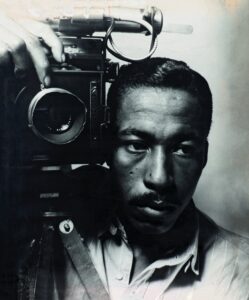
Gordon Parks
Shared publisher: GILES
10 photobook(s) in the library
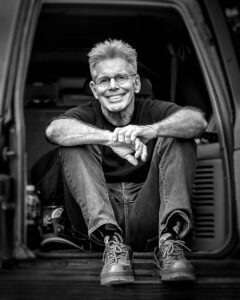
Keith Carter
Shared publisher: University of Texas Press
7 photobook(s) in the library

Aaron Siskind
Shared publisher: University of Texas Press
5 photobook(s) in the library
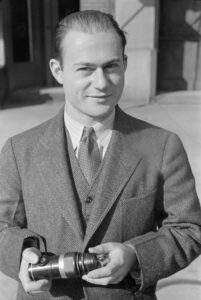
Arthur Rothstein
Shared publisher: GILES
5 photobook(s) in the library
COMMUNITY DISCUSSION
Discuss this entry
Share interpretations, reading notes, and source-aware questions. For catalog corrections, use the feedback form below.
No discussion yet. Start the first focused conversation.
Sign in to join the discussion.
Optionally receive a digest when related photobooks are added to the catalog.
See something incorrect? Sign in to suggest a correction or report an issue.